

February 24, 2026
JAKARTA – House of Representatives Deputy Speaker Sufmi Dasco Ahmad said on Monday that he had conveyed a message to the government to delay the plan to import 105,000 commercial vehicles from India, worth around Rp 24.66 trillion (US$1.46 billion), for the Red and White Rural Cooperatives (KDMP) program. According to him, President Prabowo Subianto would discuss the details of the proposal after completing his overseas working visit.
“So, regarding the plan to import 105,000 pick-up trucks from India, I have conveyed a message to the government that the plan should be temporarily postponed, considering that the President is still abroad,” Dasco said at the Senayan Legislative Complex in Central Jakarta, on Monday, as quoted by Detik.
The statement came after complaints from local businesses, which slammed the plan and urged the government to scrap the proposal. They argue that domestic manufacturers are fully capable of meeting the demand, warning that proceeding with the imports could further strain an already weakened auto sector.
The Indonesian Employers Association (Apindo) said the plan should be comprehensively reevaluate, given its scale and strategic implications for the national automotive industry, which is currently grappling with weakening domestic demand.
“Procurement [of vehicles] must be truly based on real operational needs in villages and carefully consider the strategic consequences for the national industry, especially the automotive sector,” Apindo chairwoman Shinta Kamdani told The Jakarta Post on Monday.
She said industry data showed that national production capacity for pick-up vehicles reached between 400,000 and 1 million units per year, with most locally produced models already meeting domestic component requirements (TKDN) of above 40 percent.
However, this capacity had remained underutilized in recent years because of sluggish market conditions.
“As long as production capacity and capability are available domestically, the procurement scheme should prioritize optimizing the national industry and providing sufficient time for domestic producers to meet the required volume, specifications and criteria,” she said.
According to Shinta, such an approach would generate a stronger multiplier effect for the domestic automotive ecosystem, including higher factory utilization, stronger component manufacturing and stable employment absorption along the supply chain, which employs around 1.5 million workers nationwide.
Her remarks came after state-owned firm Agrinas, which is responsible for the physical development of the KDMP program, struck a deal to import 105,000 vehicles from India.
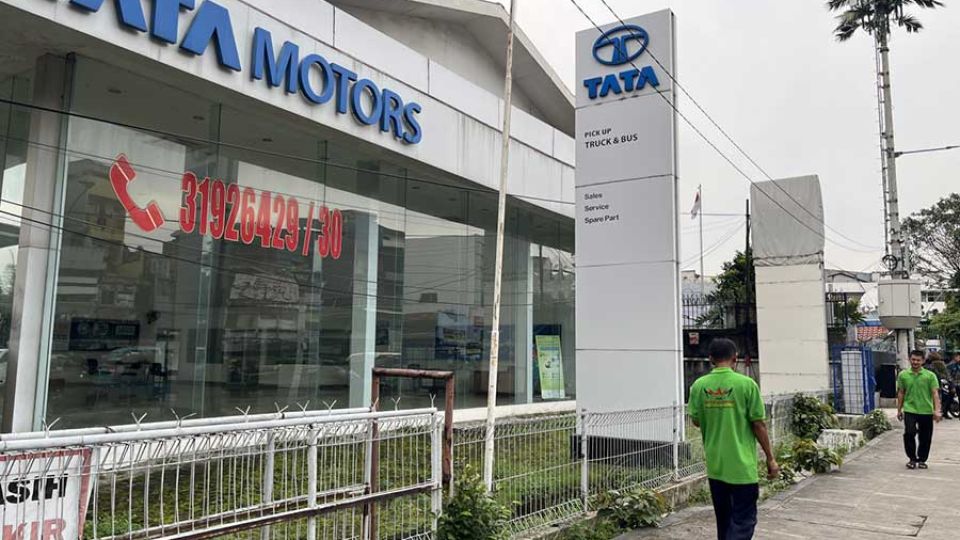
The shipment will consist of 35,000 4×4 pick-up trucks produced by Mahindra & Mahindra Ltd., as well as 35,000 4×4 pick-ups and 35,000 six-wheel trucks from Tata Motors.
The deliveries are planned to be carried out gradually throughout 2026, with 200 Mahindra pick-ups already having arrived in Indonesia.
Agrinas said the import decision was based on limited domestic pick-up capacity of around 70,000 units per year, concerns that absorbing the entire KDMP demand could disrupt other sector needs, the more competitive specifications and the cheaper pricing of imported vehicles.
Nevertheless, Indonesian Automotive Industry Association (Gaikindo) chairman Putu Juli Ardika said the national industry, together with component producers under the Indonesian Association of Automotive Parts and Component Industries (GIAMM), is capable of meeting the demand, although adjustments in volume and technical specifications will require time.
Indonesian Glass and Safety Industries Association (AKLP) chairman Yustinus H Gunawan urged the government to review the import plan and proposed an incompletely knocked down (IKD) scheme, allowing the import of components not yet produced or competitive domestically while maintaining local assembly and maximizing the use of domestic parts.
The Indonesian Chamber of Commerce and Industry (Kadin) went further, urging President Prabowo Subianto to cancel the import plan entirely.
Kadin warned that importing vehicles in a completely built-up (CBU) form would undermine domestic industrial growth and fail to stimulate the local economy.
“Importing CBU vehicles is the same as killing the automotive industry that is currently growing,” said Kadin deputy chairman for industrial affairs Saleh Husin, who also served as industry minister from 2014 to 2016, in a written statement on Sunday.
Saleh said that while vehicle imports are legally permitted under current trade regulations, import policy must be aligned with the industrialization mandate carried by the Industry Ministry.
Industry Minister Agus Gumiwang Kartasasmita previously said that fulfilling a demand of 70,000 units of locally produced 4×2 pick-up vehicles would generate backward economic linkages of around Rp 27 trillion.
“If all pick-up vehicle needs are met through imports, then economic value added and job absorption will be enjoyed by industries abroad. However, if those needs can be met by the domestic industry, then the economic benefits, job creation and strengthening of the national industry will also be felt at home,” Agus said in a statement on Thursday, without mentioning the India car import plan.
The policy direction for KDMP has also raised concerns about its implications for the domestic private sector, as, beyond the planned Indian truck imports, Cooperatives Minister Ferry Juliantono has also called for a reevaluation of the presence of modern minimarkets.
“Villages should not have Alfamart and Indomaret because they already have village cooperatives, so money can circulate within villages instead of flowing to shareholders in Jakarta,” Ferry said on Saturday, as quoted by Antara.
He added that the presence of modern retailers should be reevaluated in terms of licensing, noting that many regional administrations are considering moratoriums on new permits and tighter regulation of existing outlets.