

August 13, 2025
PHNOM PENH – Nearly two-thirds of the Cambodian families displaced by the recent fighting along the Thai border are struggling with severe psychological distress, a new assessment has found.
According to World Vision International in Cambodia, 66% of the displaced reported serious mental health symptoms following evacuation, witnessing bombings or shootings, and in some cases, losing relatives.
The findings were based on a Psychological Safety Assessment conducted across 43 sanctuary centres in Preah Vihear (7), Banteay Meanchey (15) and Siem Reap provinces (21).
“The study, carried out through individual interviews with 274 randomly selected people — including 158 women and 65 children — found that while 56% of adults felt physically safe in the shelters, many were still emotionally tied to their homes and worried about family members and financial insecurity,” according to World Vision.
“Children showed mixed emotional states: 42% reported feeling happy and safe in the centres, while 58% said they remained fearful after exposure to gunfire, explosions and the chaos of displacement,” it added.
The findings show that symptoms of trauma were widespread, with many respondents describing fear, anger, disrupted sleep, loss of appetite, anxiety, and difficulty concentrating.
Only about a third said they knew where to seek help, with most relying on relatives rather than professional services.
Children cited education and access to play materials as their most urgent needs.
Adults prioritised rice, cooking ingredients, tents and other essentials such as soap, mattresses and the presence of permanent medical staff.
World Vision has called for urgent action to address the mental health crisis, recommending the deployment of trained counsellors — both in person and via free hotlines — alongside community awareness programmes and peer support groups.
The organisation also urged the creation of child-focused activities to help young people process fear and trauma.
“Our immediate response to support the needs of children during this critical time is to welcome them to the child friendly spaces at the safety centres,” said Janes Imanuel Ginting, national director of World Vision International in Cambodia.
“We hope that participating in the learning and playing programmes in a safe and supportive environment will provide them a sense of comfort and peace,” he added.
He stressed that trauma can have long-term effects on both mental and physical health.
“It is imperative that psychological support is provided to the affected people, especially children, whether they remain in the safe centres for an extended period of time or return to their home villages,” he said.
The organisation provides displaced children with colourful storybooks and other toys and games.
An informal learning programme, organised with World Vision, offers drawing, puzzles, reading and group games twice a day.
“Our goal is to give them a safe and happy space to behave like children again,” said 18-year-old volunteer Teng Lakna.
“We don’t let them play in dangerous places like ponds. Instead, they stay here and learn through fun,” she added.

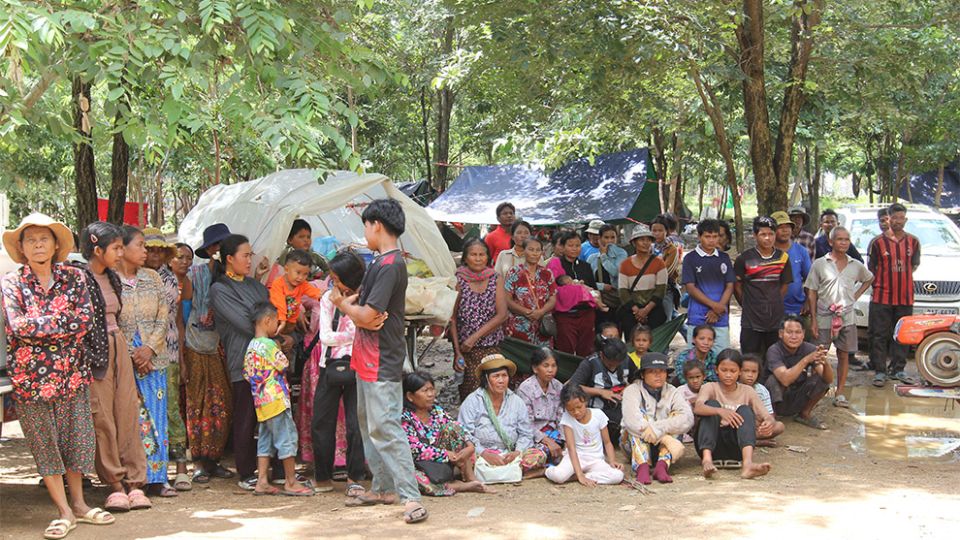
Children cited education and access to play materials as their most urgent needs. PHOTO: THE PHNOM PENH POST
World Vision’s Seng Sokpho said the activities help ease fear.
“When they draw and play, they forget the sounds of war. This helps reduce stress — something even children carry,” he said.
“This is a way of reminding them that education and hope still exist, even in hard times,” he added.