

June 2, 2026
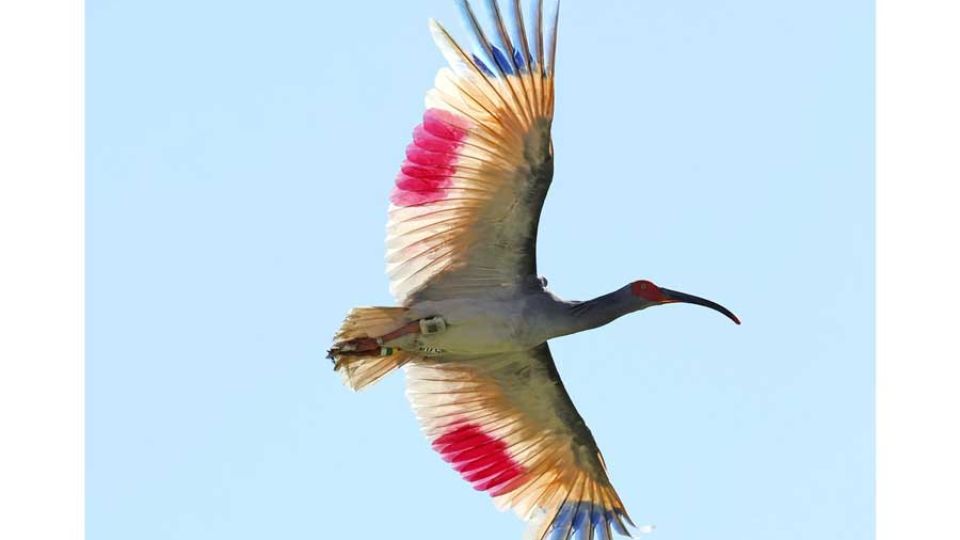
KANAZAWA – The Environment Ministry on Sunday released toki Japanese crested ibises in Hakui, Ishikawa Prefecture, on the Noto Peninsula — the first such release in Honshu of the species, which is designated as a special natural monument of Japan.
The ministry’s release program has successfully reintroduced the species into the wild on Sado Island in Sado, Niigata Prefecture. It now aims to help them settle also on Honshu, once their natural habitat.
In Ishikawa Prefecture, it is hoped the birds will become a symbol of the prefecture’s recovery after it was struck by the Noto Peninsula Earthquake in 2024.
Crown Prince Akishino and Crown Princess Kiko attended the release ceremony, joined by Environment Minister Hirotaka Ishihara, Ishikawa Gov. Yukiyoshi Yamano and local residents involved in conservation efforts.
Each of the eight birds flew off once the lids were lifted from their wooden crates, watched on by about 600 spectators, selected from over 3,000 applicants.
The remaining 10 birds are scheduled to be released into the wild on different dates. After about two weeks in a nearby temporary facility to help them adapt to their surrounding environment, they will be observed until they naturally take off.
Wild Japanese crested ibises on Honshu ceased to exist in 1970, when the last one inhabiting the Noto Peninsula was captured for breeding purposes. All Japanese crested ibises on Sado Island were subsequently captured, but artificial breeding failed, resulting in the extinction of the species in Japan in 2003.
Meanwhile, a pair of Japanese crested ibises given to Japan from China successfully bred in captivity. Due to their steady increase in offspring, the ministry began releasing them into the wild on the island in 2008, bringing the species’ population to nearly 500.
As the island has become too small to accommodate them, the ministry concluded expanding their habitat as necessary to sustain the species and decided to proceed with releases on Honshu.
Releases are scheduled for around September in Nakanoto, Ishikawa Prefecture, and around June next year in Izumo, Shimane Prefecture. The ministry aims to achieve natural breeding on Honshu by fiscal 2030.