

August 21, 2025
JAKARTA – In many countries, history has been reshaped to secure ideological loyalty and justify long-term rule.
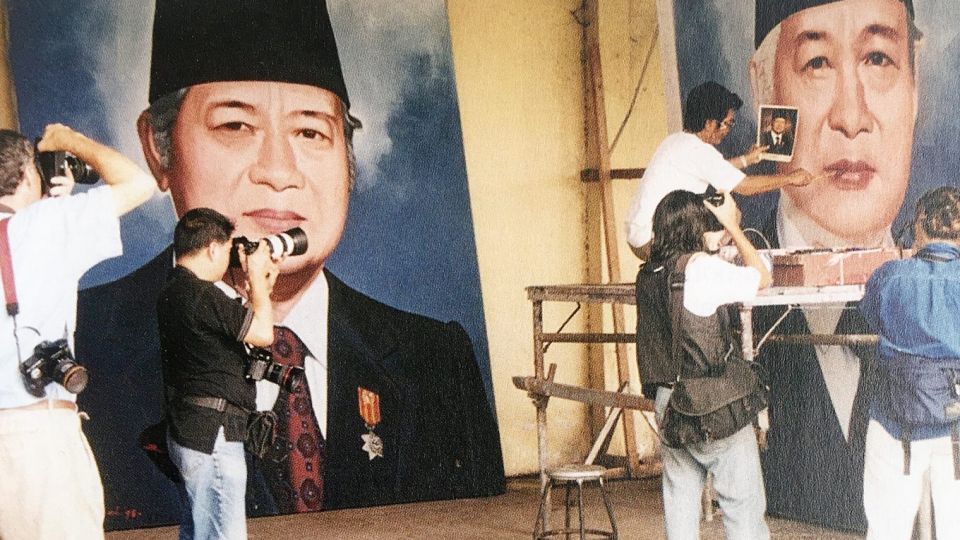
Indonesia is apparently no stranger to such practices, having seen its own narrative recast through a heavy militaristic lens in the early years of former Army chief Soeharto’s presidency, a move that arguably helped secure his more than three decades in power.
In 1971, about three years after Soeharto took office, military historian Nugroho Notosusanto led a project to write the national history book that emphasized the military’s role in “crushing rebellions” while downplaying civilian contributions to safeguarding the state, historian Asvi Warman Adam said during a focus group discussion at The Jakarta Post office last week ahead of Indonesia’s 80th Independence Day.
Nugroho, who later served as culture minister from 1983 to 1985, also authored a 1968 book framing the kidnapping and murder of six Indonesian Army generals on Sept. 30, 1965, as a coup attempt by the Indonesian Communist Party (PKI), countering the Cornell Paper by Benedict Anderson and Ruth McVey that portrayed the incident as an internal Army conflict, which angered Soeharto and the military.
Calling the 1970s Sejarah Nasional Indonesia (Indonesia national history) as the “militarization of history”, Asvi warned that the pattern of reshaping the past to benefit those in power risks repeating itself, pointing to similar efforts now underway under President Prabowo Subianto, who was once Soeharto’s son-in-law.
Read also: Rewriting the past: Indonesia’s new history books spook scholars
Former attorney general and international human rights campaigner Marzuki Darusman voiced concerns about a potential revival of authoritarian practices, noting that Nugroho’s early work helped “pave the way for the 30-year New Order.”
“We have to warn the younger generation; the warning signs of authoritarianism are reappearing,” Marzuki said during a similar discussion.
He added that the ongoing project could complicate efforts to address sensitive episodes, such as the May 1998 riots, during which military figures including former Army general Prabowo faced repeated questions over alleged roles in the disappearance of activists and other abuses.
Prabowo has consistently denied any involvement in rights violations during that turbulent period near the end of Soeharto’s rule.
Ilham Aidit, the son of PKI secretary-general Dipa Nusantara Aidit and a survivor of the 1965 mass killings targeting PKI-affiliated individuals, stressed that truth-telling is crucial, particularly regarding past atrocities, so younger generations can learn from mistakes.
He added that the historical narrative of the 1965 incidents is often reduced to a “political detective story,” focusing on chronology while overlooking the human and social impact.
The current project, he added, also shows the tendency to omit key historical events that do not align with the government’s vision. The book’s draft reportedly leaves out some of the country’s most painful and politically sensitive chapters, including the abductions of pro-democracy activists and the Trisakti student shootings in 1998.
Prabowo ally Culture Minister Fadli Zon, whose ministry is spearheading the project, told lawmakers in May that the new history book would adopt a “more positive tone” toward each president, highlighting milestones such as Indonesia’s economic development under Soeharto and arguing that the work “would never be finished if we focused on [former presidents’] flaws and shortcomings.”
He later faced criticism for dismissing accounts of mass rapes during the 1998 riots as mere “rumors.”
“I think it is truly evil to deceive the younger generation, as they have every right to know what our history is really like,” Ilham said, adding that teaching the nation’s true history–the good, the bad and the ugly–is essential for guiding the country’s future wisely.
Meanwhile, Marzuki, who also led a 1999 fact-finding team under Soeharto’s successor BJ Habibie to document victims of the sexual violence, urged Prabowo’s government to scrap the project, arguing that its recent delay from Aug. 17 to celebrate Independence Day to Nov. 10 to coincide with National Heroes Day would only “legitimize the New Order”.
“Just scrap the project completely, because rewriting history to produce alternative narratives is a central principle, manual and standard of authoritarianism,” Marzuki concluded.
Former army deputy chief of staff Lt. Gen (ret) Kiki Syahnarki said the project could strengthen national unity if it aligns with the founding fathers’ vision of nationalism, rooted in a deep attachment to the homeland.
“If [the nationalism formula] is implemented properly, we will have the true history,” Kiki said.
Eva Kusuma Sundari, former lawmaker and board member of the ASEAN Parliamentarians for Human Rights (APHR), said the revision should adopt a “Feminist Pancasila” approach to dismantle the masculine, elitist and power-biased legacy of historiography.
“Feminist Pancasila demands that the nation’s history is not merely rewritten but rebuilt on a foundation that prioritizes social justice, gender equality and the noble values of Pancasila,” she told the Post separately on Wednesday, referring to the state’s ideology.
Read also: Delay triggers fresh demands to scrap history rewrite
But ironically, critics noted that the current project also omits the women’s movement, including the 1928 Women’s Congress, a key milestone in the fight for emancipation during the anti-colonial struggle.
Jajat Burhanuddin, the project editor, acknowledged the concerns but promised the new history book will present the past objectively.
“Some may have concerns, but we are not that foolish to repeat [what has been done in the past]; we create new and significant innovations in the writing of Indonesian history”.