

December 22, 2025
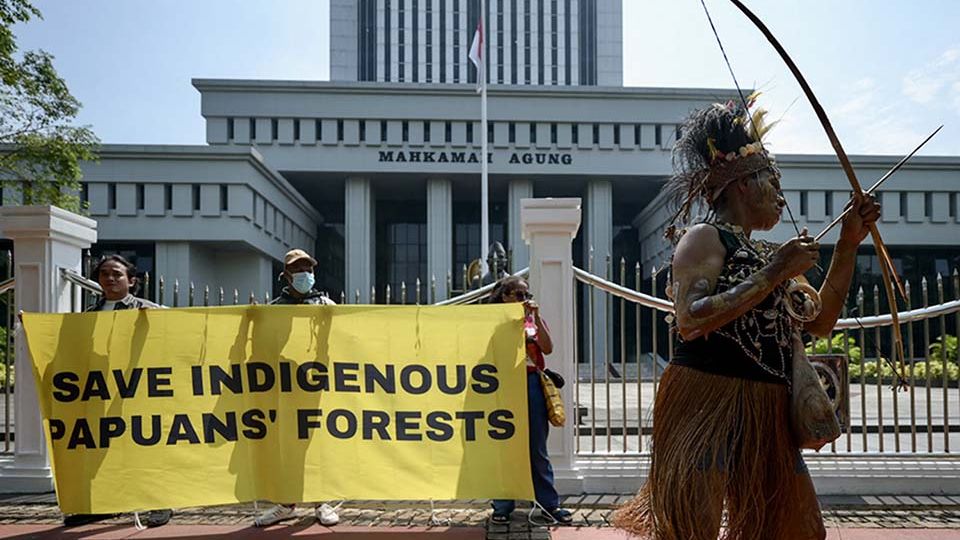
CAMBRIDGE – Earlier this month, President Prabowo Subianto suggested that Papua should be planted with oil palm to boost biofuel production and reduce Indonesia’s dependence on imported fuel. The rationale is clear: Indonesia spends hundreds of trillions of rupiah annually on fuel subsidies and imports, making the strengthening of domestic energy supply a top policy priority.
At first glance, oil palm appears to offer an attractive solution. In 2023, Indonesia produced 47 million tonnes of crude palm oil, accounting for roughly 54 percent of global exports and reinforcing its position as the world’s largest producer. The crop delivers high yields per hectare, supports millions of livelihoods and serves as a strategic input for biodiesel. Compared to many alternatives, oil palm generates more output on less land, reinforcing its appeal from a narrow production perspective.
However, when expansion is proposed in forested regions such as Papua, the policy calculus fundamentally changes. The question is no longer simply how much fuel can be produced, but at what cost, and over what time horizon.
For a country like Indonesia, where 63 percent of the land is classified as forest, these landscapes are not “idle assets” waiting to be converted into more productive uses. They are complex ecological systems providing services essential to long-term food security and economic stability. These include regulating water flows, preventing soil erosion, storing carbon, moderating local climates and sustaining biodiversity.
In Papua, forests also underpin indigenous food systems, including sago cultivation, hunting and fishing, which remain central to local livelihoods and nutrition. Yet, these contributions rarely appear in GDP calculations or energy balance sheets. As a result, policies that prioritize short-term fuel output risk systematically undervaluing the broader economic and social worth of standing forests.
When forests are cleared, the costs tend to surface later. The loss of ecosystem services increases exposure to floods and droughts, reduces agricultural productivity and inflates public spending on disaster response and infrastructure repair.
Recent flooding disasters in parts of Sumatra, widely linked to extensive deforestation and land-use change, offer a stark illustration. These floods have claimed more than 1,000 lives, injured thousands and destroyed hundreds of thousands of homes. These are not abstract environmental risks; they are tangible human and fiscal consequences.
This is where the debate must move beyond energy security alone. In today’s policy landscape, security is no longer defined solely by fuel supply or military strength. It encompasses food security, human security and environmental security: the conditions in which people can live safely, maintain sustainable livelihoods and withstand shocks. Forest loss directly weakens these dimensions by increasing disaster risk and exposing communities to instability.
Energy security cannot be pursued in isolation. Converting forests into monoculture plantations may increase biofuel feedstock in the short term, but it simultaneously weakens the ecological foundations that support agriculture and social stability. Over time, such trade-offs risk undermining the very resilience that national security policies are meant to strengthen.
In Papua, the stakes are particularly high. The region contains some of Indonesia’s largest remaining intact forests and plays a critical role in regional hydrological regulation. Large-scale land conversion here carries heightened risks of ecological disruption and social conflict, especially given the complexity of land tenure systems and the insufficient protection of customary rights.
The potential loss of endemic species, such as birds of paradise and giant butterflies, adds another layer of concern. Beyond their intrinsic value, these species contribute to pollination and ecosystem regeneration, supporting the long-term productivity of the landscape. Their disappearance would represent an irreversible loss that cannot be offset by economic gains elsewhere.
Experience from other forest frontier regions shows that plantation expansion often delivers uneven outcomes. While national-level benefits may accrue through exports and energy supply, local communities frequently bear the costs through land dispossession, the loss of traditional food sources and environmental degradation. Such outcomes deepen inequality, erode trust in government capacity and ultimately weaken human security.
None of this suggests that palm oil has no role in Indonesia’s energy transition. The country has already invested heavily in biodiesel blending, and improving productivity on existing plantations remains a viable pathway to increase output without further deforestation. In parallel, restoring degraded lands may offer opportunities for economic development, provided strong governance, environmental safeguards and genuine community consent are in place.
The central policy question, then, is not whether palm oil can contribute to energy security, but where and how expansion should occur. Treating intact forests, particularly in Papua, as reserves for future fuel production risks locking Indonesia into a development pathway that trades long-term food, human and environmental security for short-term fiscal relief.
Early signals from the new administration have emphasized resilience and self-reliance. Achieving these goals requires recognizing that forests are not obstacles to development, but national assets whose value extends well beyond immediate commodity output.
In the case of expanding oil palm in Papua, energy gains purchased at the expense of food, environmental and human security are unlikely to be worth the cost.
If Indonesia is to truly strengthen its resilience, policy debates must move beyond production targets and account for the full economic and social value of forests. Just as a tree cannot grow without strong roots, economic development strategies cannot be sustained if they undermine their own ecological foundations.
The writer is a PhD student in Land Economy at the University of Cambridge, researching forest governance and resilience in Indonesia.