


December 22, 2025
SINGAPORE – Come winter, Japan’s northernmost island Hokkaido draws not only skiing and snowboarding enthusiasts, but also wildlife lovers keen to snap pictures of highly sought-after subjects such as red-crowned cranes and ezo deer in snow-covered landscapes.
To these shutterbugs, award-winning wildlife photographer Makoto Ando advises care and caution. Certain photographer behaviour could cause stress in animals – staying too long in one place could attract predators and animals may not be able to return to their nests with food to feed their young, he said.
Red foxes, for instance, will abandon their nesting holes if they perceive the photographers to be dangerous, he added.
Other common mistakes that wildlife photographers make include getting too close to animals, talking loudly or using flash photography, said Mr Ando, who typically observes and takes only one or two shots a day.
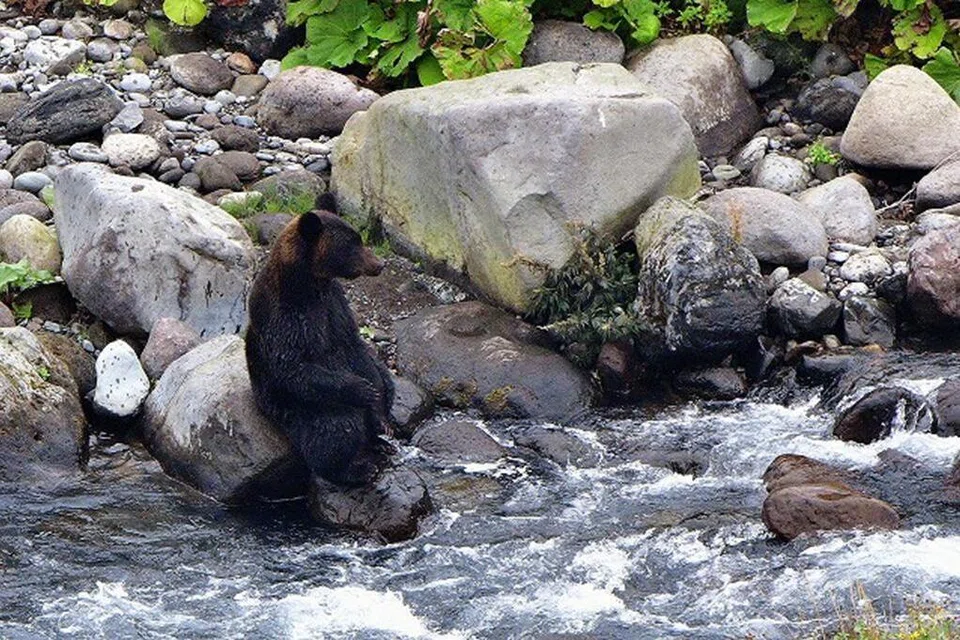
A brown bear sitting and leaning against a rock in Shiretoko Peninsula, Hokkaido, during autumn. PHOTO: MAKOTO ANDO/THE STRAITS TIMES
Mr Ando was speaking to The Straits Times ahead of an event by The Photographic Society of Singapore (PSS) on Dec 17 encouraging best practices for wildlife and bird photography.
PSS member Jayaprakash Bojan said a panel discussion was held to address concerns about the ethics of wildlife photography as more people photograph wildlife in Singapore’s nature parks.
“In their eagerness to capture striking images, some photographers may inadvertently contribute to habitat degradation, littering and environmental destruction, as well as pose risks to public safety,” he said, adding that some may not realise that actions such as baiting animals are not allowed.
“Wildlife photography goes beyond creating compelling images. It carries the responsibility of preserving the delicate ecosystems of the animals and plants in our nature parks.”
Unethical behaviour in photography has been recorded in Singapore. In 2015, an orthopaedic surgeon injected a live fish with air to use as bait to attract an endangered grey-headed fish eagle. He apparently did this with two other people so that the fish would remain afloat and help the photographers snap an “action” shot of the eagle swooping down on its prey on the water’s surface.
He was later fined $2,000.
Another photographer was fined in 2017 for feeding three birds at the Singapore Botanic Gardens and venturing off trail, flouting the law to get good pictures of birds.
“The lives of wild animals, birds and plants come first,” said Mr Ando. “Do the photographs contribute to the morality and safety of wildlife? Infuse your photographs with respect.”
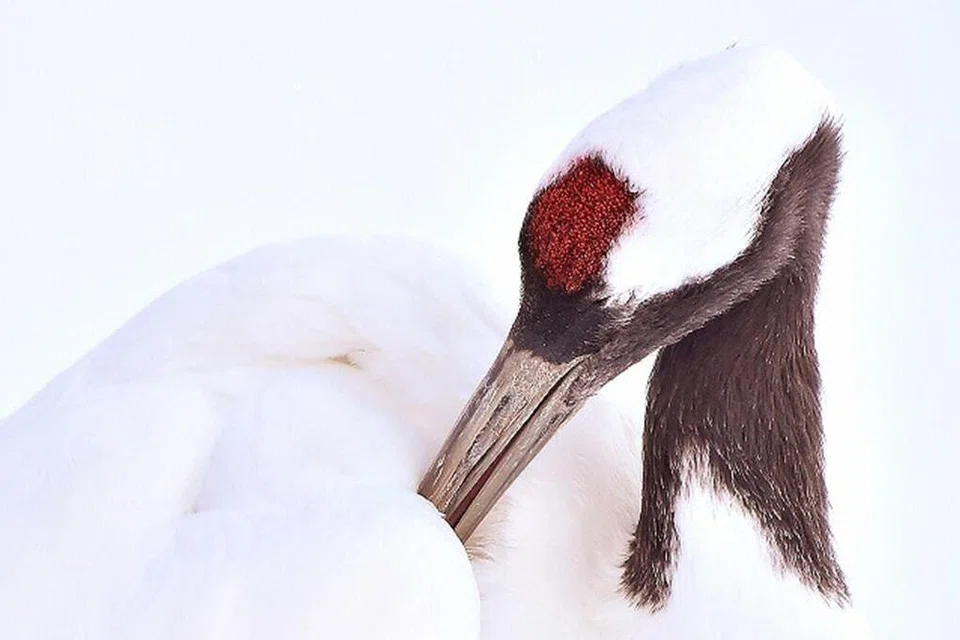
Native to East Asia, the red-crowned crane is among the rarest cranes in the world. PHOTO: MAKOTO ANDO/THE STRAITS TIMES
Born in Hokkaido, the 61-year-old has been a professional photographer for over 26 years, specialising in the wild landscapes and animals of eastern Hokkaido.
His accolades include having his photo recognised in the mammals category at the 2020 Wildlife Photographer of the Year awards by the Natural History Museum in London.
Patience is key to capturing good wildlife photos, he said.

The red-crowned cranes – native to East Asia – woke up in the winter at Kushiro Wetland in eastern Hokkaido. PHOTO: MAKOTO ANDO/THE STRAITS TIMES
“Wildlife photography is all about patience. Sometimes, (it takes) years, sometimes hours, sometimes five minutes,” said Mr Ando, who owns a lodge in Hokkaido where he serves as a guide and photographer. “You never know what will happen in wildlife, but being alert and having experience can help photographers to react.”
To reinforce the point, he recounted an occasion in 2020 when he unexpectedly snapped a great shot of cranes. He was trying to take photos of the cranes from a high vantage point but they were roosting at different times on that day, making them barely visible.
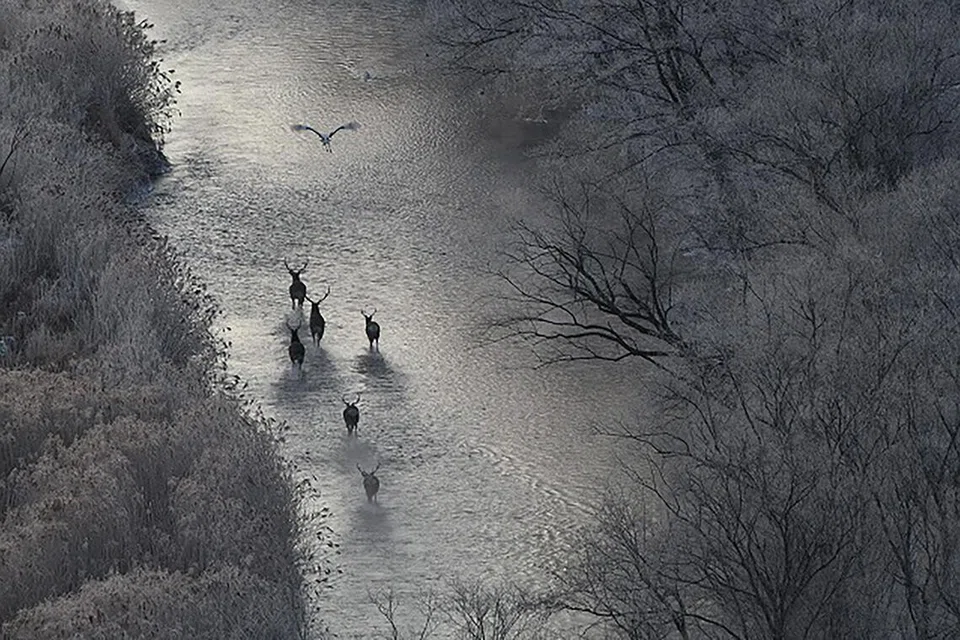
Mr Makoto Ando was taking photos of cranes from a high vantage point, but they were roosting at different times on that day, making them barely visible. But he did not give up and eventually snapped this shot. PHOTO: MAKOTO ANDO/THE STRAITS TIMES
Eventually the other photographers who were with him left, but he continued to wait, even though the cranes remained motionless.
Then, just as his anxiety crept in, a herd of deer suddenly jumped into the river and startled the cranes, which then took off.
“It was a completely unexpected turn of events. Nature easily exceeded my expectations and predictions, gifting me with an unexpected sight,” he said.
“A client who was with me said, ‘So this is what it means to never give up,’ and I found myself nodding vigorously with a big smile, saying it was truly wonderful, a spectacular sight.”
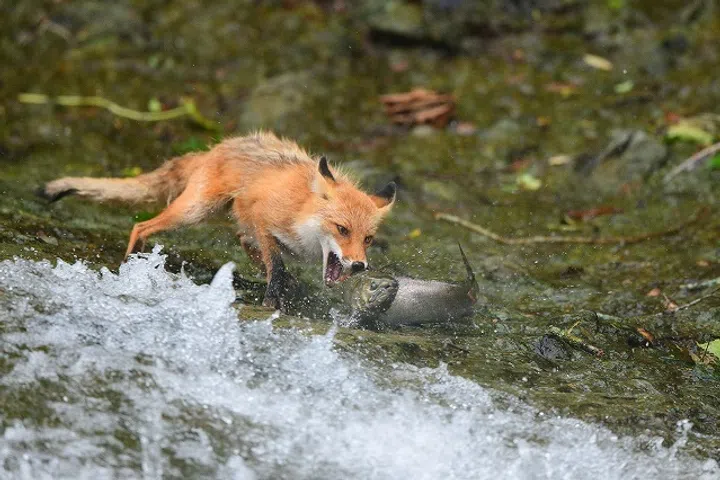
A red fox trying to catch a salmon. PHOTO: MAKOTO ANDO/THE STRAITS TIMES
Some guidelines for ethical practices for nature photography:
Do not destroy or damage the environment or habitat where the subjects are located, such as removing branches, leaves and stones.
Stay on existing roads, marked trails and paths, and keep habitat disturbance to the minimum, where possible.
Maintain a respectful distance from wildlife. If a subject displays signs of stress, either switch to a longer lens or leave the area immediately.
Never use food or bait to lure wildlife from their hiding places or to manipulate them into better poses for photographs.
Do not force a subject into an unnatural environment or engage in any other actions that deliberately disturb animals for the sake of a good photograph. Be mindful of resting animals, especially nocturnal species like owls.
Exercise discretion before publicising the presence of a rare subject, evaluate the potential disturbance and impact to the subject and its environment.
For nesting birds, maintain an appropriate distance from nests, roosts, weaning dens and feeding sites.
Do not use birdcall playback devices at nests as this can disrupt natural breeding behaviour and cause unnecessary stress to nesting birds.
Never handle or touch nests, eggs, chicks or their immediate surroundings. Do not remove branches or foliage as doing so may expose the subject to predators.
Keep your voice low to avoid disturbing the subjects, other photographers and general site visitors.
Respectfully stop others from engaging in inappropriate behaviour, and report them to the authorities when necessary.
Sources: National Parks Board, Mandai Nature, Nature Photographic Society Singapore, The Photographic Society of Singapore