


December 23, 2025
SEOUL – “Even if you’re not a big merch buyer, you learn fast that if you don’t get it now, you’ll never see it again.”
For Jin Yoo-won, a 28-year-old fan of Monsta X, that sense of urgency has become part of everyday fandom. K-pop agencies release new merchandise year-round, often in limited quantities and rarely restocked — pushing fans to act quickly or risk missing out on what feels like a piece of their favorite group’s story.
That sense of urgency is not accidental. It sits at the center of a merchandise strategy that has grown into one of the K-pop industry’s most reliable revenue engines — and one that continues to expand far beyond physical albums and photocards.
Today’s K-pop merch goes beyond collectibles or simple keepsakes meant to display loyalty to their favorite artists. Instead, it has transformed into a market of experience-driven products that offer daily use, allowing fans to show off their support for their favorite artist as they get on with their daily lives.
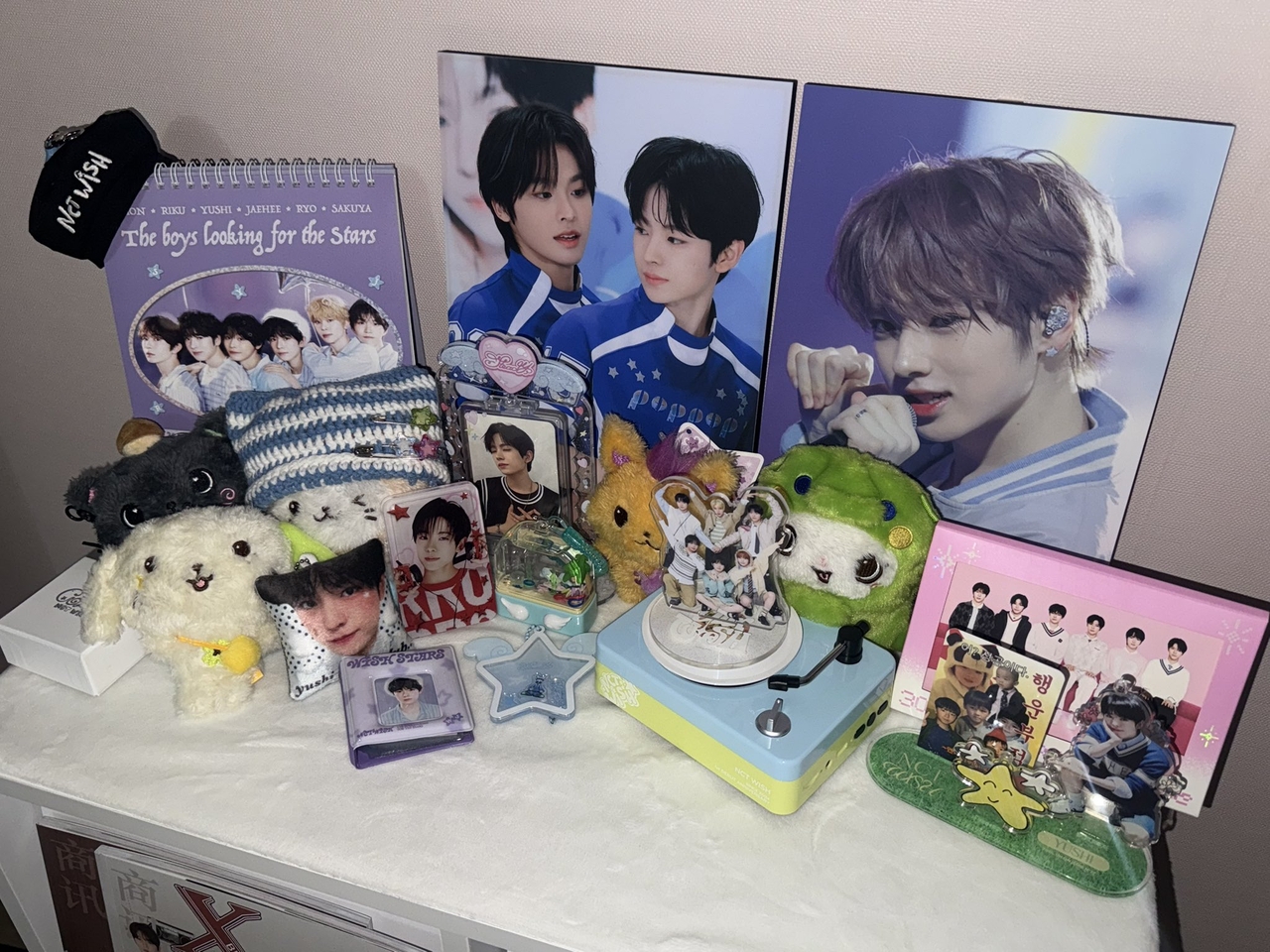
A fan’s display of NCT Wish merchandise. PHOTO: COLLECTED/THE KOREA HERALD
That shift has translated directly into profits.
Recent earnings reports from Korea’s major entertainment companies underscore just how central merchandise has become to their business. In the third quarter, Hybe posted 727.2 billion won ($493.5 million) in revenue, with 249.8 billion won coming from merchandise. SM Entertainment and JYP Entertainment reported 321.6 billion won and 232.6 billion won in revenue, respectively, with merch accounting for 50.3 billion won and 29.3 billion won. YG Entertainment also recorded 28.1 billion won in merch revenue out of 173.1 billion won total.
Finance industry insiders cited in local reports forcast that combined merchandise revenue from the four major entertainment companies could reach 1 trillion won this year — a 26 percent increase from the 791.3 billion won recorded in 2024.
Music critic Lim Hee-yun told The Korea Herald that K-pop merch stands out among other musical franchises due to its “product ecosystem built around the artists’ narrative, story and visual identity.”
“While Western pop artists, for example, typically lean on T-shirts, vinyl records and posters as their primary merchandise offerings, K-pop merchandise has its own story, making it more immersive,” said Lim. These stories can include character concepts created for each group, as well as references tied to their most recent album’s overarching theme and the group’s artistic universe.
“The K-pop industry’s emphasis on storytelling, as well as its limited-edition drops that enhance collectability, serves as an effective marketing strategy that encourages continual engagement and repeat purchasing,” Lim continued.
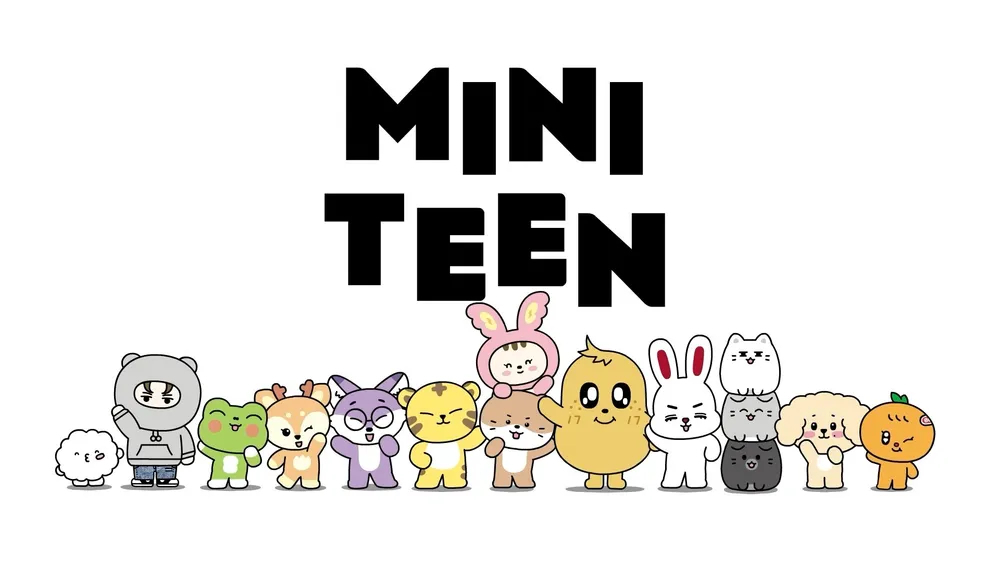
Boy group Seventeen’s “Miniteen” characters are personally designed and have characteristics modeled after the group members. PHOTO: PLEDIS ENTERTAINMENT/THE KOREA HERALD
This marketing model has proven effective not only culturally but financially. Unlike albums or tours, merchandise can be released steadily year-round.
“While comebacks and tours occur only periodically, agencies can drop new product lines at any time, such as seasonal releases, concert merch and collaborative items with other companies,” consumer science professor Lee Eun-hee told The Korea Herald. “Each release, tied with its limited-edition nature, allows agencies to maintain engagement and consistent income even during periods when artists are not actively promoting.”
Merchandise in K-pop initially meant a poster that would come with physical albums, or sometimes unofficial merchandise made by the fans themselves. Then, photocards came into play.
Photocards marked one of the earliest turning points in K-pop’s merchandising strategy. Originally included as randomized album inserts, they soon became the industry’s entry-level collectible — fueling trading communities, encouraging repeat purchases with artifical scarcity.
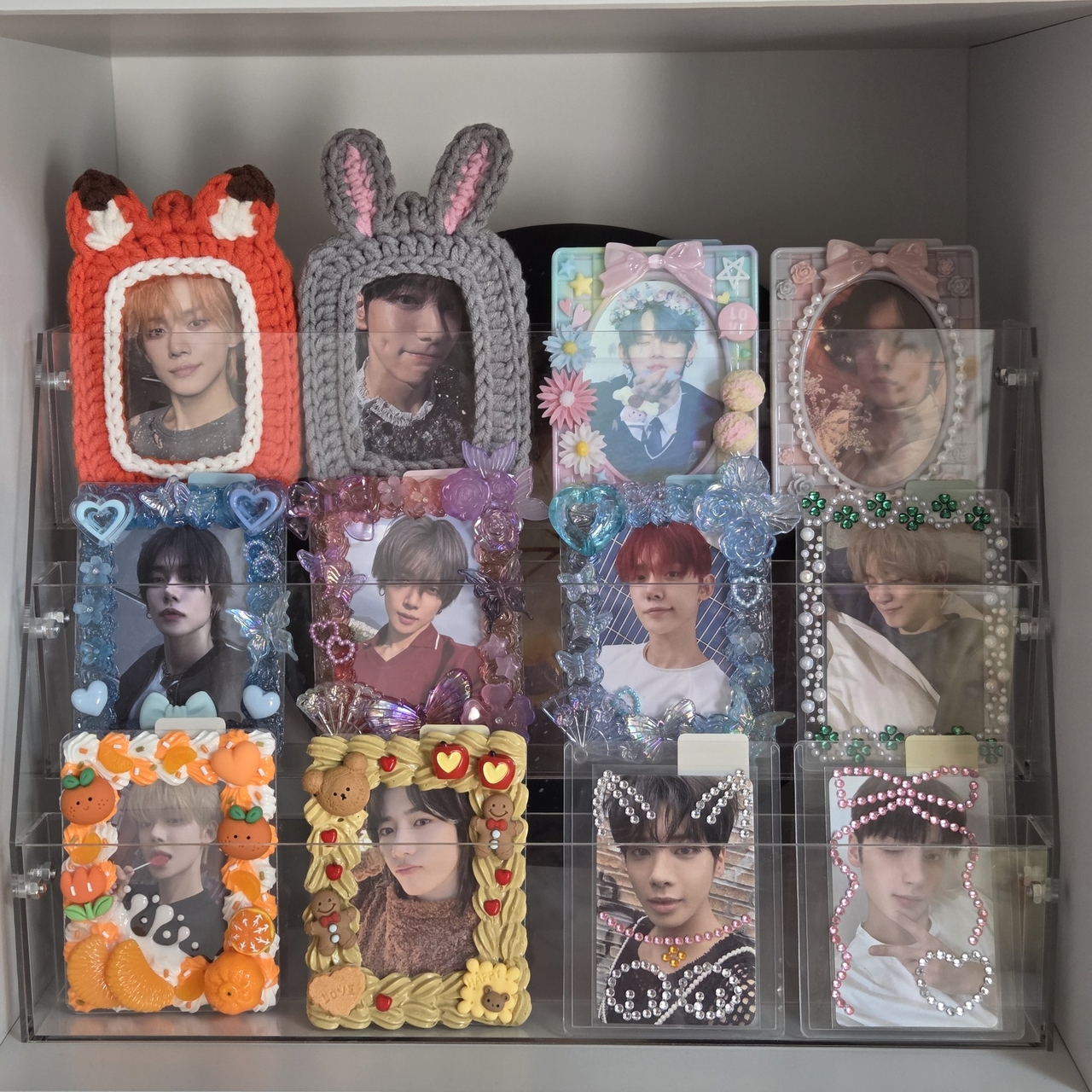
A Tomorrow X Together fan’s collection of photocards of the group’s members. PHOTO: COLLECTED/THE KOREA HERALD
“(This phase) laid out the groundwork for today’s merch strategies, familiarizing fans with the idea of personalization and collectability — all principles that now underpin nearly every new product line in the industry,” culture critic Kim Heon-sik told The Korea Herald.
Building on that foundation, agencies began shifting toward merchandise that reflected each group’s distinct identity. Character-based products — now common across nearly all K-pop acts — feature mascots modeled after artists themselves, such as Seventeen’s “Miniteen” or Stray Kids’ “Skzoo.” According to Kim, these items allowed fans to express their fandom more subtly in daily life, without relying on overt logos or slogans, while signaling a broader move away from souvenir-style goods.

Nmixx’s 4th EP album, “Fe304: Forward (Shell Version),” designed as an MP3 player. Fans who purchase the player can not only play all six songs featured in the album, but can also add their own music to use as an actual MP3 player. PHOTO: JYP ENTERTAINMENT/THE KOREA HERALD
From there, merchandise expanded beyond collectibles into products designed for everyday use. MP3 and CD players preloaded with album tracks, stationery and home decor items such as mood lamps became increasingly common, and fan goods evolved into lifestyle products rather than items meant solely for display.
This concept was then pushed further, as agencies began to introduce products that brought fans closer to the world their idols inhabit. Replicas of in-ear earphones — the custom pieces artists wear onstage — proved especially popular, offering a glimpse into the tools of a performer while fostering a sense of shared experience. Artist-designed clothing and accessories, along with scented candles and room fragrances inspired by idols’ personal preferences, further blurred the boundary between performers and fans.
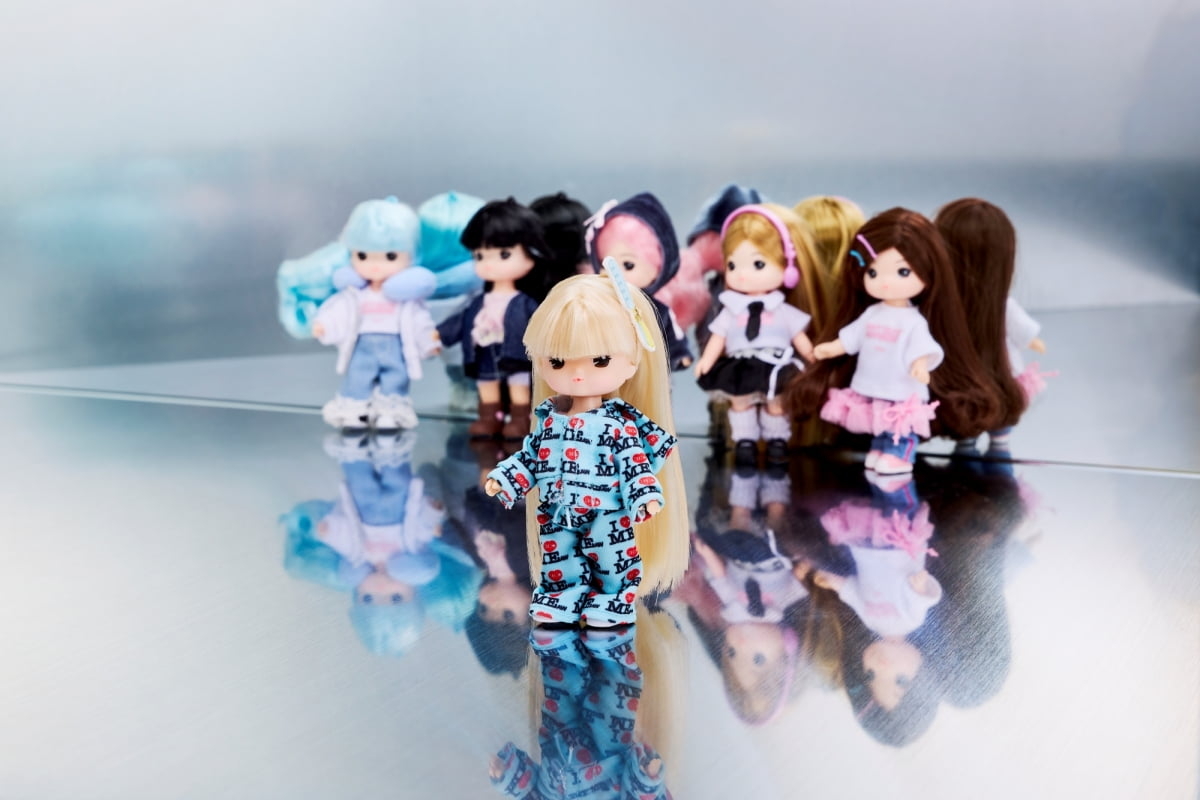
Girl group Illit’s keychain, made in collaboration with Little Mimi, is modeled to look like the group’s members. Fans can customise the doll’s clothes. PHOTO: BELIFT LAB/THE KOREA HERALD/THE KOREA HERALD
Now, interactive merchandise is becoming popular, including plush dolls embedded with audio or NFC chips that play recorded messages, as well as figures fans can customize with additional clothing and accessories.
“Merch in K-pop today has to be more than just something cute and worth keeping. Not all fans will be motivated to buy something just for keepsakes,” Kim added. “Merch also has to be a direct point of engagement for the fans, allowing the fans to somehow personalize their connection with their favorite artists.”