

December 23, 2025
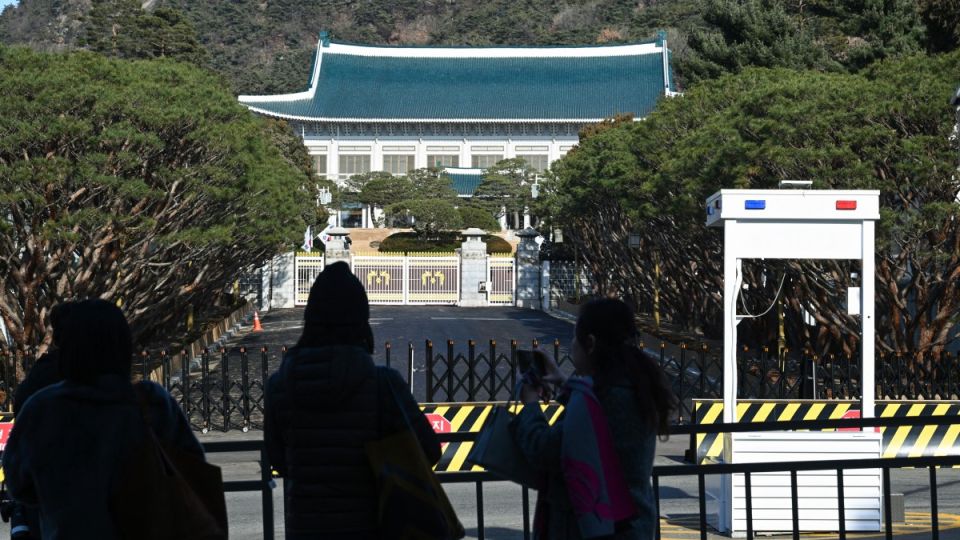
SEOUL – The address for South Korea’s presidential office is changing again, moving from Yongsan-gu back to the Blue House after three years and seven months.
The move will trigger a series of relocations, including the return of Defense Ministry staff displaced by the original move.
But President Lee Jae Myung’s return to the Blue House, also known as Cheong Wa Dae, is more than a logistical reset.
It revives the old, unresolved question of whether the Blue House enables leadership or insulates the president from the public — the issue that triggered efforts to leave.
The move is now well underway. On Monday morning, the presidential office held its daily briefing with its press corps in the Cheong Wa Dae complex for the first time since May 2022.
Cheong Wa Dae said that, from Monday, all presidential briefings would take place in Chunchugwan, the briefing room used before the relocation located about 500 meters from the main hall.
It is one of many changes in the weekslong relocation process that kicked off Dec. 8, a day after the presidential chief of staff Kang Hoon-sik unveiled plans for Lee and his secretaries to “move back to where the president used to be, and where the president is supposed to be.”
Some Cheong Wa Dae staff had already relocated before the presidential press corps arrived on Monday. The entire process is set to be completed by the end of this year, but Cheong Wa Dae has not confirmed when Lee will begin working in the refurbished presidential office.
According to the presidential office, Lee’s workspace will be in both Cheong Wa Dae’s main hall and Yeomingwan. A Cheong Wa Dae official added that this will enable the president’s closer communication with his aides ― chief of staff Kang Hoon-sik, director of national security Wi Sung-lac and chief secretary of national policy Kim Yong-beom ― by having their workspace in the same building.
The official residence inside the Cheong Wa Dae complex, which sits to the east of its main hall, is still under renovation, meaning the presidential residence will likely move to the Cheong wa Dae complex in the first half of 2026, according to Cheong Wa Dae.
Carrying historical significance as the seat of the presidency in South Korea’s modern history since 1948, when the nation’s first president Syngman Rhee began ruling the country, the presidential complex began to be called Cheong Wa Dae in 1960.
As a sprawling historic palace complex separates the Blue House from main roads and public squares, some say the site distances the president from public, particularly after protesters were repeatedly kept away during the Park Geun-hye administration.
Park’s successor, President Moon Jae-in, promised to relocate the presidential office to the other side of the palace in Gwanghwamun, the site of the protests that led to her impeachment. But he abandoned the plans after security concerns were raised.
Yoon revived the proposal to move the office, bulldozing through a plan to relocate it before his inauguration, this time to the site of the headquarters of the Ministry of Defense in Yongsan-gu, 6 kilometers south of Cheong Wa Dae and 4 kilometers from Gwanghwamun.
Yoon also took things a step further than his predecessor’s plan, by moving the president’s living quarters out of the Blue house, taking over the foreign minister’s residence about 3 kilometers from the new office.
Yoon’s relocation plan was touted as a move to bring the presidential office closer to the public. But it faced criticism over the cost of the plan and the way it had been rushed through without public consultation.
While the new location was secure, there were also complaints that it lacked the refinement and tradition of the Blue House, as well as appropriate facilities for a presidential office. Traffic problems associated with Yoon’s commute also drew criticism.
Alongside the relocation, Yoon “returned the Blue House to the people,” opening it to the public in May 2022, for the first time in 74 years.
Lee, who was inaugurated in June two months after Yoon’s removal from office for his martial law imposition, said during his presidential election campaign that he would return the presidential office to Cheong Wa Dae once he wins the presidency.
He also proposed that he set up a new presidential office in the de facto administrative capital Sejong.
In August, Cheong Wa Dae closed to the public for refurbishment. Over 8.5 million people visited the complex during the three years and two months it was open.