

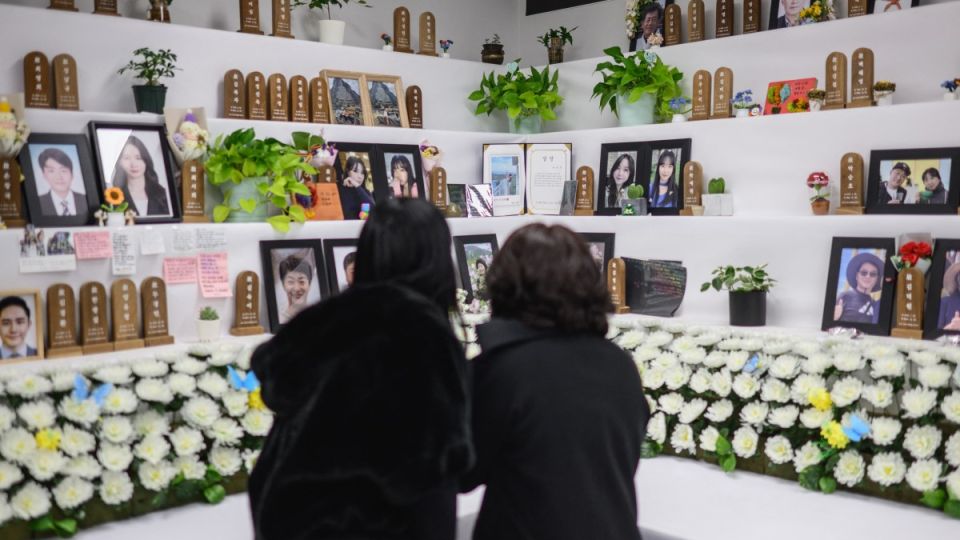
December 29, 2025
SEOUL – For Ko Jae-seoung, the year since his parents died in a Jeju Air plane crash has been marked less by mourning than by waiting for answers, accountability and an explanation the government has yet to provide.
Ko, 43, lost both of his parents in the Dec. 29, 2024, crash at Muan International Airport in South Jeolla Province. They were returning from a vacation in Thailand.
The passenger aircraft skidded along the tarmac during an emergency landing and burst into flames as it struck with a concrete structure near the end of the runway. Before landing, a possible bird strike involving the engine had been reported. The crash killed 179 of the 181 people on board.
One year on, Ko and other bereaved families say the investigation has failed to meet basic standards of transparency and fairness.
“Before the first anniversary of the accident, which falls on Monday, I hope the ministry offers an apology,” Ko told The Korea Herald. “Not a vague statement, but a clear acknowledgment of what is already evident.”
“I believe such an apology could be the starting point for a credible effort to determine the cause of the accident,” he said.
The probe has been conducted under the authority of the Ministry of Land, Infrastructure and Transportation, which also oversees aviation safety and airport facilities that may have contributed to the disaster.
Families say they have received little explanation throughout the yearlong investigation. No one has been indicted or detained in connection with the case. The lack of clear accountability, they say, has compounded the grief caused by the tragedy itself and hindered their psychological recovery.
The Aviation and Railway Accident Investigation Board, an investigative body under the Transportation Ministry, has led the probe since the crash. However, the investigation has ground to a halt, as families raise concerns over its integrity and independence.
Kim Yu-jin, who lost her parents and younger brother in the Jeju Air crash, knelt before lawmakers at the National Assembly in October, accusing the authorities of failing to conduct a transparent investigation.
“The board says it is working to uncover the truth, but it has never shared any information with the bereaved families,” Kim said. “For 300 days since the accident, we have not received a single line of truth or a piece of data.”
The board pledged in January to disclose its investigative procedures transparently to the bereaved families.
But while some details have been disclosed, much of the findings have not been shared. The board says it has withheld the information out of concern that broader disclosure could affect the investigation’s outcome.
Disclosed details included findings such as traces of migratory duck blood found on two engines. But other key information, including inspections related to the concrete structure near the runway and data on bird activity around the airport, has remained undisclosed.
The concrete structure 251 meters from the end of the runway at Muan International Airport consisted of 19 pillars up to 1.65 meters high that supported a concrete slab measuring 42 meters in length, 4.2 meters in width and 30 centimeters in thickness.
The bereaved families have also criticized a separate investigation led by the police. While the Jeonnam Provincial Police Agency has booked 44 officials, including 20 current or former employees of the Transport Ministry, none had been indicted or detained as of Friday.
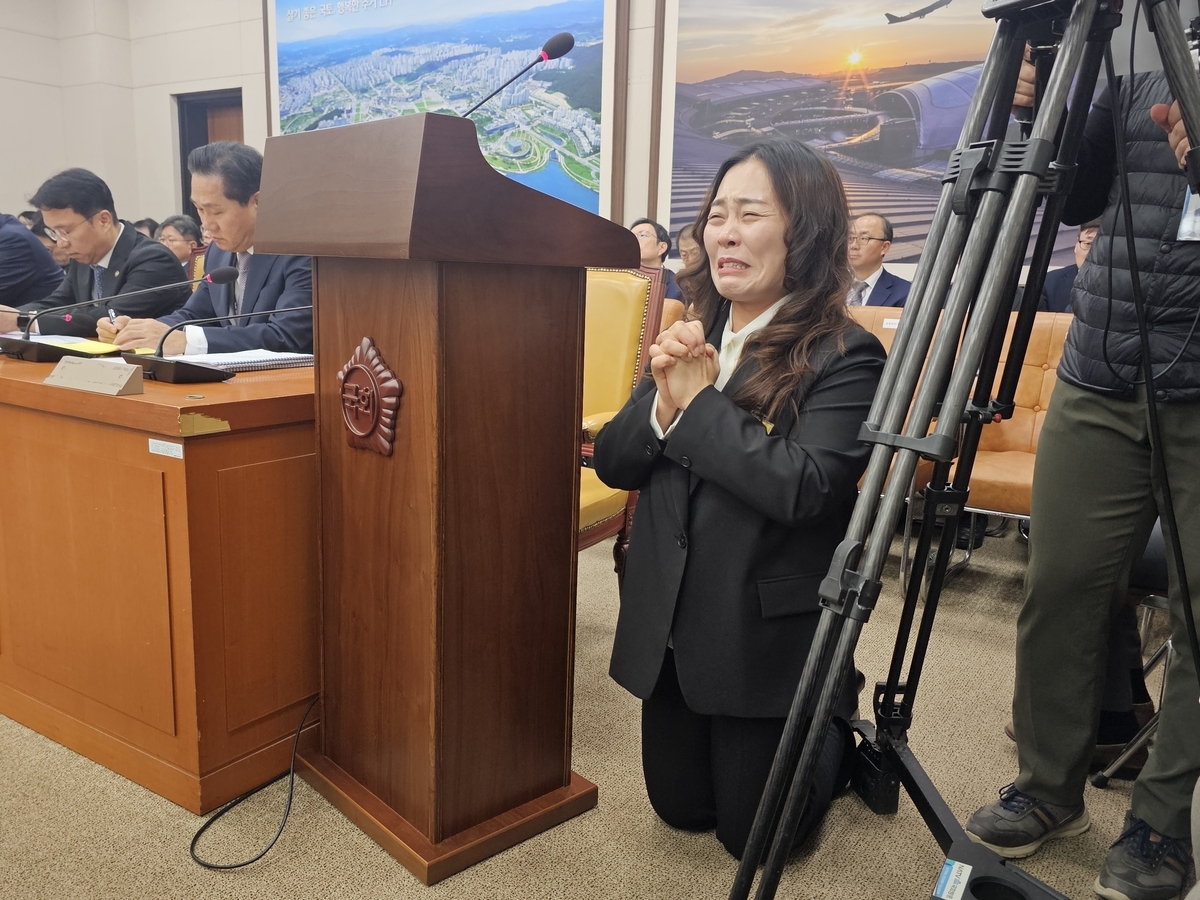
Kim Yu-jin, who lost her parents and younger brother in the Jeju Air plane crash, calls for a thorough investigation into the accident during a National Assembly audit of the Transportation Ministry on Oct. 29 at the National Assembly in central Seoul. PHOTO: CONTRIBUTED/THE KOREA HERALD
Tensions escalated this year over access to investigative data. In July, the board’s planned announcement of provisional findings was derailed after families objected to the release of an interim report, arguing that it focused narrowly on pilot error.
Another announcement scheduled for early December was also called off after families said they were not allowed to question the findings and had been denied access to draft materials in advance.
The authorities’ exclusive control over key data has fueled concerns among families that the investigation board may be seeking to shield the Transport Ministry from responsibility and divert attention from an objective determination of the cause of the tragedy.
Some developments have emerged amid continued advocacy.
As the National Assembly moves to transfer oversight of the investigation team from the Transport Ministry to the Prime Minister’s Office, the first formal acknowledgment by a government body emerged Tuesday.
According to the bereaved families, the Anti-Corruption and Civil Rights Commission said the government violated safety standards by installing a concrete berm at the site instead of using frangible materials designed to break on impact.
A year of stalled findings and unanswered questions has taken a growing psychological toll on bereaved families, including those who remain near the airport awaiting answers.
“We support a thorough investigation rather than a rushed one, but as December approaches, we are seeing signs that families are becoming more withdrawn and increasingly reluctant to speak,” Ko said.
“I see a growing sense of emptiness and despair among the bereaved families, along with persistent questions about why the government is not protecting us and why we are being pushed into desperate protests like this,” he said.
An internal survey conducted by South Jeolla Province found that up to 89 percent of bereaved families showed symptoms consistent with clinical depression. However, local media outlets have reported that participation in on-site psychological support programs remains low.
Experts warn that bereaved families, exhausted by the shock of the tragedy and the prolonged process of seeking answers, may become increasingly isolated.
“With a strong sense of urgency to uncover the truth, some families feel it is not appropriate to seek treatment for themselves,” said Baek Myung-jae, a professor of psychiatry at Kyung Hee University Medical Center. “They tend to put their own care aside, even though they are aware that doing so is harmful.”
Experts also emphasized the need for a smoother and more considerate truth-finding process, saying that minimizing secondary stress is essential for recovery after a disaster.
Baek cited previous social disasters in Korea, including the Sewol Ferry disaster in 2014 and the Itaewon Halloween tragedy in 2022, which claimed 304 and 159 lives, respectively.
“The government should take a more active role in supporting their psychological recovery,” Baek added.
“This could include providing remote mental health services for those living outside the region and making greater use of the established trauma recovery center in Gwangju, where many bereaved families are concentrated.”
“Our final wish is that no one else has to endure the excruciating pain we are experiencing,” Kim Yu-jin said. “I hope our family’s sacrifice will be the last.”
Bereaved families are increasingly forming solidarity with families affected by other major tragedies, calling for institutional reforms to prevent both disasters and prolonged suffering afterward.
“After meeting families who went through similar tragedies before us, I came to agree with their view that a legal framework is needed to prevent future social disasters,” Ko said.
Experts have argued for the establishment of an independent government body responsible for handling social disasters, with authority spanning investigations and post-incident preventive measures.
“Social disasters often span multiple ministries, yet investigations are conducted within each ministry’s own jurisdiction,” said Kim Eui-soo, a professor of safety engineering at the Korea National University of Transportation. “This approach undermines investigative credibility and fuels allegations of self-investigation.”
He expressed regret that a legislative push during the Moon Jae-in administration (2017–2022) to establish an independent disaster-response body, separate from individual ministries, failed to gain traction amid criticism that it would amount to excessive legislation.
“Each time a tragedy occurs, a new special committee is created,” Kim added. “Yet we still cannot say we truly understand the causes of past disasters. As discussions over new legislation resume, we must find a way to ensure investigations can genuinely be considered complete.”