

January 9, 2026
PHUENTSHOLING – Tourist arrivals increased last year, signalling a post-pandemic recovery. But for many local guides, drivers, and travel agencies, the rebound has brought little relief.
Industry stakeholders say the current tourism policy allows substantial revenue leakage, with foreign travel agents controlling key segments of bookings and tour arrangements.
As a result, much of the money tourists spend never circulates through Bhutanese businesses or communities.
Bhutan recorded 161,512 tourist arrivals in the first ten months of last year, a 39 percent increase compared to 116,384 during the same period in 2024.
Despite higher visitor numbers, tourism income has failed to generate the domestic multiplier effect that policymakers anticipated. Offshore operators now handle a significant portion of reservations, reducing opportunities for licensed Bhutanese tour companies, guides, and drivers.
Besides the Sustainable Development Fee (SDF), there are a few mechanisms to ensure that tourism earnings move through local value chains.
Changes to the booking system have compounded the problem, allowing visitors to make reservations directly without engaging Bhutanese tour operators. This has given foreign entities greater control over accommodation, transport, and itinerary planning.
Many of these transactions fall outside domestic oversight, contributing to revenue and tax leakage and reducing foreign currency inflows.
The issue was also raised during the recent Parliament session by the National Assembly’s Economic and Finance Committee.
The committee stated that when foreign firms dominate the sector, domestic operators lose business and revenue, which affects their ability to continue operating. “The national economy captures less value from tourism, diminishing potential contributions to employment and development,” the committee stated.
The committee also stated the country’s “High Value” tourism principle is under pressure as undercutting and fronting practices increase, which affects tourism services. The direct SDF and visa applications that bypass Bhutanese operators have created coordination gaps and increased the risk of revenue leakage.
Concerns were further raised about payment systems, with multiple gateways making monitoring more difficult and reducing transparency.
Impact on local operators
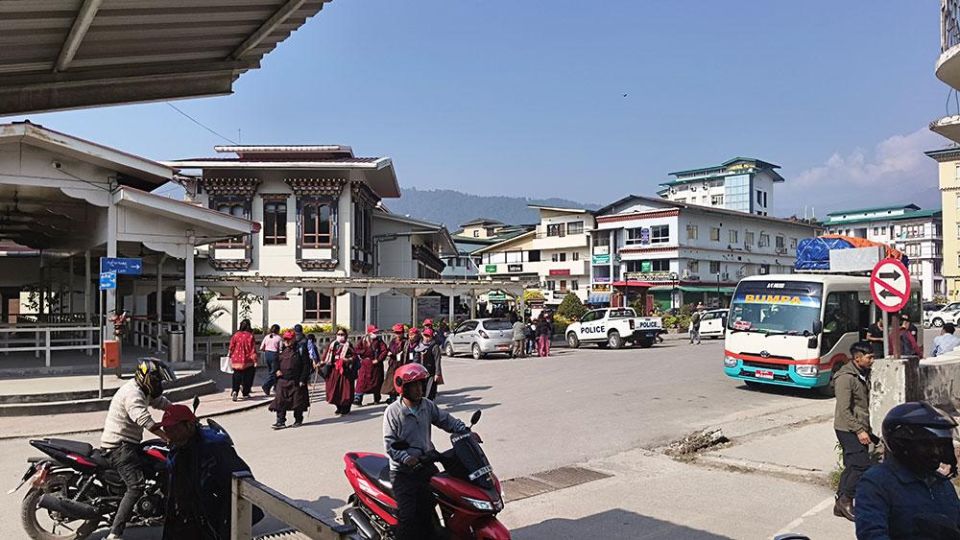
The impact is most visible in border towns such as Phuentsholing, where many tourists enter Bhutan through Indian operators. Bhutanese travel agents say these firms offer cheaper packages that local businesses struggle to match.
Among road entry points, Phuentsholing receives the highest number of tourists each month. For instance, in November last year , about 7,755 tourists entered Bhutan via Phuentsholing.
Foreign operators are able to undercut prices by sourcing lower-cost accommodation and meals, paying guides and drivers below local benchmarks, and using vehicles arranged through informal networks.
A tourist guide based in Phuentsholing, speaking on condition of anonymity, said sustaining a livelihood has become increasingly difficult.
Guides hired through Jaigaon-based operators are often paid below the minimum daily subsistence allowance (DSA).
While Bhutanese guides can charge a minimum DSA of Nu 3,000, those working with foreign operators typically earn between Nu 1,800 and Nu 2,000.
Some freelance guides, sources said, work with foreign agents and then hand over responsibilities to unlicensed individuals once tours reach Thimphu. Low wages have also encouraged guides to supplement their income through various facilities offered to tourists.
Another cultural guide said domestic travel agencies have been forced to cut staff to stay afloat amid rising competition. Employment generation has suffered, with many firms now relying on family members as guides to reduce costs. Those without such connections often turn to foreign operators despite lower pay.
Several Bhutanese tour operators have closed their Phuentsholing offices, citing the difficulty of sustaining fixed costs as freelance arrangements proliferate.
In one case, a Bhutanese travel agent offered a six-day package including one meal for Nu 241,000, while the same group was offered a package for Nu 2,75,000 by a foreign operator with two meals.
Guides have also raised concerns about service quality, stating that some tourists are transported in poorly maintained taxis. Over time, they warn, such practices could damage visitors’ perceptions of Bhutan.
Foreign travel agents, meanwhile, often work exclusively with select hotels in Thimphu and Paro, hiring only local guides. This further narrows income streams for Bhutanese tour operators.
Industry observers say the current system has created an uneven playing field, where part of the tourism revenue bypasses local operators, employment opportunities are reduced, and travel agencies struggle to sustain operations.
That is the reason why the EFC recommended to repeal the Tourism Levy Act 2022 and introduce a consolidated, holistic tourism Act with clear roles, pricing instruments, licensing processes, and accountability mechanisms.