

January 15, 2026
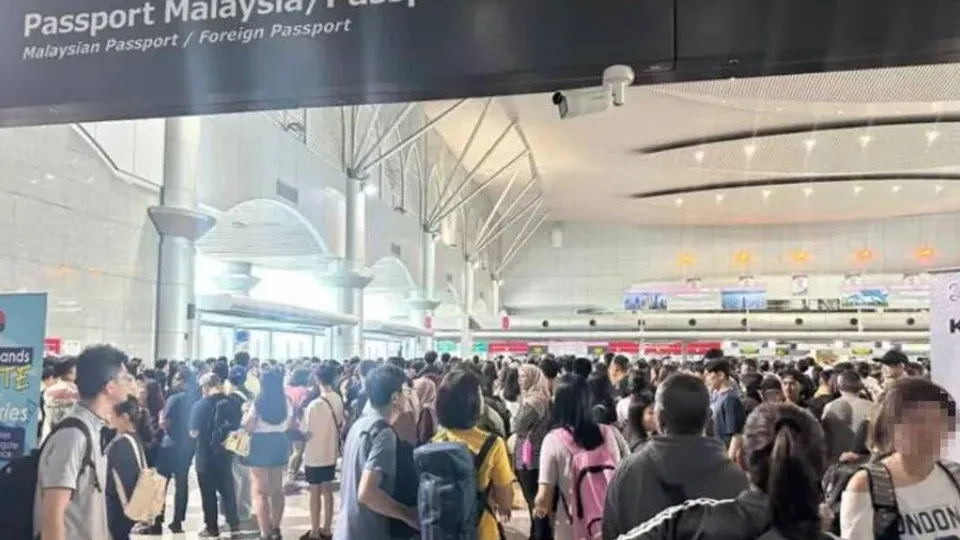
JOHOR BAHRU – The Malaysian authorities have vowed that there will be no repeat of the system failure that left thousands of travellers stranded for hours at both Johor land checkpoints with Singapore over the weekend, as the Visit Malaysia 2026 tourism campaign kicks off.
The “severe disruption” at the Causeway and Second Link between Jan 10 and 12 exposed coordination gaps and raised questions about Malaysia’s ability to upgrade its 30-year-old immigration system without further chaos.
Malaysia Border Control and Protection Agency (AKPS) director-general Mohd Shuhaily Mohd Zain said on Jan 12 that Prime Minister Anwar Ibrahim instructed the agency to ensure the autogate glitch “must not happen again, especially during this Visit Malaysia year”.
“I personally have given instructions to all commanders… Should they see signs that the system is not working well, please let headquarters know in advance so troubleshooting measures can be executed earlier,” he told reporters at an event in Putrajaya.
Visit Malaysia years are nationwide campaigns by Tourism Malaysia to attract tourists and spur the country’s tourism economy. The last campaign was in 2020, and in 2014 and 2007 before that.
Malaysia’s autogates under the unmanned automated immigration entry and exit system require only a passport scan for clearance.
The glitch affected only foreign passport holders at the Bangunan Sultan Iskandar Customs, Immigration and Quarantine Complex (BSI) in Johor Bahru and the Sultan Abu Bakar Complex (KSAB) at the Second Link, and led to snaking queues in the departure and arrival halls.
The checkpoints have 39 autogates for entry and 29 for exit at BSI, while KSAB has 12 autogates. They serve more than 300,000 travellers daily.
Singaporean Nicholas Tan told The Straits Times he entered Johor Bahru for a short weekend break with ease on Jan 9, but it was a different story on his return leg.
“I had to scan twice,” said Mr Tan, who arrived at BSI at around 2.20pm. His second attempt, after a 10-minute wait, was successful, and he was out of the complex within 20 minutes.
“Everyone was complaining” that they could not scan their passports at the autogate. “But I think I was quite lucky, I was at the front of the crowd,” he added.
Johor exco Fazli Salleh announced that the technical glitch was resolved only on Jan 12. The Malaysian authorities have yet to issue a reason behind the disruption.
Analysts warned that glitches may persist as Malaysia undergoes both administrative and technological overhauls at its borders. Problems may be compounded by coordination gaps between the new border agency AKPS and immigration authorities, who still control key system assets.
“The challenge here is how we see this process through with minimal disruption to the end-user (travellers),” said Mr Harris Zainul, director of research at think-tank Institute of Strategic and International Studies (ISIS) Malaysia.
“Compounding the challenge are two things: first, it is a Visit Malaysia year, which raises the stakes; and second, this autogate system is as ‘front and centre’ as it gets with digital public infrastructure, where any downtime would be immediately noticeable.”
Datuk Seri Shuhaily said on Jan 12 that the “ageing” immigration system is being replaced with the new National Integrated Immigration System (NIISe), which will be “the backbone” of Malaysia’s immigration system in the future.
The legacy immigration system being used by immigration authorities is 30 years old. While its data is being transferred to the new one, glitches can be expected “here and there”, Mr Shuhaily said.
Agreeing, ISIS Malaysia’s director for cyber and technology policy Farlina Said noted: “The challenge of systems required to produce continuous service is that upgrading technologies without creating further inconveniences would be a problem.”
The NIISe project was launched in 2021 by then Prime Minister Muhyiddin Yassin to replace the Malaysian Immigration System, which was deemed vulnerable and prone to hacking.
The project, initially developed by Iris Corporation, was terminated in 2023 due to delays. Tech company HeiTech Padu took over the project in October 2024, and has been tasked with completing the system within five years.
Among the enhancements under the new NIISe system is the use of artificial intelligence and facial recognition technology to enhance border security and allow faster immigration clearance.
During the Jan 10 to 12 disruption, AKPS encouraged travellers to use the new NIISe app MyNIISe to hasten immigration clearance, to speed up clearance at the manual counters.
MyNIISe allows foreign passport holders from 63 countries, including Singapore, to clear immigration via QR codes as part of a trial from Sept 22, 2025, to Feb 28, 2026.
From a bureaucratic perspective, such technical glitches may reflect the change Malaysia’s border administration is going through, with AKPS being a newly set up agency and still in the process of fully taking over immigration assets.
AKPS, which began operations in January 2025, is expected to assume full control of all 125 international entry points into Malaysia, including airports and seaports, by 2026.
Its duties are to act as a coordinator to six core agencies managing Malaysia’s border control and enforcement operations: the Immigration Department, the Customs Department, the Malaysian Quarantine and Inspection Services Department, the Health Ministry, the Wildlife and National Parks Department, and the Road Transport Department.
Cybersecurity expert Mohamed Ridza Wahiddin from the International Islamic University Malaysia said that without full takeover of BSI assets by AKPS, this creates coordination delays, fragmented accountability and slower responses. Such issues were seen in the multi-day outage when there were delays in deploying officers to assist stranded travellers and encourage them to use MyNIISe.
“From a tech security view, split ownership risks inconsistent patching, vulnerability exposure in data migration, and potential exploits if access controls or encryption standards differ across agencies,” he said.
Immigration system outages in Malaysia are not new. In July, a glitch affecting all 200 autogate systems in Malaysia resulted in long queues in Johor’s checkpoints and Kuala Lumpur’s two international airports affecting solely foreign passport holders.
Johor’s Menteri Besar Onn Hafiz Ghazi had described the incident as an “embarrassment to the country”.
In December 2024, local media reported a technical malfunction impacting BSI’s QR code scanning systems and autogates, resulting in a six-hour delay for travellers.
Additional reporting by Muzliza Mustafa
Sign up for our weekly Asian Insider Malaysia Edition newsletter to make sense of the big stories in Malaysia.