

January 15, 2026
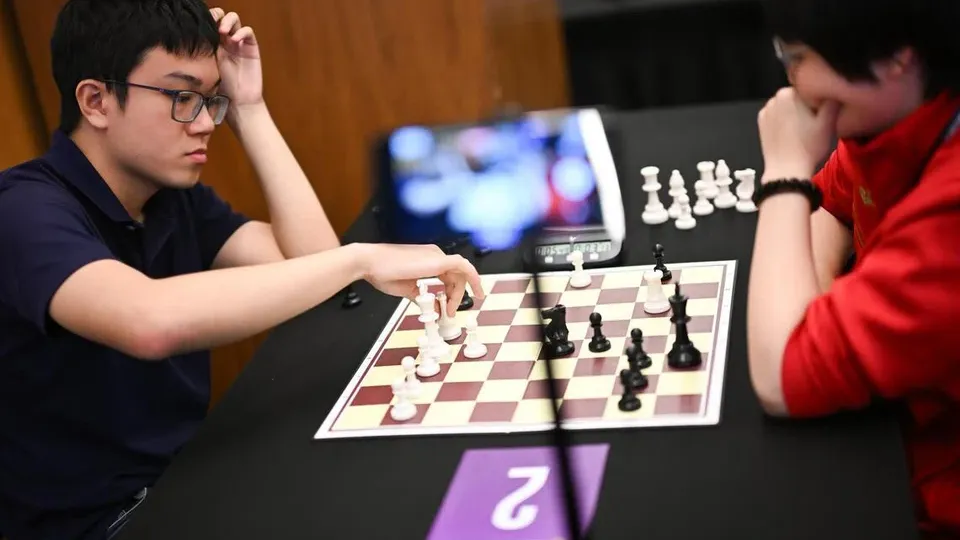
SINGAPORE – Mind sports such as chess and bridge, along with e-sports, will be formally recognised as sports after a Bill was passed in Parliament on Jan 14.
The Singapore Sports Council (Amendment) Bill was first introduced in Parliament on Nov 4 for its first reading by Acting Minister for Culture, Community and Youth David Neo, and it aims to update the roles and functions of Sport Singapore (SportSG) to better support Singaporeans’ diverse sporting aspirations.
Mr Neo noted that it “is an important enabler in driving Singapore’s sporting culture, and for our national sport ecosystem to be inclusive, dynamic and future-ready”.
He added: “It reaffirms that sport is for everyone, regardless of age or ability, and our effort for every Singaporean to live better through sport. It states in one voice our support for Team Singapore athletes, and our effort to nurture every athlete to realise their full potential.
“We will continue to work closely with partners in the sport ecosystem and industry to ensure smooth implementation of this Bill.”
SportSG will also calibrate its support for these sports based on their “specific needs, governance standards and contributions to national sporting objectives”, said Mr Neo.
Beyond updating the definition of “sports” to include mind sports and e-sports, the updated Bill will also empower and enhance SportSG’s role to provide holistic education and career support to athletes.
It will also strengthen disability sports and inclusivity by recognising the Singapore National Paralympic Council as SportSG’s key partner in the same way as the Singapore National Olympic Council.
The Bill also introduces technical amendments, such as increasing the maximum size of SportSG’s board from 15 to 25 members.
Chess is already recognised as a sport by the International Olympic Committee, while e-sports got the nod as a “sports activity” in 2017.
While neither is part of the Olympic programme, chess, bridge and e-sports have all featured in other multi-sport events.
Chess was first introduced to the SEA Games as a medal sport in 2003, before making its Asian Games debut three years later, while contract bridge appeared only once in the SEA Games in 2011 and was part of the Asian Games programme in 2018 and 2023.
E-sports became a medal event at the 2019 SEA Games and has been contested in every edition after. In 2023, it made its bow at the Hangzhou Asiad.
Chess and e-sports also command massive audiences worldwide.
More than 600 million people play chess, and the game boasts an enthusiastic fan base.
The 2021 FIDE World Chess Championship drew a record peak viewership of 613,000 concurrent viewers online.
E-sports’ reach and revenues are also soaring. According to market research firm Statista, global e-sports revenue was projected to hit US$1.86 billion (S$2.4 billion) by 2025, nearly doubling the US$996 million revenue generated in 2020.
On Nov 8, the Honor of Kings 2025 King Pro League Grand Finals was attended by more than 62,000 fans in Beijing’s Bird’s Nest stadium, breaking the Guinness World Record for the largest attendance at an e-sports match.
During the debate, MPs raised questions ranging from potential gaming addiction to funding for the newly recognised sports.
In response, Mr Neo said in his closing speech that there is an opportunity to engage youth through e-sports, given its popularity, and to do so by addressing “all possible risks” and potential issues regarding gaming addiction.
He added: “We’ll work with industry and community partners such as the Singapore Cybersports and Online Gaming Association and the Singapore Esports Association, as well as government agencies like MOE (Ministry of Education) and MOH (Ministry of Health).”
Mr Neo also said an expanded definition of sport “does not mean that we will support all sports equally, given the need for us to use public funds wisely”.
“The development of new sports, including e-sports, should complement rather than crowd out existing sporting pathways, especially those that promote physical activity and broad-based participation,” he added.
Those from the fraternity that The Straits Times spoke to are glad that their disciplines are now recognised as sports.
Singapore Esports Association president Ng Chong Geng believes the passing of the Bill marks “a historic turning point” for its athletes, adding that it is a “formal recognition that the skill, dedication and competitive spirit found in e-sports are comparable to those of contemporary sports”.
“We will continue to strive to grow the Singapore e-sports ecosystem to promote sustainable growth of athletes and support the present and future stars of Singapore alongside SportSG and MCCY,” he added.
Singapore’s top-ranked chess player Tin Jingyao said: “More recognition and awareness mean a stronger local chess scene and the development of more young talents, which will help grow the Singapore team.”
Mr Daniel Chan, co-owner of an academy that teaches Chinese board game weiqi, hopes to see mind sports included in the National School Games and its athletes becoming part of SportSG’s spexPotential and spexScholarship schemes, besides stronger training programmes and coaching support.
Mr Chan, also a national para-shooter, added: “With the right system in place, I truly believe Singapore has the potential to groom top-level mind sports athletes.”
Additional reporting by Melvyn Teoh