

January 19, 2026
ISLAMABAD – Concerned citizens and experts speaking at a webinar raised apprehensions over the growing environmental crisis in Islamabad, caused by rapid, unplanned and largely irreversible urban development by the Capital Development Authority (CDA) and various housing societies, often in violation of zoning rules and regulations.
Speakers stressed that the city’s green spaces were steadily being replaced by concrete due to weak governance, elite capture and a persistent conflict between populist decision-making and professional, science-based planning.
A key outcome of the discussion was a strong call for a new, collaborative approach to sustainable urban development through the establishment of a dedicated Islamabad-focused think tank. Participants emphasised the need to bring together independent professionals, policymakers, civil society and creative communities, including architects, designers and artists, to develop long-term, people-centred solutions.
The webinar underscored that environmental degradation was not only an ecological issue but also a major public health concern, making citizen engagement and collective responsibility essential.
The webinar was organised by the Development Communications Network (Devcom-Pakistan) on the theme “Islamabad’s Green Future – Coping with Irrational Development”. It brought together environmental experts, policymakers, civil society members and concerned citizens to deliberate on the growing environmental challenges facing the federal capital.
Environmental expert Dr Tariq Banuri highlighted that environmental protection efforts were being undermined by institutional weaknesses and the marginalisation, and at times harassment, of environmental professionals and activists working to safeguard protected hills, forests and wildlife habitats.
Participants agreed that without transparent, democratic and inclusive governance, Islamabad’s ecological balance would continue to deteriorate.
Dr Banuri focused on the environmental consequences of rapid and often unplanned urban development and underscored the urgent need for sustainable governance models that balance economic growth with environmental conservation.
He said Islamabad’s environmental degradation was a symptom of deeper governance challenges, pointing to elite capture, weak institutional frameworks and the ongoing tension between populism and professionalism as key factors driving the replacement of green spaces with unchecked concrete development.
Dr Zafar Mirza strongly condemned the ongoing tree-cutting in Islamabad, terming it a brutal act against nature and a direct assault on public health and environmental sustainability. Emphasising the power of citizen-led action, he suggested forming active citizens’ forums modelled on initiatives such as “Lahore Bachaao”, which have played a critical watchdog and advocacy role in urban conservation.
He said similar collective platforms in Islamabad could significantly contribute to protecting green spaces and the Margalla Hills National Park by raising public awareness, monitoring violations and holding authorities accountable for safeguarding the city’s natural heritage.
Former senator Mian Attiq stressed the urgent need to establish an independent, multidisciplinary think tank to guide the CDA on sustainable planning and environmental governance in Islamabad.
He said evidence-based advice from professionals and experts was essential to correct the city’s current development trajectory.
Former Pak-EPA director general Ziaul Islam criticised the ineffective bureaucratic approaches dominating environmental governance in Islamabad, noting that such top-down systems often ignored ground realities and community knowledge.
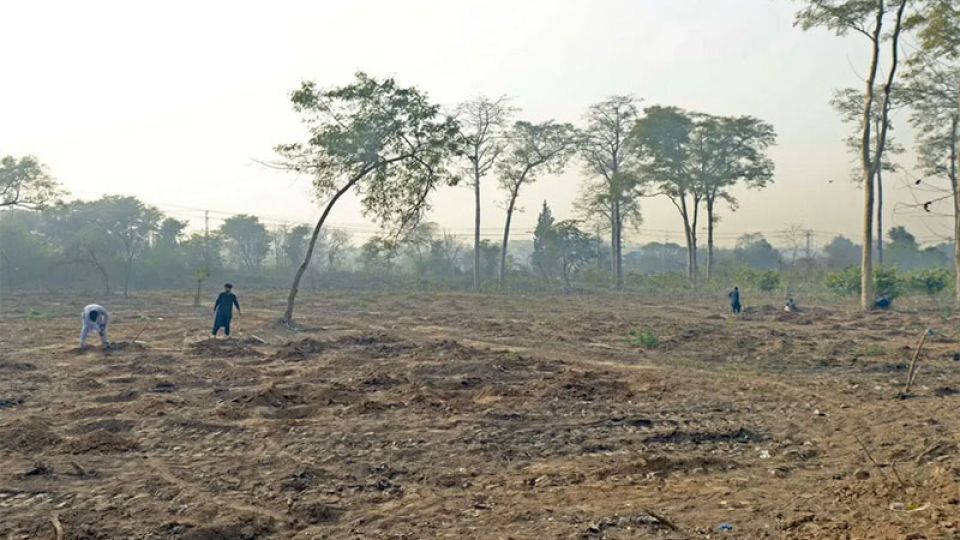
Devcom Director Munir Ahmed said Islamabad was witnessing an alarming wave of tree-cutting that threatened the very identity of the capital as a green and liveable city. “The unchecked felling of trees in the name of development reflects a serious failure of planning and governance,” he said.
He emphasised that the Islamabad High Court and relevant parliamentary committees should play a proactive, pro-citizens role, calling for accountable governance, restoration of institutional mandates and meaningful participation of independent environmental professionals and citizens in decision-making.
Internationally known ecosystems expert Ashiq Ahmed Khan said sustainable development was fundamentally a governance challenge as much as an environmental one.
He said true sustainability could not be achieved without inclusive and democratic decision-making processes that gave space to collective voices, particularly those of independent experts, local communities and civil society.
Others who spoke on the occasion included Rabia Raheel, Ivan Carmody, Abdul Shakoor Sindhu, Almas Shakoor and Silvia Shamoon.