

January 19, 2026
VIENTIANE – Laos, Thailand and Malaysia have taken a significant step towards deeper regional energy integration with the signing of an electricity transmission agreement under the Laos-Thailand-Malaysia-Singapore Power Integration Project, reaffirming ASEAN’s shared commitment to a more interconnected and resilient regional power system.
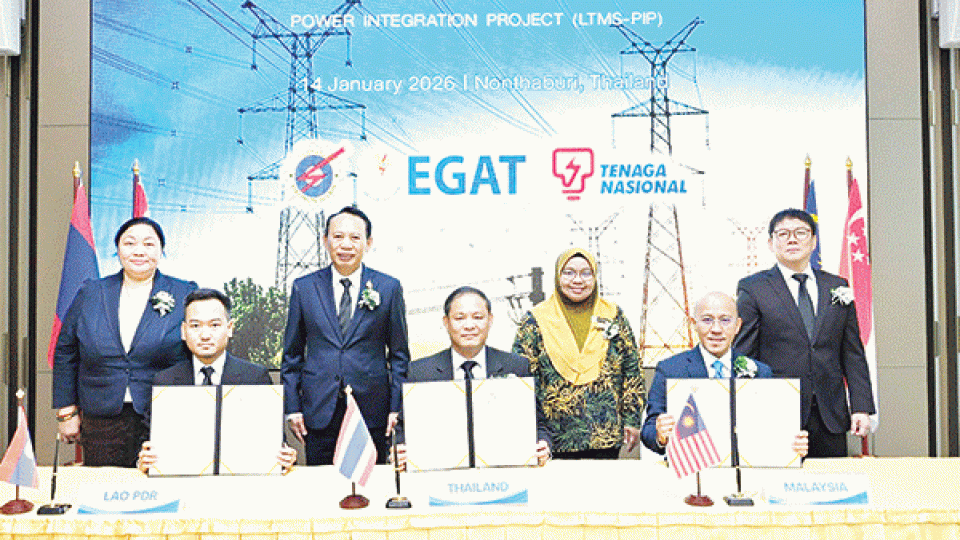
The agreement signing ceremony, held on January 14 at the headquarters of the Electricity Generating Authority of Thailand (EGAT) in Bangkok, brought together senior executives and government officials from the three countries.
The agreement enables the cross-border transmission of 100MW of electricity from Laos to Singapore, using the existing transmission networks of Thailand and Malaysia, and will be implemented over a two-year contract period.
The second phase of the Laos-Thailand-Malaysia-Singapore Power Integration Project represents a concrete advancement of the ASEAN Power Grid vision, which seeks to promote energy security, optimise regional resources and support sustainable economic growth through enhanced electricity interconnection and trade among ASEAN member states.
The agreement was signed by the Deputy Managing Director of Electricite du Laos (EDL), Mr Souksavath Sosouphanh; the Governor of EGAT, Dr Nerin Phauwanit; and the Chief Grid Officer of Malaysia’s Tenaga Nasional Berhad (TNB), Mr Hasmarizal Hassan.
The signing was witnessed by high-level representatives from the energy ministries of the three countries, including the Permanent Secretary of Thailand’s Ministry of Energy, Dr Prasert Sinsukprasert; Director General of the Policy, Planning and Evaluation Department of the Lao Ministry of Industry and Commerce, Ms Santisouk Phimphachanh; and the Deputy Secretary General (Energy) of Malaysia’s Ministry of Energy Transition and Water Transformation, Ms Mareena binti Mahpudz.
Officials said the project is not only an electricity trading arrangement but also a strategic initiative that strengthens regional energy connectivity, improves power system reliability, and demonstrates ASEAN’s collective capacity to implement complex multilateral infrastructure projects.
By making use of existing transmission infrastructure, the project is expected to enhance efficiency while reducing investment costs and environmental impacts.
The successful implementation of the project is widely viewed as a milestone for ASEAN energy cooperation and a practical model for future cross-border power trading arrangements, contributing to long-term regional stability, energy sustainability and economic integration.
In recent years, Laos has expanded regional energy cooperation, reinforcing its role as a major electricity exporter in the Greater Mekong Subregion and ASEAN.
Laos has long supplied hydropower to Thailand and Vietnam and has also developed cooperation frameworks with Cambodia to expand cross-border electricity trade.
In addition, Laos and Myanmar have strengthened power cooperation through memorandums of understanding and feasibility studies for future transmission projects.
Together with energy links with China, these partnerships underscore Laos’ efforts to promote regional integration and lay the groundwork for multilateral initiatives such as the Laos-Thailand-Malaysia-Singapore Power Integration Project with Singapore.