


January 23, 2026
SEOUL – From understated wool dresses to all-black luxury tailoring, South Korea’s chaebol are increasingly shaping consumer taste, often triggering sold-out items and online buzz without overt promotion.
Hotel Shilla President Lee Boo-jin has recently drawn attention for her restrained, logo-free style, often described as “old money.” On Jan. 9, at a scholarship certificate ceremony for the Dooeul Scholarship Foundation, where she serves as chair, Lee wore a gray high-neck wool dress by Korean womenswear brand Dint, priced at 177,000 won ($120). According to local sources, she selected the piece herself at the brand’s offline store in Cheongdam, Seoul. The choice echoed her appearance at the same event in 2024, when she wore a gray two-piece set from the same brand, priced at 124,000 won
Lee’s preference for understated, practical pieces stands out, given her annual salary of about 1.7 billion won at Hotel Shilla. Industry watchers note that her looks, including last year’s Dint belt-set suit and this year’s high-neck dress, have helped boost attention to domestic labels.
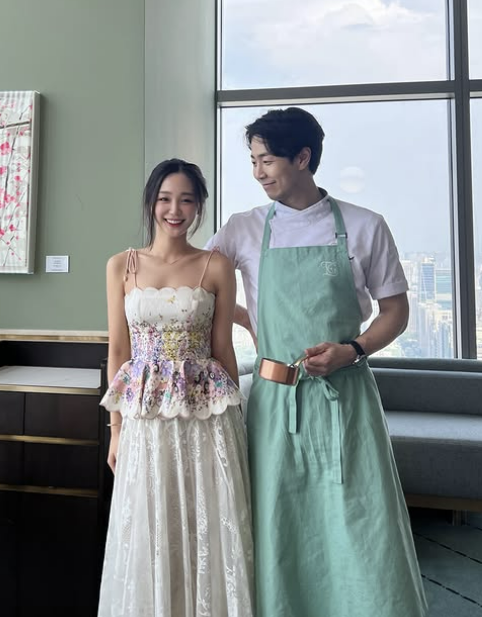
DL Holdings fourth-generation heir Lee Ju-young (left) with Chef Son Jong-won. PHOTO: INSTAGRAM/THE KOREA HERALD
Her quiet luxury aesthetic was also on display Dec. 17, when she visited Myeongdong with Second Vice Culture Minister Kim Dae-hyun to inspect preparations for the 2026 Korea Grand Sale. Lee wore a long light-gray coat from British luxury house Erdem, featuring a detachable black floral brooch, paired with a black top and patterned skirt. The coat retails at about 3.97 million won, and is currently sold out on Shinsegae International’s platform. She carried a Moynat Gabriel clutch, priced in the 6.9-million-won range, a design known for its discreet branding and often cited as a representative item of the quiet luxury trend.
A similar reaction followed the appearance of Lim Se-ryung, vice chair of Daesang Holdings, at the 139th Republic of Korea Naval Academy commissioning ceremony for her son. Her all-black outfit, featuring a long coat from Celine’s 2026 spring-summer collection under creative director Michael Rider, Saint Laurent sunglasses and a The Row Agnes tote, spread quickly on social media.
The sunglasses, priced in the 400,000-won range, and the bag, which retails domestically for 6.4 million to 7.4 million won, were reported to be difficult to find, with overseas resale prices climbing higher. Online comments focused on the clean proportions and subdued detailing rather than visible logos.
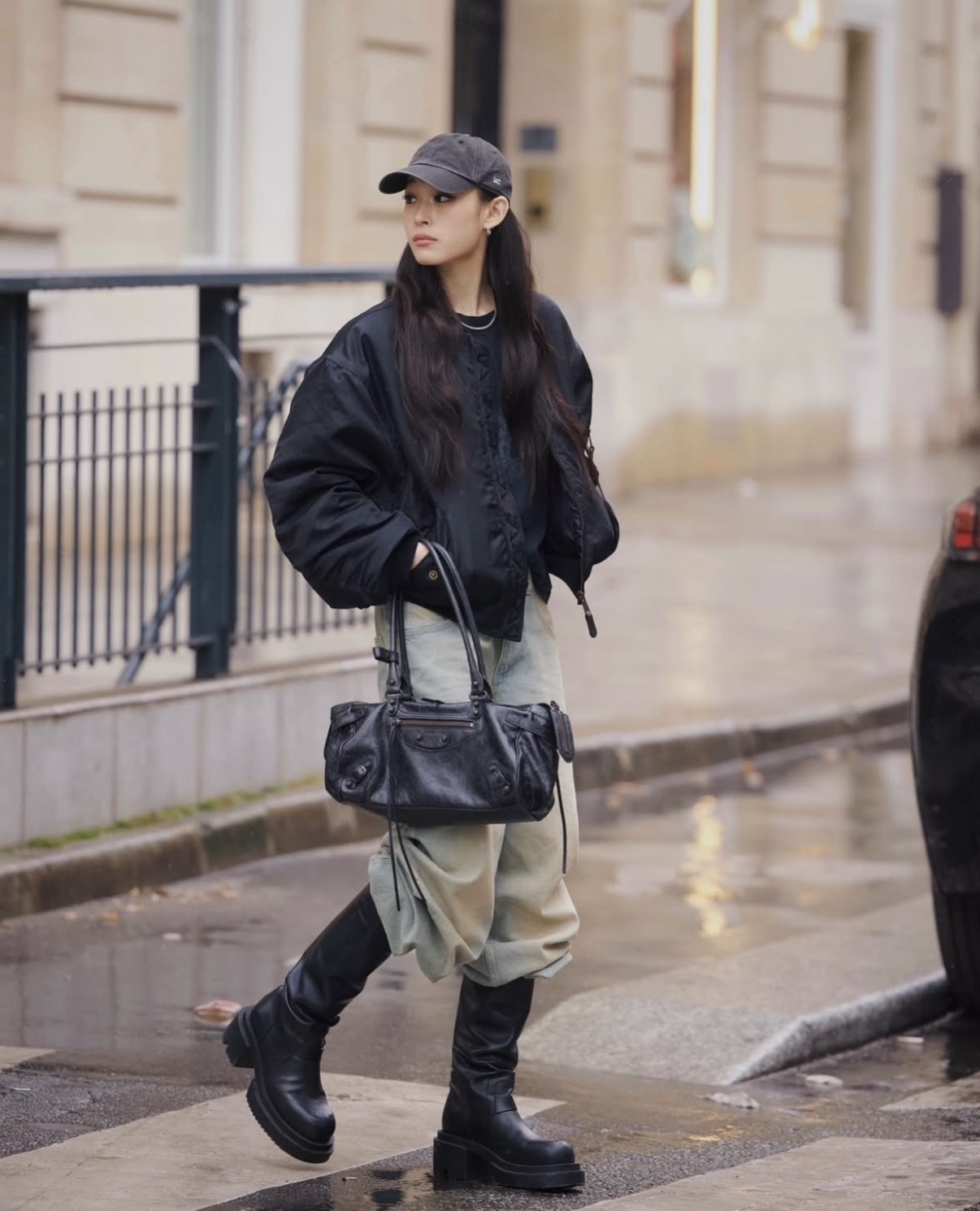
Annie of K-pop group Allday Project is spotted in Paris wearing a Balenciaga leather jacket and carrying a matching bag. PHOTO: INSTAGRAM/THE KOREA HERALD
Younger members of chaebol families are also drawing attention in fashion circles. DL Holdings fourth-generation heir Lee Ju-young has built a following of nearly 150,000 on Instagram, leveraging her background as a former Vogue Korea intern and collaborations with brands such as Chanel, Dior and Louis Vuitton. Active as a fashion and lifestyle influencer, she is also known for her connections with celebrities and fellow chaebol.
Another prominent example is Moon Seo-yoon, known as Annie of the coed K-pop group Allday Project, the eldest daughter of Shinsegae Group President Chung Yoo-kyung. Her daily looks, often featuring black leather pieces and Balenciaga accessories, have been widely circulated online, including appearances in Paris last year wearing the brand’s revived Le City East-West bag.
The purchasing power of such appearances reflects a broader trend in Korea’s consumer culture. The phenomenon known as “ditto consumption” — buying items favored by well-known figures — has intensified amid economic uncertainty, with both affordable and luxury products gaining attention once worn by public figures.
“Under circumstances where consumers inevitably seek value for money, seeing a product worn by a well-known person naturally amplifies purchasing desire,” said Lee Young-ae, a professor of consumer science at Incheon National University. “It creates a halo effect that makes the item appear more valuable. As the economic slowdown continues, this kind of imitative consumption is likely to persist.”