

January 28, 2026
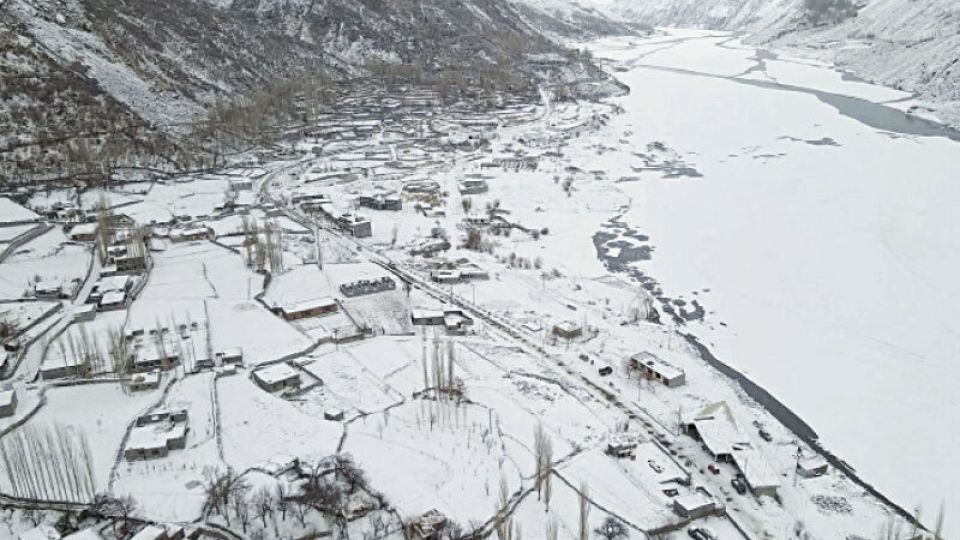
GILGIT/RAWALPINDI – A fresh spell of snowfall brought life to a standstill across parts of Gilgit-Baltistan amid freezing temperatures, power outages and road closures.
Snowfall continued on Monday and Tuesday, blocking the Karakoram Highway (KKH), the Ghizer-Shandur Road, Baltistan Road and several link roads.
Temperatures in upper areas dropped below minus 15 degrees Celsius. Police said that up to six inches of snow was recorded in parts of Skardu, Astore, Ghanche, Shigar, Kharmang, Hunza, Nagar and Ghizer, disrupting routine life and making travel hazardous.
Residents said the latest snowfall compounded existing hardships. Shafqat Ali, a resident of Astore, told Dawn that road links in upper parts of the district had been cut off. He said roads to Shounter, Dasskharam, Tirshing, Rattu, Gultari, Minimarg, Bobin and other areas were blocked.
In Hunza, Nagar, Shigar and Ghanche, heavy snowfall left roads slippery and risky, cutting off several localities. The situation was particularly difficult for earthquake-affected residents in Chipurson and flood-affected communities in Ghizer, many of whom are living in tents or temporary shelters.
Ali Ahmed, a resident of Chipurson, said more than 200 affected families had been struggling since the recent earthquake and the snowfall had worsened their conditions. Road closures also hampered relief activities.
In Diamer, snowfall since Monday night paralysed life in upper areas, including Tangir, Daril, Thak Babusar and Goharabad. Police said several communication links were blocked, raising fears of food shortages, while residents also faced electricity outages.
Travel between Gilgit-Baltistan and other parts of the country remained suspended on parts of the KKH on Tuesday as snow and rain made sections of the road slippery. In a public advisory, authorities warned of rockfall risks in the KKH’s Gilgit-Kohistan section and urged travellers to avoid unnecessary travel.
Officials in Ghizer said land connectivity to several areas was cut off. Roads in upper parts of Yasin, Phander and Ishkoman were closed, while residents continued to suffer due to prolonged power outages and road blockages.
In a statement issued on Tuesday, caretaker Chief Minister Justice (retd) Yar Muhammad directed the Gilgit-Baltistan Disaster Management Authority, district administrations and the Communications and Works Department to clear snow from highways and take timely measures to prevent damage during the ongoing snowfall and rains.
He also urged residents of remote areas to avoid unnecessary travel due to accident risks and directed relevant departments to utilise all available resources to ease public hardship.
Snow blankets Murree
Snow also blanketed Murree and adjoining hills, with the district administration reopening the GT Road to traffic after temporary restrictions.
A Met official said nine inches of snow was recorded at the Murree observatory, with one to two inches in upper hills, while the temperature dropped to minus 3 degrees.
The official said the weather was expected to clear by Wednesday morning, but temperatures could fall further in Murree and the twin cities in the coming days. A westerly wave was affecting upper parts of the country and was likely to persist in northern areas until Wednesday, she added.
“The snowfall stopped in the afternoon and district administration opened the traffic for all kind of traffic.
Deputy Commissioner Agha Zaheer Shirazi told Dawn that traffic restrictions were lifted in the afternoon after snowfall subsided. He said vehicular movement on the GT Road had earlier been restricted to locals and visitors with advance hotel bookings, while Murree Expressway remained open.
He said main roads had been cleared, though some link roads were still snow-covered and work was under way to clear them. The deputy commissioner said officials had been deployed on roads, hospitals were functioning normally with sufficient medicine stocks, and there was no electricity breakdown in the hill station.
Divisional Commissioner Amir Khattak also visited Murree to review arrangements, saying that major connecting roads were open and unnecessary closures would not be allowed.
He directed that machinery be kept fully operational during snowfall and roads cleared at the earliest. Tourists were advised to follow official instructions, avoid unnecessary travel and contact facilitation centres and helplines in case of emergencies.
Heavy snowfall in Quetta
The Quetta valley and surrounding areas received heavy snowfall on Tuesday, while Ziarat and several towns across northern and central Balochistan were also blanketed in white, disrupting routine life and affecting traffic on key highways and inter-provincial routes.
The snowfall began around midnight in Quetta and continued until noon with brief breaks. Residents welcomed the spell, saying it had broken a prolonged dry period in the provincial capital and adjoining areas.
Officials said Hanna Urak valley, about 20 kilometres from Quetta, also received snowfall, drawing large numbers of families from the city.
District administration officials said Ziarat received heavy snowfall overnight, which continued into Tuesday noon and led to the closure of the Quetta-Ziarat Road, suspending traffic.
Snowfall was also reported in Zhob, Muslim Bagh, Qila Abdullah, Chaman and the Khojak Pass, Kan Mehtarzai, Khanozai, Toba Kakari, Toba Achakzai, Qila Saifullah, Harnai, Duki, Sanjavi, Mastung, Kalat, Surab, Noshki, Dalbandin and Taftan, among other areas.
Reports said the Quetta-Zhob-Dera Ismail Khan highway was affected, with snow and ice hampering movement between Balochistan and other provinces.