

February 3, 2026
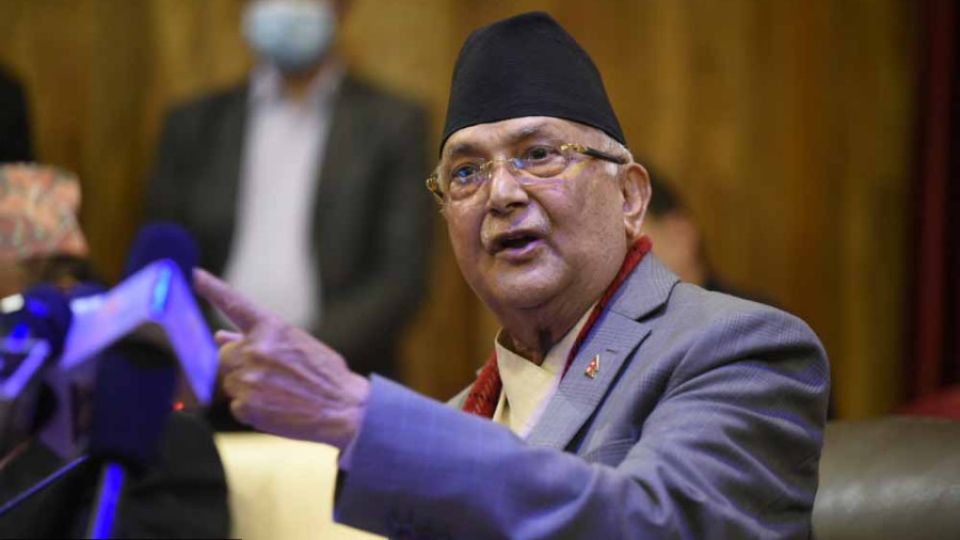
KATHMANDU – CPN-UML chair and former prime minister KP Sharma Oli appears to have softened his stance on the September 8-9 Gen Z uprising that toppled the UML-Congress coalition he led.
During and immediately after the protests, Oli had taken a hard line, repeatedly alleging external interference in the youth-led movement and sharply criticising protesters as arsonists. The demonstrations, driven largely by Gen Z activists, accused mainstream political parties and their leaders of corruption, poor governance, and poor service delivery.
What began as a peaceful anti-corruption movement turned deadly on the first day, September 8, when police gunned down 17 unarmed youths in front of the parliament complex at New Baneshwar. In reaction, the protests escalated on the second day, spread nationwide, and became violent and destructive. The death toll rose to 77 as several injured protesters died later.
At the time, Gen Z representatives and members of civil society openly accused then Prime Minister Oli of using excessive force to suppress the movement—allegations that Oli consistently rejected.
Following the fall of this government, Oli saw an interim government take charge, dissolve parliament, and call snap elections for March 5. He is now back in the electoral fray from Jhapa-5, with a noticeably softer tone on the Gen Z uprising.
In a video interview with journalist Ghanshyam Khadka, Oli also appeared to make an effort to reach out to angry young people by sending the message that they should be viewed as “heroes”.
He said Gen Z should be champions of creativity, innovation, research, construction, and start-ups and act as guides for society.
“They should not become a generation that loots or sets the country on fire, but one that earns with dignity and contributes to national development,” Oli said in the interview.
Oli further divides Gen Z into two groups. In the interview, he described one section as “irresponsible” while claiming that the other is thoughtful and capable of understanding the country’s situation and distinguishing right from wrong. In doing so, the four-time prime minister looks to address the sentiment of the movement that he earlier dismissed.
The former prime minister’s recalibrated approach became evident after his return to Kathmandu from Jhapa. On January 28, Oli issued a statement on social media denying any role in ordering security forces to open fire during the protests.
“I am deeply distressed by the deaths of 19 children,” Oli wrote on Facebook. “I am ready to sit on any platform and respond openly.”
Oli is widely expected to face a tough challenge from Balendra Shah, popularly known as Balen, who stepped down as Kathmandu mayor to take on the former prime minister and has emerged as a prominent figure following the September uprising.
Shah travelled to Jhapa on January 19 to submit his candidacy ahead of the Election Commission’s January 20 deadline and received a warm public reception. At the time Oli was also present in the district to file his nomination.
While Shah is increasingly portrayed by supporters as a symbol of progressive change born out of the Gen Z movement, Oli is often characterised by critics as representing the old political order the protests sought to change.
Referring to the aftermath of the violence, Oli stated that a probe commission led by a former justice has been investigating the killings and related issues. Expressing condolences, he added that he continued to feel deep sorrow for the 19 people who lost their lives on September 8.
Min Bahadur Shahi, head of the publicity and publication department of the UML, says that “despite the softness in the party chief’s tone,” the party remains firm on its policy regarding the September 8 and 9 incidents.
“Our party upholds the right of the youths to protest,” Shahi told the Post. “But our party is also firm that the incident of September 9, where public and private properties were set on fire, also should be investigated.”
After the death of 19 people on the first day of Gen Z protest, billions worth of government, public and private properties across the country were destroyed on September 9, the second day. A government-appointed committee assessing the damage from the Gen Z protest estimated losses of around Rs 39.31 billion.
Left-leaning political analyst Jhalak Subedi believes Oli is under pressure after returning to Kathmandu from his constituency. However, Subedi says that despite some softening, Oli remains rigid on the Gen Z protest and claiming that he has changed his view would be a miscalculation.
“Although Oli seems to have softened his tone on the Gen Z uprising on September 8-9 a bit, he is still reluctant to accept any fault on his part,” Subedi said. “One should also study his comments on the September 9 incident.”
On Saturday, addressing a gathering of party workers organised by the Okhaldhunga-Kathmandu Liaison Forum in Chabahil, Kathmandu, Oli said, “You will make the country victorious. Not even one of the 165 seats should be allowed to go against the nation.”
He described the upcoming election as a contest between those who want to “burn the country” and those who want to “build it”.
In a veiled reference to his rival, Balen Shah, in Jhapa-5, Oli said