

April 16, 2026
JAKARTA – Around 250 Rohingya refugees are missing after a boat carrying them capsized in the Andaman Sea, United Nations agencies said.
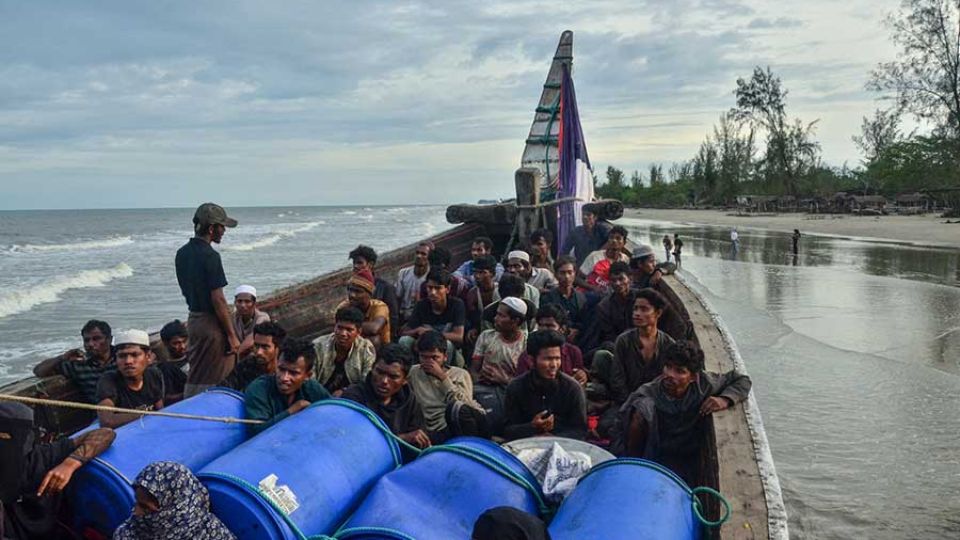
The trawler, carrying men, women and children, is believed to have sunk in severe weather after leaving Teknaf in southern Bangladesh for Malaysia, amid rough seas and strong winds.
“This tragedy highlights the devastating human cost of protracted displacement and the continued absence of durable solutions for the Rohingya,” the United Nations High Commissioner for Refugees (UNHCR) and the International Organization for Migration said in a joint statement cited by Reuters.
For years, Rohingya Muslims from Myanmar have risked dangerous sea crossings on fragile wooden boats to reach neighboring countries including Malaysia, Indonesia and Thailand, fleeing persecution in Myanmar and harsh conditions in overcrowded refugee camps in Bangladesh.
According to the BBC, Bangladesh coast guard officers rescued nine people from the overturned trawler in the Andaman Sea on April 9, as the vessel was heading toward Indonesia.
The Andaman Sea lies along the western coasts of Myanmar, Thailand and the Malay Peninsula.
Authorities said one of the survivors was a woman, but the exact timing of the capsizing remains unclear.
Bangladesh Coast Guard spokesperson Lt. Cmdr. Sabbir Alam Sujan said the patrol vessel MT Meghna Pride spotted survivors drifting in open waters, clinging to drums and logs. “They were rescued from deep waters near the Andaman Islands,” he said.
One survivor, Rafiqul Islam, 40, said he had been lured onto the boat by traffickers who promised him work in Malaysia.
“Some of us were held in the trawler’s hold. Some died there. I was burned by oil that spilled from the vessel,” he said.
The boat had been at sea for four days before it capsized, Islam added. “We drifted for nearly 36 hours before being rescued.”
He said between 25 and 30 people died during the journey from suffocation and overcrowding.
In recent years, Indonesia has received waves of Rohingya refugees, most of whom arrive by boat in the westernmost province of Aceh.
In January last year, about 300 refugees landed in Aceh and were relocated to temporary shelters spread across Aceh, North Sumatra and Riau.
Indonesia largely serves as a transit country where Rohingya refugees stay temporarily before seeking permanent resettlement elsewhere. However, their stay is often prolonged because of limited resettlement opportunities in third countries.
The extended and uncertain duration of their stay has increased interaction with local communities, particularly in Aceh and other host provinces, raising the risk of social tensions.
Such tensions came to a head in late 2023 when a group of university students stormed a temporary shelter in Banda Aceh and forced refugees to leave. Videos circulating online showed students chanting “reject Rohingyas in Aceh” while kicking the refugees’ belongings and demanding they be moved to a local immigration office for deportation.
The UNHCR has called on the international community to increase and sustain funding for life-saving assistance for Rohingya refugees in Bangladesh, as well as to support the communities hosting them.