

April 27, 2026
PHNOM PENH – Prime Minister Hun Manet has offered more details about how the Kingdom’s updated conscription law will work, while sharing that he has instructed the Minister of Justice to examine the possibility of assigning juvenile delinquents to military logistics and support roles.
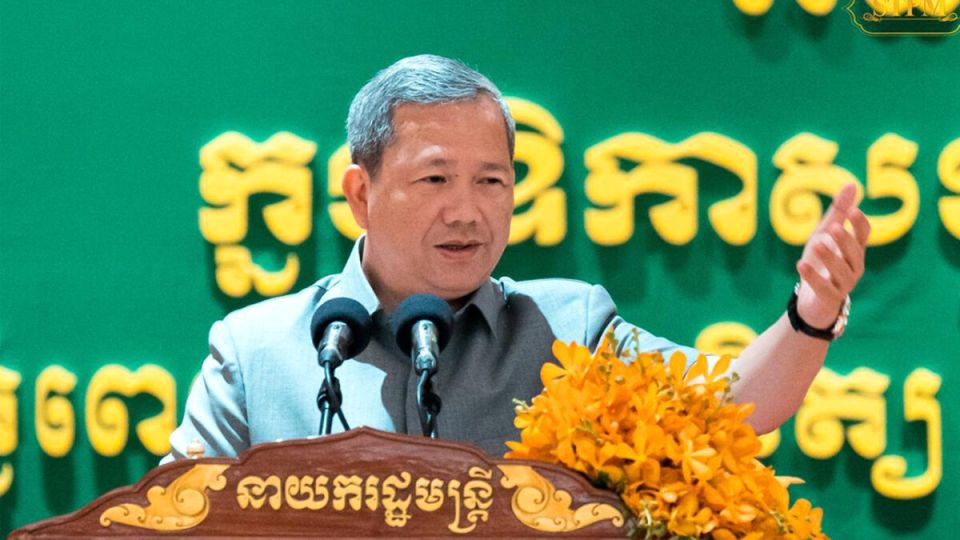
Manet addressed a celebration of this year’s 140th Labour Day, held today, April 26, ahead of the May 1 holiday. He told the thousands of factory workers in attendance how the conscription law will work, noting that not all 18-year-olds would be required to enlist.
According to the prime minister, an annual draft lottery would select the number of 18-25 year-olds required by the Kingdom’s current defence needs. The recruits would receive two years of initial training, then remain as registered reservists until the age of 45.
“As reservists, they may be required to attend one or two weeks of training every year, to ensure that their skills are maintained,” he said.
“I have noted people wondering on social media if their workplaces could dismiss them while they receive compulsory training. No, their employers must allow them to return to their positions,” he added.
He added that those who are conscripted will receive the same salary as volunteer soldiers, except for bonuses.
He also proposed limited military service as a solution to the problem of juvenile delinquency. Manet asked justice minister Koeut Rith, as well as police and military commanders, to assess whether young offenders could be used in non-combatant support roles.
“We won’t provide them with weapons, but perhaps we could use them to dig trenches or in military engineering or logistics roles,” he said.
“When we put them in prison, it only wastes our rice. When they get out, some will have changed their behaviour, but some will not. We don’t have to push them to the frontlines, but we can use them to support the frontline troops,” he added.
He suggested that the length of their service could be decided by the courts.
“I believe this would give them an appreciation for the dedication and hard work of our troops. I want these ‘gangsters’ to understand the serious challenges our soldiers face to keep us all safe, while they are enjoying street fights and petty crime,” he said.