

May 21, 2026
TOKYO – Discussions at the Antarctic Treaty Consultative Meeting (ATCM), currently underway in Hiroshima, have entered their final stages as this year’s meeting approaches its closing on Thursday.
A plenary session, in which decisions will be made by all the member states, is scheduled to be held on the final day, and a final report that will include points agreed on at the meeting, among others, is expected to be adopted. Attention is being paid to whether Japan, which is presiding over this year’s meeting, will be able to achieve certain results through its leadership of discussions.
The Antarctic Treaty came into force in 1961, chiefly aiming to promote scientific research and the peaceful use of Antarctica. The ATCM is held on a rotating basis by nations which are Consultative Parties to the treaty and actively conduct scientific research in Antarctica. This year, Japan is hosting the meeting for the first time since 1994, when it was held in Kyoto.
About 400 people, including government officials and researchers, from 44 countries, including the United States, China and Russia, are participating in this year’s meeting, which began on May 11. Discussions are being held behind closed doors, with working groups set up for specific agenda items, such as “legal and institutional issues” and “development of a tourism framework.”
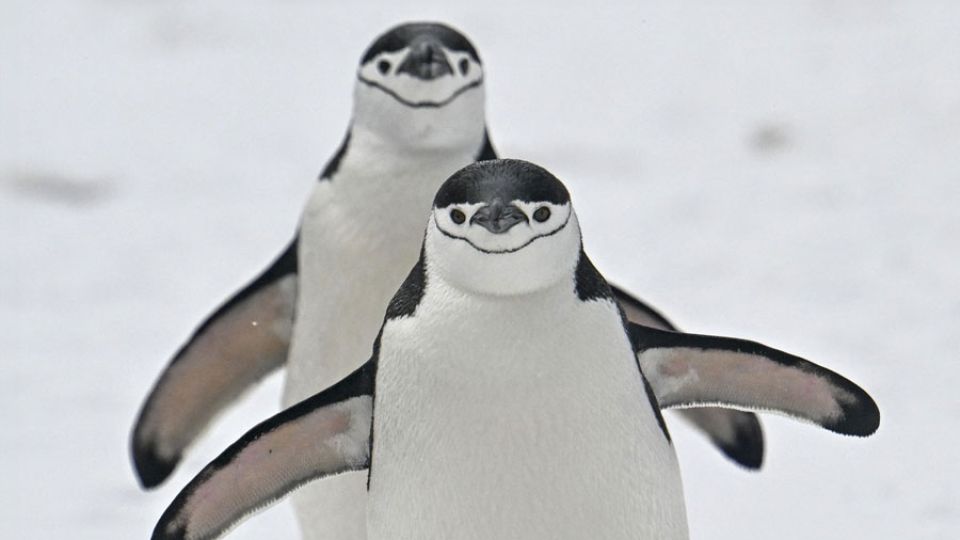
One of the main issues at the meeting is whether to designate emperor penguins, which live in Antarctica, as a specially protected species under the treaty. As emperor penguins lay eggs and raise their chicks on sea ice in the bitter cold, their breeding and habitats are being threatened by global warming, which is causing sea ice to decline. In April, the International Union for Conservation of Nature classified emperor penguins as “Endangered” on its Red List of Threatened Species, citing concerns that their population could be halved by the 2080s.
Most Consultative Parties, including Japan, which participated in the previous meetings, have supported designating emperor penguins as a specially protected species, but China and Russia have consistently opposed this move. Beijing and Moscow may believe that measures to strengthen conservation of the species would lead to excessive restrictions on the use of Antarctica and surrounding oceans.
“In recent years, the two sides have remained at an impasse despite repeated discussions. The outlook for a resolution isn’t optimistic,” confessed a source related to the Japanese government’s delegation.
At this year’s meeting, regulatory measures to address a surge in tourists to Antarctica are also believed to be under discussion. According to the International Association of Antarctica Tour Operators, the number of tourists to Antarctica during the 2024–2025 season was about 120,000, an increase of about 1,400% from 30 years before. In recent years, tourist activities have also expanded beyond cruise ship tours to view icebergs and penguins, to include sightseeing flights and marathons on land.
An increase in tourist numbers risks causing excessive stress to animals such as penguins and undermining their habitats further. There is also a risk of tourists unintentionally bringing non-native species to Antarctica, which could harm its precious ecosystems. In light of this, the question of whether to impose restrictions on tourist areas and visitor numbers could be a point of contention at the meeting.
“As the number of tourists landing [on Antarctica] increases, the likelihood of them trampling on things or otherwise damaging the environment inevitably rises,” said Satoshi Imura, vice director general of the National Institute of Polar Research and a member of the Japanese government’s delegation to the meeting.
“Discussions to find solutions need to move forward as quickly as possible,” added Imura, who served twice as the leader of the Japanese Antarctic Research Expedition.