

July 13, 2026
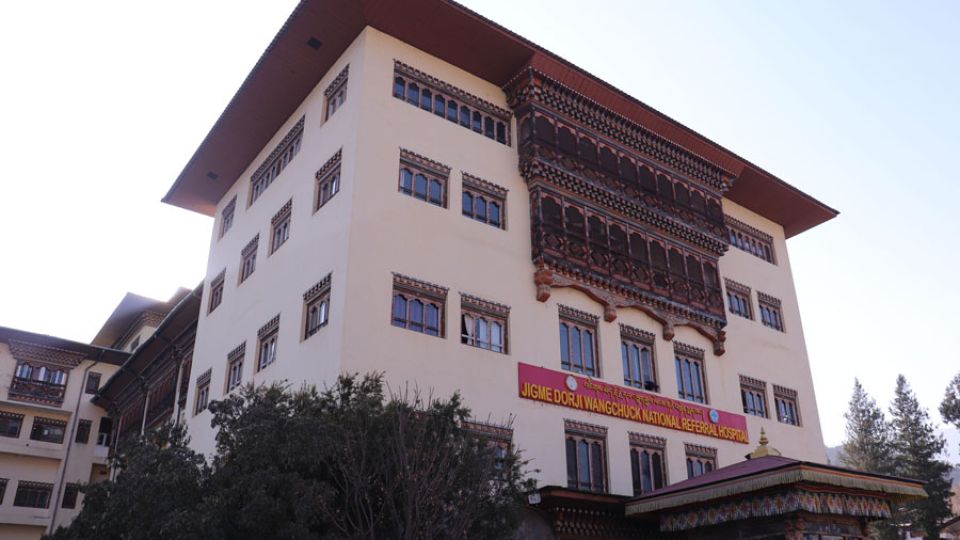
THIMPHU – A multimillion-ngultrum radiotherapy service at the Jigme Dorji Wangchuck National Referral Hospital (JDWNRH) has remained idle for nearly five years, with no clear plans to resume operations even two years after the audit case on sub-optimal performance was closed.
After four years of operation, the radiotherapy service was suspended in August 2021 following audit findings of lapses in planning, procurement, and implementation, which incurred a government loss of nearly Nu 117.98 million paid to the Kolkata-based (India) vendor, Care Australia.
The radiotherapy service was outsourced under a contract that included a monthly composite fee of INR 1.3 million, INR 1 million for the rental of the Linear Accelerator, and INR 125,000 for a surgical oncologist.
The fee was subject to a 3 percent annual escalation, with ownership of the machine to be transferred to JDWNRH after 12 years.
The outsourcing model was intended to reduce overseas referrals, improve access to treatment, and build national capacity for cancer care. However, the service was later found to have failed to deliver value for money.
The service agreement was terminated in November 2021 after the Ministry of Health’s High-Level Committee (HLC) found suboptimal radiation treatment outcomes among some rectal and cervical cancer patients compared with international standards.
The radiation oncologists and medical physicists deployed by the vendor at JDWNRH were withdrawn, with only one staff member remaining to operate and monitor the Linear Accelerator until the contractual issues were resolved. However, the future of the facility remains uncertain.
According to Care Australia, the radiotherapy service, which began operations in January 2018, was established in collaboration with Pinnacle Cancer Care Center in Bengaluru through an investment of more than USD 1 million in a Linear Accelerator, physics accessories, and technical expertise.
The Royal Audit Authority (RAA) identified Health Minister Tandin Wangchuk, former JDWNRH President Lhab Dorji, and former Medical Superintendent Dr Gosar Pemba for direct accountability for approving the service without due diligence and directly awarding the contract to Care Australia.
However, audit certificates were issued to those identified for accountability after the Anti-Corruption Commission (ACC) closed its long-running investigation in June 2024, which was subsequently endorsed by the RAA.
Kuensel reached out to the RAA’s Assistant Auditor General and Chief of Follow-up, Tshering Tenzin, for comment on the issue. He said he was at Kuenselphodrang but did not respond back.
The disruption of the specialised radiotherapy service has once again compelled cancer patients to seek treatment in hospitals in India, placing additional strain on both patients and their caregivers.
JDWNRH referred more than 500 cancer patients annually to Kolkata for treatment. In the 2014-15 financial year, the hospital spent Nu 46 million on treatment for 393 cancer patients.
The radiotherapy initiative helped establish the Palliative Care Department at JDWNRH, expanding support services for patients requiring pain management and end-of-life care. The department provided care to 98 patients in Thimphu alone in 2020.
Care Australia proprietor Dr Suddhasattwa Ray, in a letter dated November 16, 2021, to former Health Minister Dasho Dechen Wangmo, said the Linear Accelerator was a non-removable high-value asset, as relocating it would involve significant technical and financial challenges.
He said such equipment is designed for long-term use, typically 10 to 15 years, and requires specialised maintenance support. “The machine is highly sensitive to dust and vibration, and damage caused by either is not covered under Elekta’s annual maintenance,” said Dr Suddhasattwa Ray.
Conflicting expert assessments?
The RAA, during the audit period from July 1, 2020, to June 30, 2021, found due diligence was not conducted in the establishment of the radiotherapy service, which did not provide value for money to the hospital.
“The Board and officials responsible for such gross negligence should be held accountable,” the audit stated.
Despite the JDWNRH Board’s direction to conduct detailed need analysis, feasibility studies, and cost-benefit analysis before establishing the radiotherapy service, the service was approved in May 2016 without adequate due diligence.
In his justification, former JDWNRH President Lhab Dorji said the hospital needed to expand into specialised services to become a multispecialty hospital. “Detailed need analysis and feasibility study by a consultant was not required to see the apparent results right in front of our own eyes,” he said.
He clarified that the establishment of radiotherapy services was approved by the Board in 2014, before he joined JDWNRH in 2015. “Imposing direct accountability on me for lapses in approving the radiotherapy services, if any, is not justifiable,” he said.
Lhab Dorji said the radiotherapy equipment is internationally proven and should perform no differently in Bhutan. If there were lapses in treatment or dosage, he said, Care Australia should be held accountable and the matter should be determined through an evidence-based clinical investigation.
Care Australia, for its part, maintained that the company was not responsible for internal government approval processes or surgical and radiology outcomes, arguing that termination of the agreement without consultation was unfair.
Health technology assessment requirements under the National Health Policy 2011 and due process under the Rule of Treaty Making Procedure 2016 were not followed before establishing the service and executing the agreement with external agencies.
Dr Suddhasattwa Ray said the contract was between Care Australia and JDWNRH, Bhutan’s only tertiary hospital, which was under the health minister, who was expected to know the applicable rules. “We cannot be penalised for their not knowing the rules, if that had actually happened,” he said.
According to the clinical report, patients with deep-seated tumours who received radiotherapy treatment were not obtaining the optimal response normally seen after radiation, which indicated poor treatment outcomes.
Care Australia maintained that allegations of suboptimal treatment outcomes required an independent clinical review based on evidence and international guidelines.
A World Health Organization (WHO) expert mission assessment of the radiotherapy unit in 2019 found the service satisfactory for cancer patients, while recommending improvements in systems, manpower, and infrastructure.
The mission, conducted by Indian specialists Dr Shyam Kishore Shrivastava of Apollo Hospitals, Navi Mumbai, and Dr Deepak D. Deshpande of Tata Memorial Hospital, Mumbai, reviewed clinical services, staffing, infrastructure, radiation safety, and outsourcing arrangements.
The assessment found the Elekta 6 MV Linear Accelerator, treatment planning system, quality assurance procedures, and radiation safety measures functioning satisfactorily, with radiation levels within acceptable limits.
The unit treated about 75 patients a week, with 148 patients receiving radiotherapy in 2018. While staffing was found adequate, the WHO team recommended stronger quality systems, additional personnel, a permanent Radiation Safety Officer, and a multidisciplinary tumour board.
The RAA could not rule out possible collusion with Care Australia, which was directly selected as the service provider by the JDWNRH Board and management. The direct award of the contract not only deprived prospective bidders of a fair and equitable opportunity but also denied the management competitive rates.
Lhab Dorji argued that attempts were made to identify Bhutanese businesses interested in establishing radiotherapy services, but none came forward due to the high initial investment, shortage of specialised experts such as clinical oncologists and nuclear physicists, and regulatory requirements for radiation and brachytherapy services.
“If the allegations proved untrue, the HLC’s decision would have disrupted a specialised service,” he said, adding that patients referred to Kolkata faced hardships, including language barriers, unfamiliar surroundings, and loss of social support.
The WHO expert team recommended introducing brachytherapy services, noting that 60 to 80 patients, mainly cervical cancer patients, could require the treatment annually. The mission stated that outsourcing could become financially viable if 200 to 250 patients received radiotherapy each year.
Care Australia attributed delays in introducing brachytherapy to radiation safety requirements and Covid-19 restrictions, stating that intensity-modulated radiation therapy (IMRT) was provided as the best available alternative under the circumstances.
Several critical deliverables under the Service Agreement were not fulfilled, including the post graduate diploma course in oncology, fellowship training, tumour board meetings, support to the national cancer registry, and deputation of a surgical oncologist.
JDWNRH management failed to enforce the contractual obligations but continued paying monthly charges to Care Australia despite the non-delivery of agreed services, which indicated undue favour to the service provider, according to the audit findings.
Under the Service Agreement, payments would commence after the first patient was treated using radiation services. However, JDWNRH paid Nu 11.65 million to Care Australia before radiation treatment began in January 2018.
JDWNRH justified the payment, stating that oncology consultations and the setup of the radiotherapy unit were provided from March 2017. However, the RAA maintained that these did not constitute radiation treatments and that payments made before January 2018 were inadmissible.
The RAA recommended recovery of Nu 11.65 million and held the Finance Section responsible for failing to comply with the Service Agreement, with direct accountability imposed on the then Chief Administrative Officer Karma Dorji, Director Tshering Yangden, and President Lhab Dorji.