

July 13, 2026
SINGAPORE – Cleaning a woman’s wounds from a mastectomy is no mean feat. Adrian Tan would know, having cared for his mother, who was diagnosed with breast cancer when he was 21.
When he first tended to her bruised and pus-filled scars, both mother and son wept.
“She kept telling me, ‘It’s okay, son, it doesn’t hurt,’” recalled Adrian, now 40. “But how can it be not painful?”
Nearly two decades later, he speaks about those years with the weight of someone who knows caregiving can be as relentless as it is intimate.
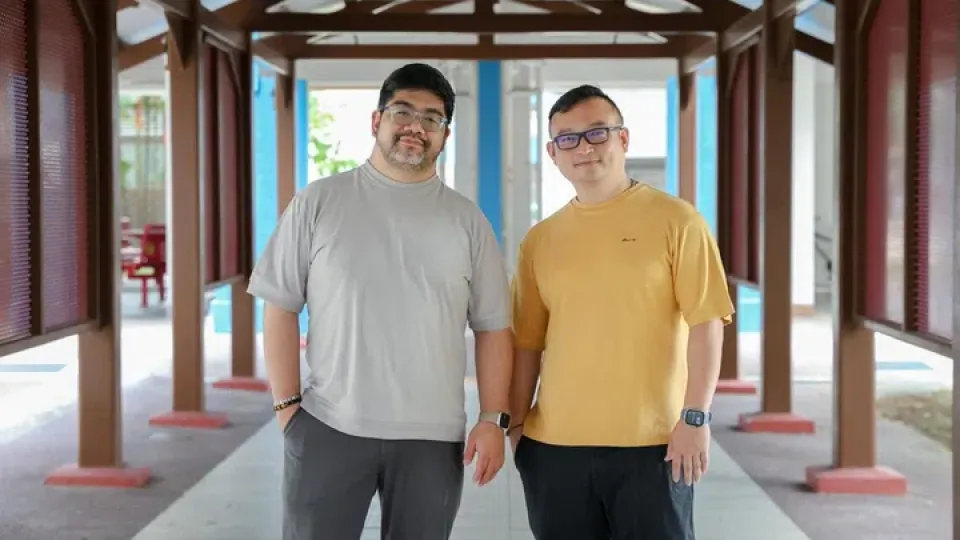
His experience would eventually shape a new mission. In 2017, he and fellow caregiver Greg Tan started SG Assist, an organisation that supports and advocates for caregivers.
Greg, 44, has similarly been in the trenches.
In 2015, after his father underwent an angioplasty, a procedure to open blood vessels to allow blood flow, he accompanied the older man in hospital daily for about two months.
Stories like theirs are increasingly familiar in Singapore, where caregiving is a growing concern as the population ages and more people shoulder the long-term care of loved ones with disabilities or chronic illnesses.
A social worker, nurse, doctor – all at once
As the eldest child, Adrian became his mother’s primary caregiver after her cancer diagnosis in 2007. She had to stop work as a kindergarten teacher and his logistics driver father became the family’s sole breadwinner. Back then, Adrian’s younger sister was 19 and his brother was only 11.
While pursuing a part-time diploma in logistics management, Adrian juggled lessons alongside his mother’s doctor appointments and medicine, and read library books to learn about her condition.
He also worked multiple part-time jobs to make ends meet, and later to pay off $80,000 in debt after his father used a credit card to pay the house loan of their four-room HDB flat.
“I definitely had no more personal life. I stopped meeting my friends. I spent all my extra time with (my mother) or to work part time,” said Adrian.
Fighting cancer also made his mother depressed. She would sometimes call him in the middle of the day, wailing. After he started working full time in the logistics sector, he exhausted his annual leave rushing home to handle her breakdowns.
It felt like he was carrying an immense burden by himself.
“We expect caregivers like myself to do the work of a social worker, a nurse, a doctor in our own home,” Adrian said.
During an in-camp training stint in 2017, Adrian struck up a chat with Greg, then a superintendent in an oil and gas firm. Both men found out that they were caregivers to their ailing parents and bonded over shared difficulties.
One common topic they noticed in conversations with others was about taking parents to medical appointments.
“But a lot of people don’t realise that is actually talking about caregiving,” said Greg. Hence, many are not aware of available resources and solutions.
About a month later, they took the plunge – with a total of nearly $300,000 from their own funds and those of four other caregiver friends – and set up non-profit organisation SG Assist.
Forgoing five-figure salary
The two men did not draw a salary until SG Assist became a social enterprise in 2018.
Even after the organisation became profitable, they paid themselves about $3,000 a month each – a fraction of what they once earned. Adrian had been making about $7,000 a month and Greg earned about US$20,000.
SG Assist’s work includes supporting caregivers by linking them to resources and providing consultancy services for social service agencies on caregiver-related projects.
The duo believe caregivers face various pressures, which may not always be alleviated through government support schemes.
Caregivers still struggle with questions like where to find a suitable wheelchair, how to hire a domestic helper with the right skills, or who can attend to an aged parent’s meals while they are at work, said Adrian.
Some financial support is limited to those from lower-income families or certain housing types, but caregiving impacts people of all backgrounds, he added.
SG Assist does not replace social services, he said. Instead, it points caregivers to relevant resources, including connecting them with grants or places to buy specialised equipment.
Greg said: “That means you don’t have to start from zero. I can ‘jump-start’ you immediately into a ‘five-year-old’ caregiver by imparting skill sets to you, helping you with your immediate needs.”
Their first idea was an app that would match caregivers with volunteers who could help with tasks such as accompanying parents to medical appointments. The scheme struggled to gain traction, attracting only about 100 volunteers in its early days.
Funders, too, were difficult to convince. Not many saw caregivers as a beneficiary group in their own right, said Adrian.
From caregiver to care recipient
Word about their app spread only during the Covid-19 pandemic, when more people needed help with daily errands. Their volunteer network grew to about 8,000.
In 2023, they opened a Caregiver Resource Centre in Khatib, which hosts regular caregiving-related talks. It also houses the Age+ Living Lab, where the latest technology to meet the needs of the elderly is displayed.
The original app was discontinued in 2026 due to operational challenges, although the organisation is actively looking for partners to develop an updated version. Its caregivers are still connected via a Telegram group chat.
Adrian and Greg, both bachelors, are still caring for their parents. Adrian’s mother has been in remission since 2021 but has occasional depressive episodes, while Greg’s father is on regular medication.
In 2024, Adrian became a care recipient himself.
He suffered a stroke that temporarily paralysed one side of his body and now relies on a domestic helper at home. He has regained mobility, but has less stamina and stability than before.
The thought of shutting down SG Assist – which now has 16 employees – crossed the founders’ minds. But they decided to carry on.
“I don’t want to be the reason it closes down,” said Adrian. “I want to push it to a state where it can sustain itself.”
Seeing life from the other side has also given him a deeper understanding of care recipients, which has in turn helped him better support caregivers, he said.