

April 29, 2026
MANILA – Environmental storytelling is an important pillar in the struggle for sustainability.
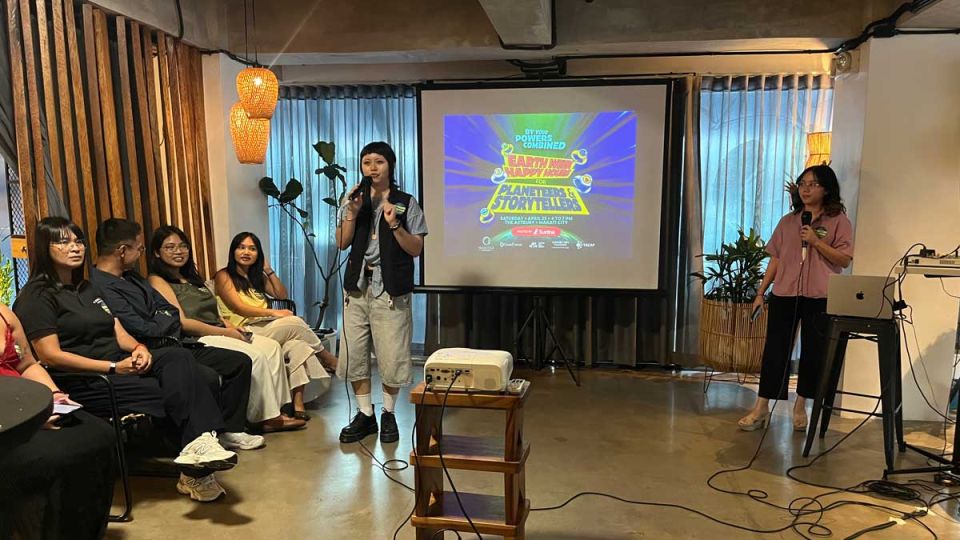
Such was the message at Earth Day Mixer, an event organised by women-led non-profit Sustina for emerging storytellers and sustainability advocates.
Sustina co-founder Anna Reyes emphasised the importance of environmental storytelling and its impact, which the NPO advances with workshops on sustainability, storytelling, strategy, and media.
The event was attended by various organisations in the climate and environment sector, such as Masungi Georeserve, Waves for Water, Gain First Youth Advocates for Climate Action Philippines (YACAP), and the ABS-CBN Foundation.
The attendees, called “Planeteers”, were separated into smaller groups to learn more about the different advocacies of the organisations and possible collaborations for storytelling.
The first hub was Masungi Georeserve, a conservation area in the rainforests of Rizal, East of Metro Manila.
Alexandra Bacani, advocacy officer at Masungi Georeserve, shared how the long-term reforestation landscape is now facing a large-scale industrial energy proposal.
“Renewable energy often equals environmentally good, but what gets lost is that not all green projects sit on neutral ground,” she said.
It is a difficult case for Masungi, because Masungi is not just an untouched site – there, more than 3,000 hectares of land are being rehabilitated, protected, and reconnected to prevent erosion, flooding, and biodiversity loss.
Bacani emphasised that while renewable energy expansion is urgent and needed, it is often discussed without equal attention to where infrastructure is placed, and what systems are already performing climate functions like water regulation and flood mitigation.
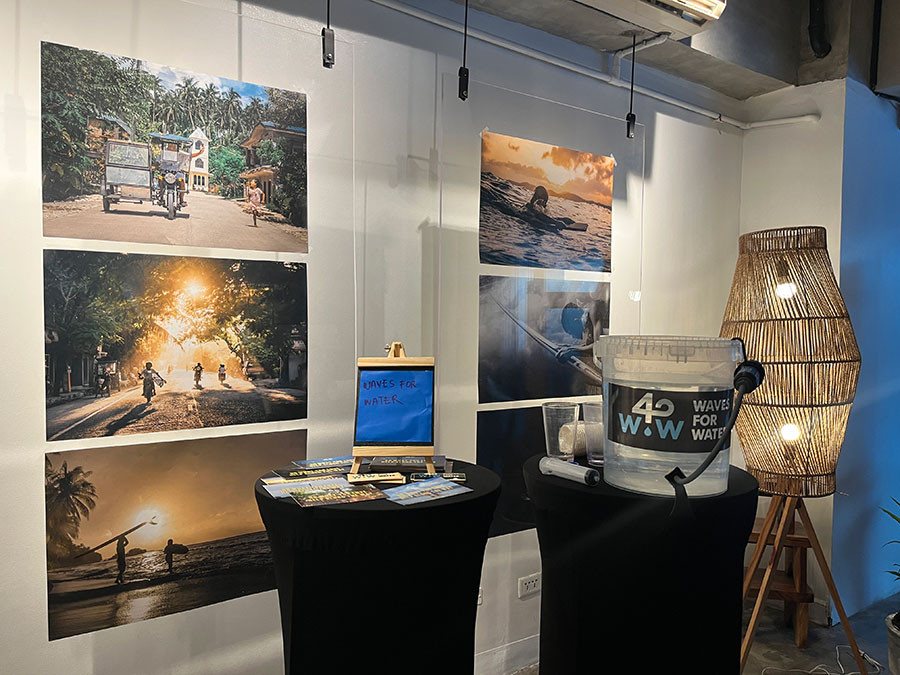
The water filter from Waves for Water. PHOTO: ASIA NEWS NETWORK
She encouraged attendees to sign their petition.
Renzo Perez, the communication officer of Waves for Water, talked about the programmes they do in far-flung communities in the Philippines to bring them potable water.
Perez demonstrated their water filter, which they bring to the communities.
To earn trust that their filter works, he said, Waves for Water volunteers would use the tool in front of the communities and drink water with them.
Gain Forest’s hub was the last stop, and its head of operations, Nina Cerilla, discussed that their initiative for a community-owned data commons for biodiversity was formed because only 1% of global biodiversity data comes from the world’s largest rainforests; most of these data banks are also controlled in the West.
“In the top 10 open-source data, nothing is authored by Filipinos, and 40% of the data in the Philippines is from Cornell Labs in the United States.
“Our local communities already know these ecosystems; for generations, they’ve been doing the naming, observing, and understanding – we just don’t have the pathway to share because it’s complicated, with Latin names and all these things. And Gain Forest is trying to bridge that gap,” said Cerilla.
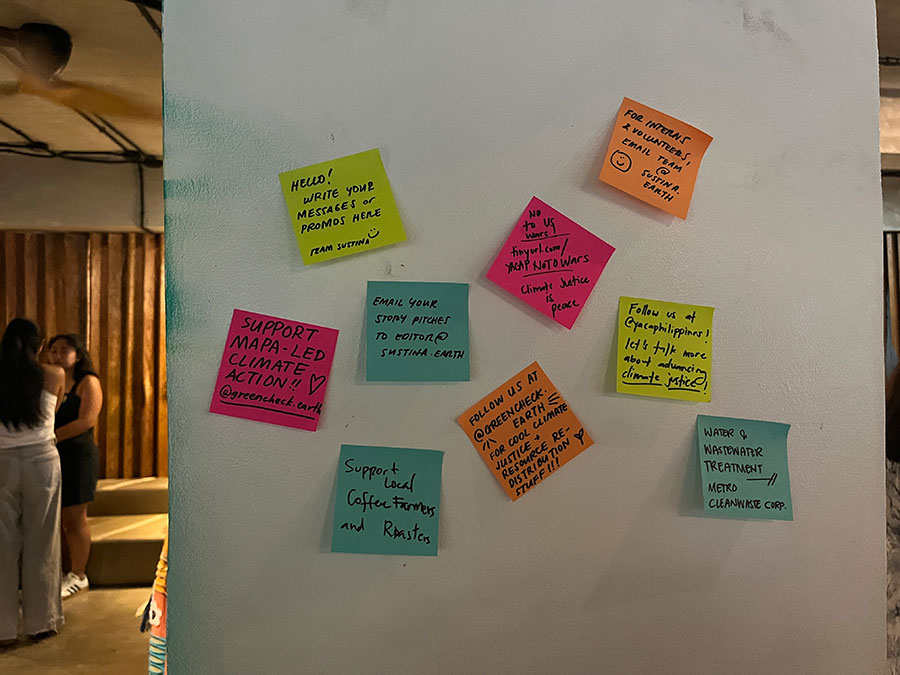
Message or promo board at the event. PHOTO: ASIA NEWS NETWORK
In an interview with Asia News Network, Eiren Bienviaje, spokesperson of YACAP, said that for their hub, their organisation discussed the connection between landlessness and climate justice.
Bienviaje talked about Lupang Ramos, a contested land in Cavite, south of Manila; the story offers a perspective on the history of land struggle in the Philippines.
“When we talk about climate, we don’t just talk about land and animals. We also talk about people; we talk about it as a system.
“Who protects the people? One of them is the farmers, so we can’t say that we protect the climate if we’re not protecting the farmers. How do we protect the farmers if we can’t protect the land? It’s hard to isolate from one another,” she explained.
The spokesperson said that it was interesting to bring stories from the communities to the mixer. With them being more used to audiences composed of college students, telling their stories in a more relaxed setting gives them space to bring their advocacies to a larger audience.
As the attendees and organisations networked with each other, Sustina co-founder and editorial director Nina Unlay shared her hope for the community they wish to build together.
“Environmentalists are some of the bravest people in the world. They also take on some of the hardest battles. One of the reasons we built Sustina is so that these advocates don’t have to feel like they’re doing the work alone.
“Earth Week Happy Hours is the first of many spaces we want to create together,” she said.
To stay updated on such spaces, climate advocates interested to connect with other like-minded environmentalists can follow @sustina.earth on Instagram.