

June 18, 2026
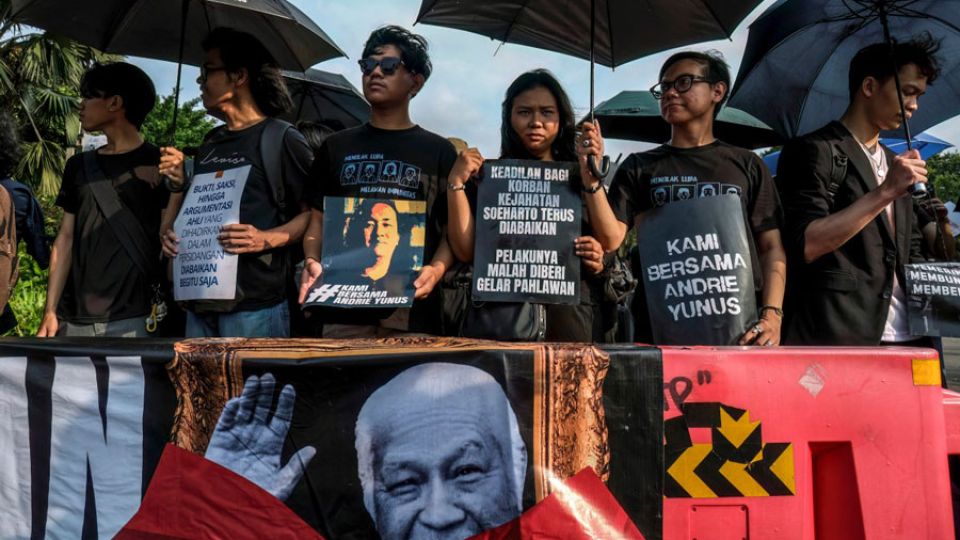
JAKARTA – Rights defender Andrie Yunus repeatedly asked for the trial against soldiers involved in the March acid attack that left him blind in one eye to be held in a civilian court, not a military tribunal, for fear of impunity.
Three months later, on June 10, the Jakarta Military Court sentenced the four soldiers to between 8 months and three years, in what rights groups describe as light sentences and a trial designed to hide the full truth in the premeditated attack against Andrie.
The fact that a pretrial ruling from a district court has ordered the case be investigated by the police briefly gave hope that his attackers would be tried at a civilian court to ensure accountability and uncover the full chain of command. But the military court pressed ahead.
The military judges held the soldiers did not act on orders but on their own initiative out of their resentment over Andrie’s anti-militarist activism, in line with the military prosecutors’ contention. Two of the four defendants were dismissed from the military.
Rights groups immediately condemned the sentences and the failure of the military justice system to find the actual mastermind higher up in the chain of command.
The anger is righteous since the sentences hardly reflect a sense of justice, amid growing concerns over expanded military roles in civilian affairs and democratic backsliding.
The charges against the soldiers for premeditated assault causing serious injuries carries a maximum sentence of seven years in prison.
We are deeply disappointed by the verdicts, but sadly, we are not surprised. In this country, human rights abuses and attacks on activists are rarely punished.
The acid attack against Andrie, the activist from the Commission for Missing Persons and Victims of Violence (Kontras), is now at risk of fading away from public consciousness, proving yet again that the public has nothing to expect from the justice system.
There are still many cases of human rights abuses or cases of violence against human rights defenders that remain unsolved, with the masterminds behind these crimes rarely identified, let alone brought to justice.
One prime example is the 2004 murder of Kontras cofounder Munir Said Thalib, a vocal activist during Indonesia’s early reform years who died of arsenic poisoning aboard a flight from Jakarta to Amsterdam. Although some people have served prison time in relation to the case, the circumstances surrounding Munir’s death remain murky to this day and the mastermind is likely still at large.
Another example is the 2014 Bloody Paniai case, of which the sole defendant brought to trial in connection with the fatal shooting of civilians in the regency in Papua was acquitted of all charges by the human rights tribunal in 2022. The defendant was a military liaison when security forces opened fire on a crowd of demonstrators protesting the alleged beating of a youth the previous day.
Lest we forget the 12 incidents amounting to gross human rights violations that have shaped the country’s past, spanning a period between 1965 and 2003, including those that marred the authoritarian New Order regime.
In the rare instances where violence committed by the military against civilians is investigated, they almost always go through military courts despite an obvious risk of conflict of interest, and even if the incidents are unrelated to their military duties.
We have seen perpetrators walk away scot-free all too often. One recent case of a lenient sentence for military personnel found guilty of a crime took place in Medan, North Sumatra. The soldier with the rank of first sergeant was sentenced to 10 months in prison in October 2025 after the military court found him guilty of killing a 15-year-old boy during an operation to disperse a street brawl in the city. Is this how cheap our lives are?
A report from Kontras, which analyzed 131 verdicts delivered by military courts from October 2024 to September 2025, suggested that the military justice system tended to hand down slaps on the wrist, especially in cases of violence committed by soldiers against civilians.
Andrie’s case should have gone to a civilian court in the first place, not a military trial. Hope for ending impunity perhaps is still there at the Supreme Court, however slim, if military prosecutors decide to appeal against the light sentence in Andrie’s case.