

July 9, 2026
JAKARTA – A presidential regulation classifying LGBTQ “culture” as a nonmilitary threat has drawn sharp criticism from civil society groups, who warn it could provide legal and political justification for further criminalizing the vulnerable minority, while lawmakers and religious groups defend the policy as necessary to “safeguard” national resilience.
As anti-LGBTQ sentiment intensified across Indonesia during June’s Pride Month, public attention turned to the presidential regulation (Perpres) on national defense policy issued by President Prabowo Subianto last October.
The 70-page regulation identifies “the promotion of LGBTQ culture” as a nonmilitary threat, alongside illegal trafficking, natural resource theft, terrorism, atheism and radicalism.
It defines nonmilitary threats as unarmed activities that endanger state sovereignty, territorial integrity and public safety, and instructs relevant ministries, state institutions and regional administrations outside the defense sector to respond to such threats.
But rights groups argue that by framing LGBTQ identity and advocacy as threats to national security, the regulation risks legitimizing further discrimination against an already marginalized community.
“The presidential regulation provides new legitimation both for the central government and regional administrations to enact legislation that penalizes and discriminates against LGBTQ individuals merely because of their identities,” Legal Aid Institute for the People (LBHM) executive director Albert Wirya told The Jakarta Post on Tuesday.
Amnesty International Indonesia executive director Usman Hamid also criticized the regulation for intensifying “systemic discrimination” against LGBTQ people.
“Such legal frameworks violate human rights and foster an environment where [these] persons are highly susceptible to immediate threats, discrimination and harassment by both state and nonstate actors,” he said on Tuesday.
Legal expert Bivitri Susanti described the regulation as unconstitutional, arguing that it contravenes the 1945 Constitution, which guarantees every citizen equal protection under the law and prohibits discrimination.
“It is very likely that individuals, including Satpol PP [public order agency] officers and members of mass organizations, will invoke this presidential regulation to persecute LGBTQ people, even though it provides no legal basis for such actions”.
The regulation has resurfaced last month amid growing calls to criminalize LGBTQ people, including proposals from lawmakers and religious organizations such as the Indonesian Ulema Council (MUI).
In late June, MUI announced that it was preparing an academic manuscript for a proposed LGBTQ penal bill that would criminalize LGBTQ individuals and rights advocates.
The country’s top Islamic clerical body also said it would seek to have the bill included in the House of Representatives’ National legislation program (Prolegnas) priority bills.
The House’s Commission VIII, which oversees social and religious affairs, has reportedly welcomed the proposal.
Rising homophobia
LGBTQ Indonesians have experienced growing fear lately following a series of threats and homophobic remarks targeting the community and its activists, according to Echa Waode, secretary-general of LGBTQ advocacy group Arus Pelangi.
“It is quite regrettable that the presidential regulation emerged at a time when homophobia is on the rise in Indonesia,” Echa said on Tuesday.
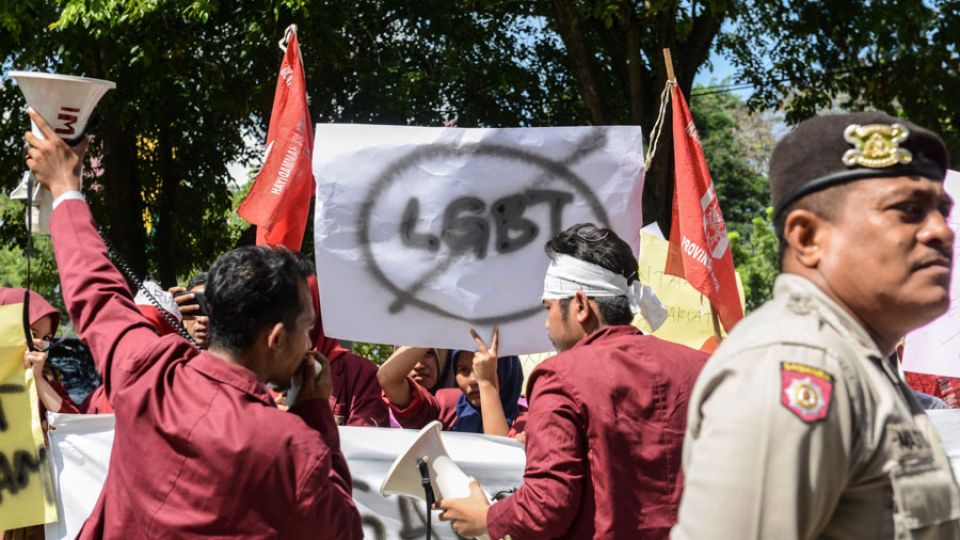
In recent months, a so-called anti-“BOTI” movement has gained traction both online and offline, organizing convoys, displaying anti-LGBTQ banners and promoting campaigns targeting the community. The movement, named after a derogatory Indonesian slang for effeminate gay men, has amplified hate speech, normalized public hostility and emboldened discrimination against LGBTQ Indonesians.
The growing hostility has also manifested in intimidation targeting LGBTQ advocates. Among the reported incidents was a wave of threats against members of a student press organization at the University of Indonesia after it posted an Instagram carousel expressing support for LGBTQ rights.
Echa warned that the presidential regulation could further embolden local administrations to adopt discriminatory policies by providing additional legal and political justification for targeting LGBTQ people.
According to Arus Pelangi, at least 45 discriminatory bylaws and circulars have already been enacted in regencies and municipalities across West Java, Central Java and large parts of Sumatra.
Coordinating Law, Human Rights, Immigration and Correctional Services Minister Yusril Ihza Mahendra defended the regulation on Tuesday, saying it provides the legal basis for the government to curb the spread of LGBTQ “culture” as part of efforts to prevent what he described as “moral degradation”.
“The government has a duty to protect the people and the nation from the threat of moral degradation, which could ultimately erode the foundations of our social, national and state life,” he said, as quoted by Antara.