

July 7, 2026
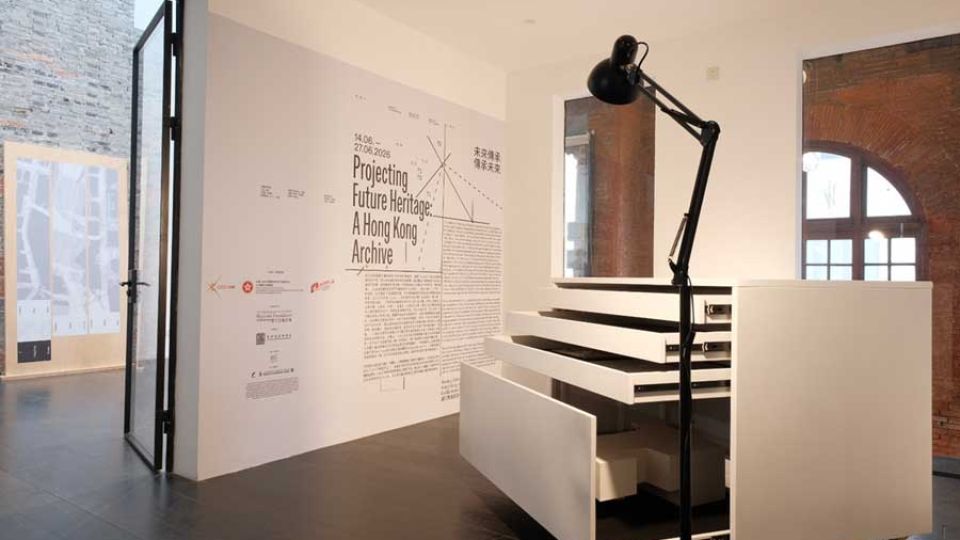
SHANGHAI – Opening the wooden drawers of the archival cabinets reveals old photographs of Choi Hung Estate’s public platforms, sectional drawings of multi-functional market complexes, and designs of retractable handrails on Hong Kong streets. These artifacts exhibited at the Manifesto Gallery at Design Republic, situated in a century-old building in Shanghai’s Jing’an district, sparked a dialogue between two distant cities, both confronting high-density urban development, brought together by an architectural exhibition from Venice.
The Projecting Future Heritage: A Hong Kong Archive exhibition, part of the HKIA Venice Biennale and Roving Architecture Exhibitions 2025/26, just finished its Shanghai stop and will return to Hong Kong for a response exhibition, with further details to be announced in due course.
Co-curator Fai Au explained that the two-year project united 32 research teams focused on Hong Kong’s built environment, showcasing a comprehensive archive of 21 cabinets and 115 drawers on the global stage, highlighting overlooked everyday typologies such as public housing estates, multi-functional market complexes, co-op housing, and street infrastructures.
“These public structures, forged in contexts of extreme density and economic priorities, embody collective wisdom for addressing climate change, managing high-density living, and sustaining cultural life in public spaces. They offer insights into the shared future challenges of cities worldwide,” Au said.
Due to venue constraints, the Shanghai leg featured selected physical exhibits from five core teams, accompanied by a two-hour film that unveils the complete archive. Beyond technical drawings, each drawer holds the lived experiences of generations of Hong Kong residents.
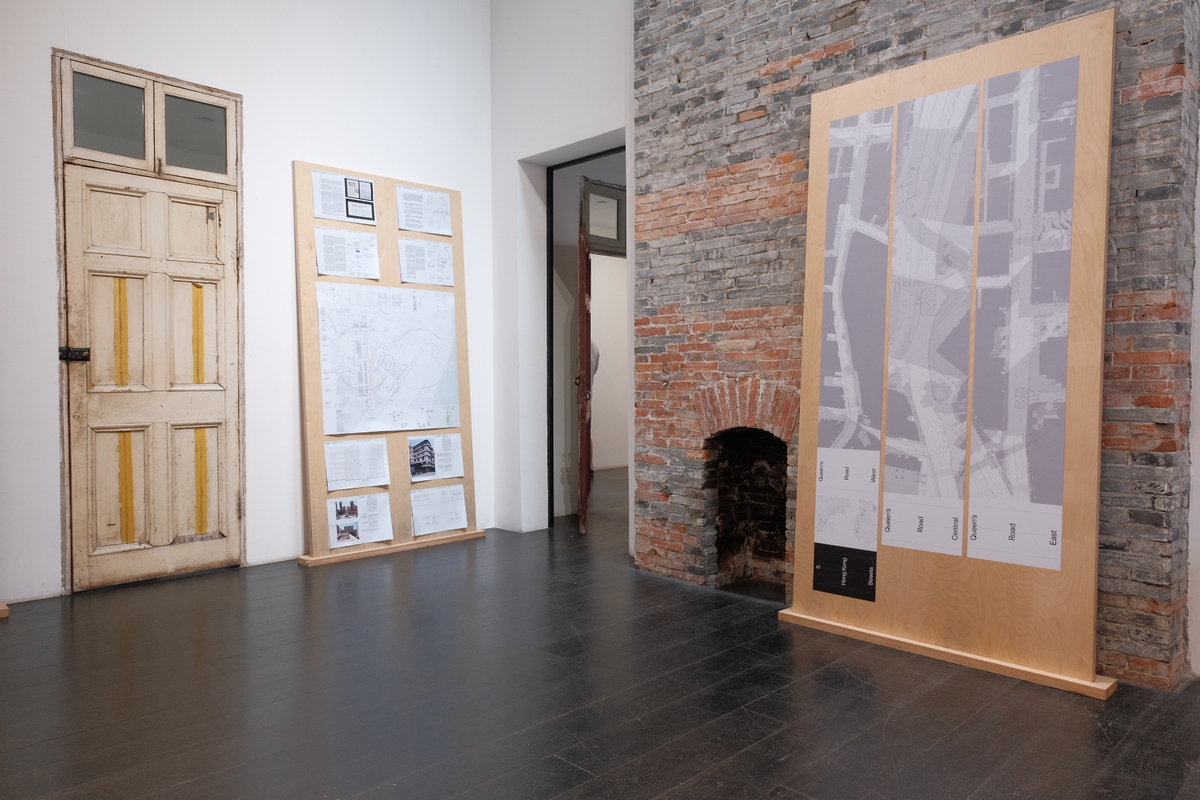
The Projecting Future Heritage: A Hong Kong Archive exhibition, part of the HKIA Venice Biennale and Roving Architecture Exhibitions 2025/26, completed its Shanghai stop from June 14 to 27 in the Manifesto Gallery at Design Republic. PHOTO PROVIDED TO CHINA DAILY
A standout exhibit is the decades-long research on Choi Hung Estate by the Chinese University of Hong Kong team. Designed by P&T Group, originally founded in Shanghai before expanding to Hong Kong, the estate is a landmark of early public housing development in the city.
Historical records note that former US president Richard Nixon played badminton on its rooftop during a visit. For the curatorial team, the true value of public housing extends beyond the residential units, it is found in the ground-floor shared spaces and adaptable site design that imbue the architecture with human warmth.
Even more distinctive is Hong Kong’s unique multi-functional market complexes. Co-curator Zhou Ying is leading a comparative research project on this building form in Shanghai and Hong Kong. The sectional model on display illustrates the vertical composite logic: a market hall at the ground level, cooked food stalls in the middle, libraries and offices on the upper floors, and sports facilities for badminton, yoga, and basketball at the top.
“With limited land resources, Hong Kong has ingeniously stacked all public functions vertically within a single building. This typology is exceptionally rare worldwide,” Zhou noted.
The team particularly values the simple, low-carbon wisdom inherent in these structures. Despite Hong Kong’s hot and humid summers, similar to those in Shanghai, these buildings function without air conditioning, relying on high ceilings, fans, and natural ventilation to maintain thermal comfort.Au further stated that Shanghai was chosen due to its deep architectural and urban connection with Hong Kong.
“In the 1960s, some Shanghai residents moved to Hong Kong, bringing their culture and lifestyle.”
As major port cities and pivotal hubs in global trade, they confront similar urban challenges, making this exhibition an ideal platform for mutual learning.
Julia Lau, president of HKIA, stated in her opening address, “This exhibition provides a timely platform to enhance dialogue between Hong Kong and Shanghai, fostering mutual learning in sustainable urban development and cross-cultural exchange.”