

February 6, 2026
JAKARTA – Every time Art Jakarta returns, it brings something new, often signaling a shift in how art is encountered and understood in the city
Its 2016 transformation from Art Bazaar to Art Jakarta, led by Tom Tandio, injected fresh creative energy into art fairs. In 2022, it expanded further with the launch of Art Jakarta Gardens, an outdoor exhibition at Hutan Kota by Plataran within the Gelora Bung Karno sports complex in Central Jakarta. Sculptures and installations were set amid a natural setting, signaling a rejuvenation of the city’s arts scene and inviting audiences to experience art beyond convention halls.
This year, Art Jakarta has innovated once again with the addition of Art Jakarta Papers, an exhibition dedicated to paper art. The exhibition is open to the public from Friday to Sunday at City Hall, a convention hall at Pondok Indah Mall (PIM) 3 in South Jakarta.
The initiative reflects a deliberate curatorial turn toward a medium that has long been underestimated, yet remains deeply rooted in artistic practice. Art Jakarta Papers 2026 underscores how paper has evolved from a preparatory surface into a fully realized contemporary medium, capable of carrying conceptual weight and technical sophistication.
Unlike many exhibitions, Art Jakarta Papers places paper artworks squarely in the spotlight as a desirable contemporary medium. Here, paper becomes a means of visualizing delicate craftsmanship, where artists push its boundaries beyond a canvas for drawing and sketching into innovative forms of expression.
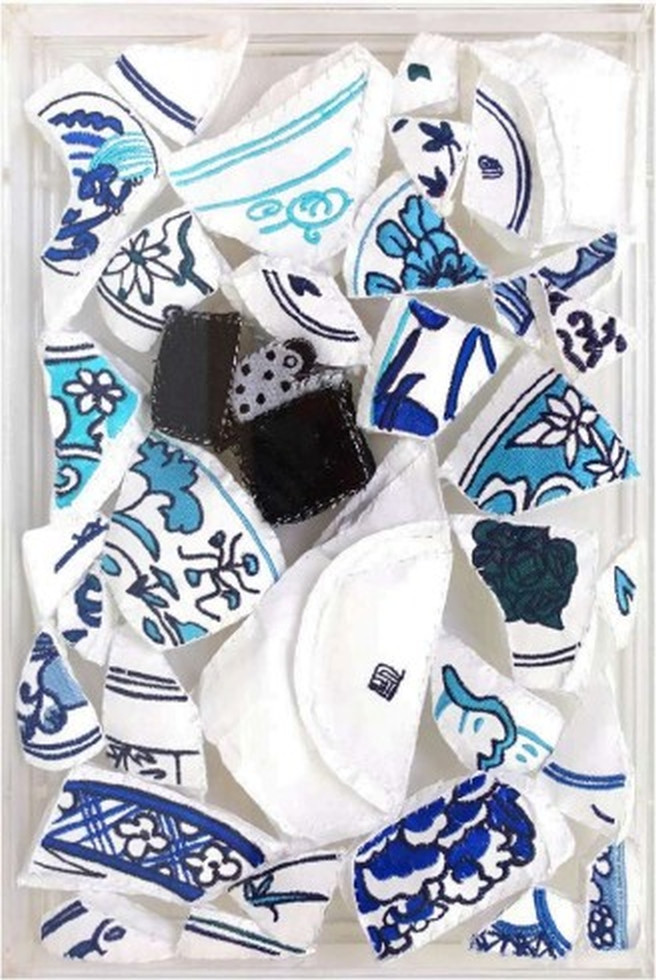
No Us Without Them #2′ (2025) by Meliantha Muliawan, Tyvek paper and embroidery in acrylic box, 30 × 20 × 3.5 cm. PHOTO: ART JAKARTA PAPERS/THE JAKARTA POST
Broadening the circle
Art Jakarta Papers also appears intent on embracing collectors at all levels. Its inaugural edition features a striking diversity of artists and works from participating galleries. D’Art Gallery alone is presenting 25 artists, each with several works.
The enthusiasm has been so high that even Bambang Bujono, senior art writer for Tempo magazine, felt compelled to take part as a participant.
Of the 28 participating galleries, 23 are local and five are international, namely Art Weme Contemporary, Art+ Contemporary, THEO, YIRI SAC Contemporary and Rika Contemporary. The balance reflects Art Jakarta’s ongoing efforts to foreground Indonesian spaces while situating them within a broader international conversation.
The curated works feature artists including Agugn Prabowo, Agus Putu Suyadnya, Agus Suwage, Arin Sunaryo, Arkiv Vilmansa, Atreyu Moniaga and Cecil Mariani, representing a broad spectrum of artistic practices that demonstrate how paper continues to accommodate experimentation, precision and conceptual rigor.
When it comes to paper art, printing plays a crucial role in ensuring quality and longevity.
Art print publisher EDISII is collaborating with the Devfto Printmaking Institute as participants, bringing together digital and manual printmaking approaches. Together, they present paper not as a mere carrier of images but as an object with its own physical and conceptual presence.
EDISII, which produces museum-grade digital giclée works to archival standards, was established through a team-up beween Davy Ferdianto, founder of the Devfto Printmaking Institute in Gianyar, Bali, and leading photographer Indra Leonardi. Devfto meanwhile specializes in hand-pulled works that use using refined printmaking techniques, Davy explains, reaffirming the enduring value of this craft in an increasingly digital age.
Paper, once less favored because of its perceived vulnerability to decay, has gained renewed relevance over time. High-quality archival paper is now widely accessible to artists, alongside advances in printing techniques that ensure durability and consistency.
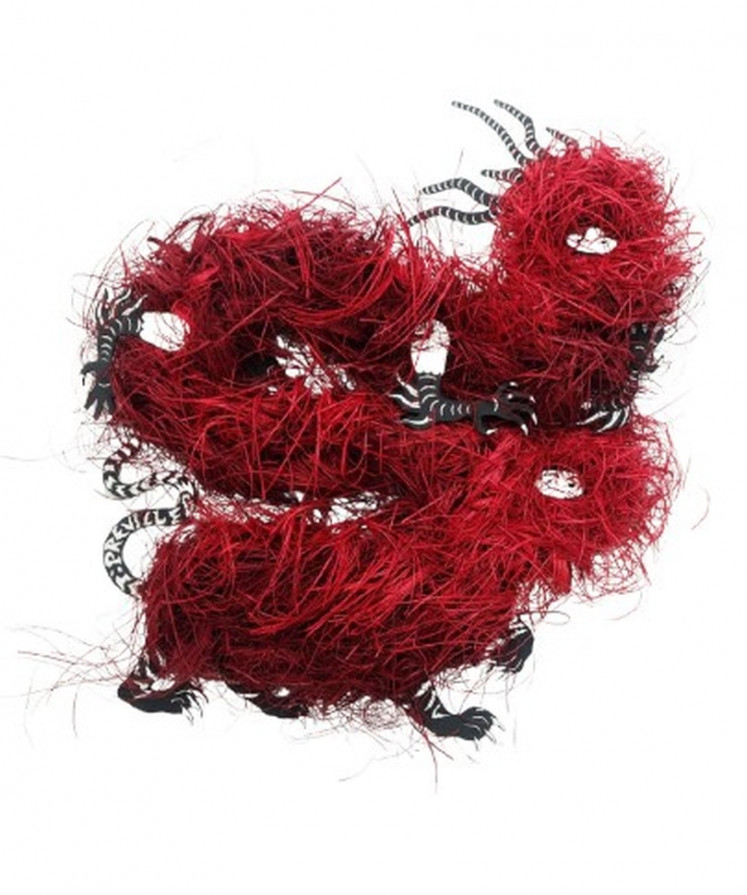
Buröng Series #8′ (2025) by Rudy Atjeh Dharmawan, hand-cut Fedrigoni Natural Rough, Winsor & Newton, Allegro Nero and Linmaster Paper Cranberry Red mounted on 2.5 mm Kappa board, 36 × 35 × 4.5 cm. PHOTO: ART JAKARTA PAPERS/THE JAKARTA POST
Personal, political, precise
Paper also offers countless possibilities for manipulating into highly desirable contemporary art.
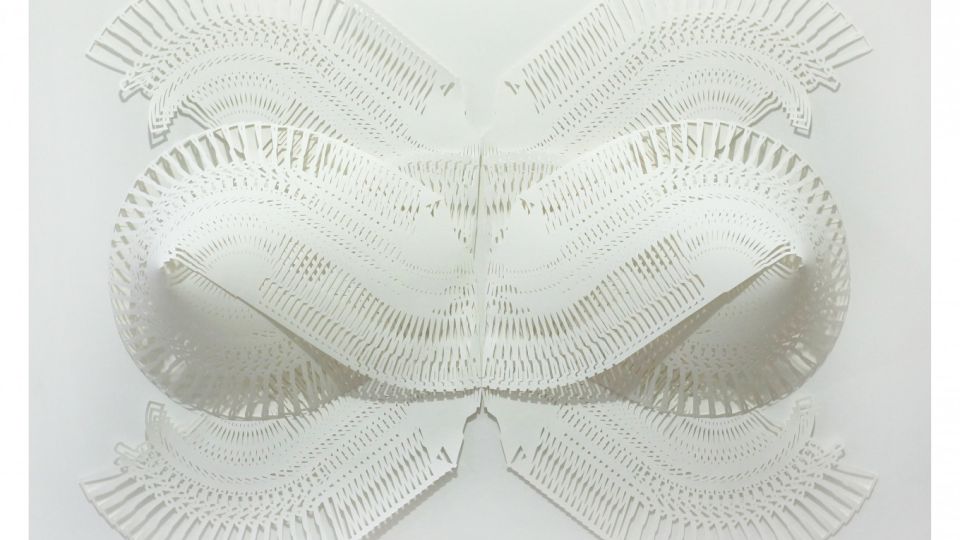
One notable example is the paper cutting oeuvre of Mujahidin Nurahman, whose tactile and intricate works have long captivated the art world. His immaculate artistry, rooted in refined arabesque designs derived from weaponry, began as a profound protest against the stigma attached to Islam globally.
In Art Jakarta Papers, his 2026 work Mo.nu.men.tal introduces architectural elements, subtly evoking a three-dimensional presence while it is mounted to the wall.
Born in 1982, Mujahidin is based in Bandung, West Jakarta. Active in the local art scene since 2003, he began his professional career in 2007 after completing his printmaking studies at the Bandung Institute of Technology Faculty of Art and Design (FSRD ITB). Paper has since become his primary medium, his intricate hand-cut works employing arabesque motifs as visual provocation in a distinctive hallmark.
Other artists use paper to articulate personal experiences or ideas they feel compelled to bring forward.
UOB Art Awards winner Meliantha Mulyawan notes that paper allows her to create works without toxic materials that could endanger her toddler’s health.
Born in 1992, Meliantha is also an alumnus of FSRD ITB, from which she graduated in 2014, and currently lives and works in neighboring Depok. her works are rooted in close observation of household objects encountered in everyday life. By isolating and reconfiguring familiar forms, she reveals subtle tensions between intimacy, routine and the structures that shape daily existence.
Graphic artist Theresia “Tere” Sitompul has likewise turned to carbon prints for a similar reason: minimizing potential exposure to harmful substances.
Born in 1981, she completed her undergraduate and graduate studies at the Indonesia Institute of the Arts (ISI) Yogyakarta and is currently a printmaking lecturer at ISI Surakarta in Central Java. Her practice has evolved from delicate, figurative works into broader existential inquiries into human life, nature and intergenerational continuity, often drawing on biblical narratives.
Hafidh A. Irfanda, VIP relations director at Art Jakarta, says the concept of Art Jakarta Papers had been in the works for some time, but it could only be realized after securing adequate funding, particularly from the event’s lead partner Bank Central Asia (BCA).
With its breadth of participating artists, Art Jakarta Papers 2026 promises fresh insights into how a familiar medium continues to reveal unexpected possibilities.