

July 10, 2025
JAKARTA – Amid intensifying geopolitical tensions and unlawful territorial claims by major powers, ASEAN must uphold international law and resolve its own members’ maritime disputes via arbitration in order to close ranks against external interference, Philippine experts have said, urging Indonesia to take a more assertive leadership role in uniting the bloc.
The experts warned further that lingering, unresolved maritime disputes among ASEAN members, often kept outside established arbitration mechanisms, risk undermining regional unity at a time when global regard for territorial integrity and the rule of law is fading.
In recent years, amid a rapidly changing global order and the increased interest of rival superpowers Beijing and Washington in expanding their influence in the Southeast Asian region, ASEAN members have found themselves at times struggling to protect their region’s strategic autonomy, with external interests posing security and political challenges.
Caught between competing powers, the 10-member bloc has found it difficult to assert its regional principles, including efforts to keep the region nuclear weapon-free and to respond decisively to geopolitical developments, such as China’s increasingly assertive posture in the South China Sea.
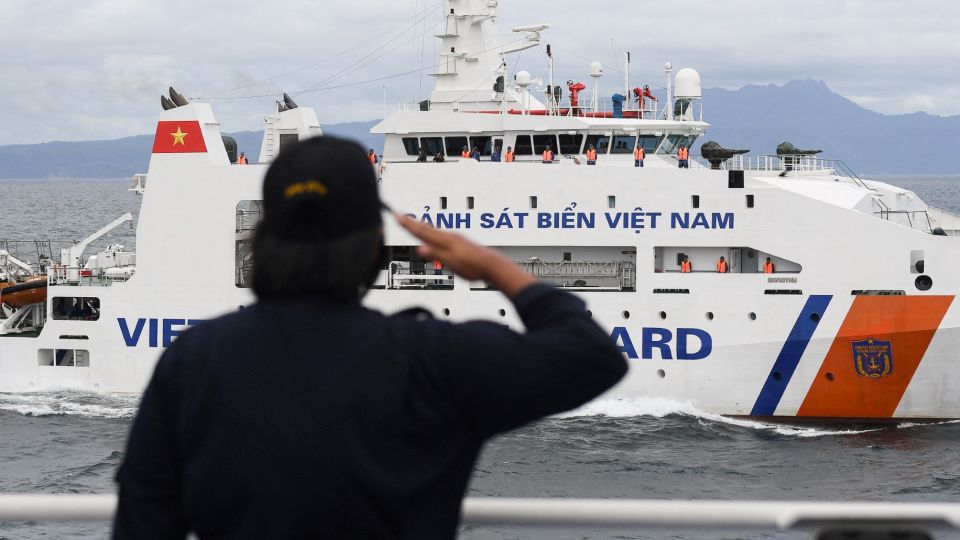
Beijing’s sweeping so-called “nine-dash line” claim over the resource-rich waters, often enforced by aggressive coast guard patrols, has long been a flashpoint for several ASEAN members like Vietnam and the Philippines, whose maritime territories are disputed by China.
Despite the Philippines’ legal victory in the 2016 Permanent Court of Arbitration (PCA) ruling, which invalidated China’s claims over Manila’s exclusive economic zones, Beijing has refused to comply, continuing its confrontational actions in the waters.
ASEAN’s response has largely centered on protracted negotiations with China over a long-delayed Code of Conduct (CoC) in the South China Sea. Critics, including the Philippines, have voiced frustration over what they perceive as the bloc’s ineffectiveness and reluctance to confront China more directly.
Although ASEAN has set a mid-2026 target for finalizing the COC, doubts persist over whether it will be concluded. Against this backdrop, some Philippine experts are now pushing for ASEAN to consolidate its internal position by, among other measures, resolving intra-bloc maritime disputes.
ASEAN members frequently squabble with each other over disputing territorial and maritime claims, though most disputes have been resolved bilaterally without international arbitration, adhering to the group’s tendency to avoid explicit confrontation and foreign interference.
With current geopolitical conditions, however, the time is nigh for ASEAN countries to settle their internal problems, they argue.
“Now we have Vietnam, Malaysia and the Philippines disputing over the Spratly Islands. It’s time to submit it to arbitration so we can move on. We belong to one community. If you want to form a family of nations, you must first settle your territorial disputes,” said Antonio T. Carpio, former justice of the Philippines’ Supreme Court, in an interview with The Jakarta Post in late June.
Julio Amador, an international relations expert at FACTS Asia, emphasized that a united ASEAN would project a stronger stance against external powers and demonstrate a real commitment to the rule of law.
“We are neighbors that are able to resolve and manage our disputes peacefully. We need to be able to show to the world as a nation, as an ASEAN community, we depend on the rule of law,” Amador said.
Indonesia, as the region’s largest country with a historical contribution to international law at sea, ought to take on a leadership role in helping ASEAN members conclude their territorial disputes with each other, the experts added, explaining that they have sought Jakarta’s support for a possible arbitration among Manila, Kuala Lumpur and Hanoi.
“Indonesia is a champion of international law in this regard. It can, I think, use all the tools it has available to help resolve this issue with the neighboring countries, among others by relaying its perspective,” Amador added.
Indonesia is not a claimant in the South China Sea, but has been involved in the negotiations for the CoC.
The Foreign Ministry did not respond to requests for comments for its support of arbitration.