

November 20, 2025
BELEM, BRAZIL – Asean is set to be the world’s fifth-largest economy, yet nations in the region are highly vulnerable to the impacts of climate change.
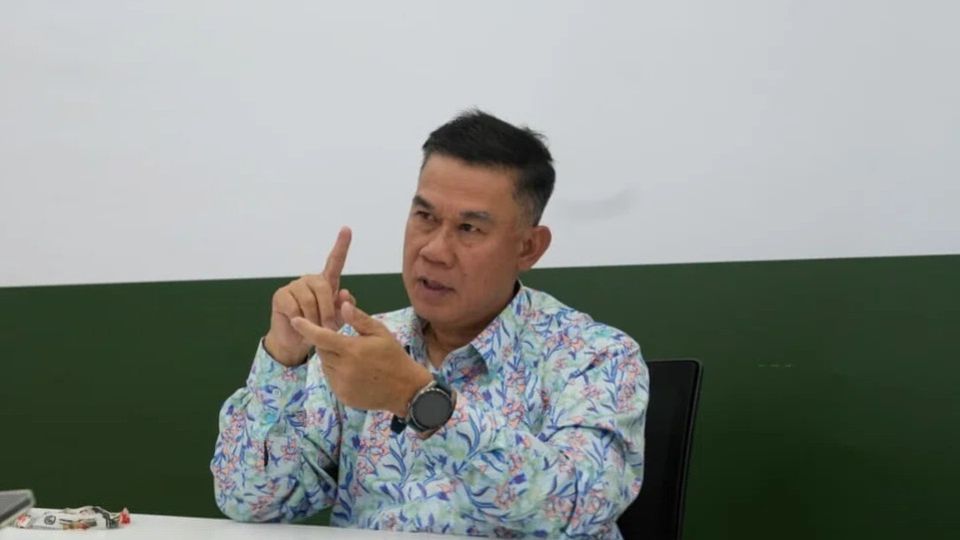
Given this, Asean should play a more active role at the UN climate negotiations by forming an official negotiating bloc to better represent its collective interests, Malaysia’s secretary-general for the Ministry of Natural Resources and Environmental Sustainability said on Nov 18.
Speaking to The Straits Times at the Malaysia Pavilion in Brazil’s Belem city, where UN climate conference COP30 is being held, Datuk Ching Thoo Kim said climate change will affect the region’s economy, which was the world’s fifth largest, at US$4.1 trillion (S$5.4 trillion), in 2024.
He added: “Floods, droughts, haze issues. These incidents affect our economies.”
He also suggested that Singapore take the lead in pursuing the idea of a bloc that represents the region’s interests at the annual forums, saying: “We very much hope that Singapore could pursue this idea of having that bloc formed for the next COP.”
Dr Ching Thoo said Malaysia had been advocating for such a group as the previous chair of the Asean Working Group on Climate Change, which Singapore now chairs.
Such working groups are chaired by an Asean member state based on interest, with a tenure of three years.
Negotiating blocs allow multiple countries to share information and speak with one voice during proceedings of the UN Conference of the Parties (COP), the decision-making body of a convention. For climate issues, this is the UN Convention Framework on Climate Change, the umbrella convention for the Paris Agreement.
There are currently 16 official negotiating groups at the annual climate summit, with the most recent addition in June for the group of Landlocked Developing Countries. Other groupings include the Alliance of Small Island States (AOSIS), which includes Singapore, Seychelles and Cuba.
These groupings usually have a shared position on a topic of negotiations.
For instance, AOSIS has always been vocal about getting the world to do more to cut their planet-warming emissions, while the grouping of Arab states – mainly economies dependent on oil and gas – traditionally opposes actions targeting fossil fuels.
With an Asean negotiating group, the region will be able to get the world to take note of its concerns, said Dr Ching Thoo, who is attending his third round of the UN climate talks.
However, for a bloc to be formed, agreement must be obtained from all of Asean’s 11 member states, which last met in Kuala Lumpur in October.
Discussions for the negotiation group are under way, said Dr Ching Thoo, adding that a few countries had suggested that technical issues of setting up a bloc needed to be ironed out before a decision can be made at the next meeting.
At COP30, Asean launched its first-ever pavilion, which featured talks on Asean’s energy cooperation efforts. It also hosted a mixer for young people from the region, and distributed pamphlets on its environmental work.
Separately, Malaysia hopes to tap climate finance for developing countries – which is also being discussed at COP30 – to realise its climate targets.
Dr Ching Thoo said: “I think many countries do share this same expectation, right? The dream of getting budget assistance, technology transfer, human capital.”
One of Malaysia’s focus areas is boosting its water security, he added.
The nation is also grappling with floods in its east and west coasts, with the government taking action to analyse and deal with the causes of flash floods.
Already, it has endured floods and landslides that devastated eight states in December 2021, which left nearly 50 dead and displaced more than 40,000 people. In total, the floods resulted in overall losses of about RM6.1 billion (S$1.9 billion), according to the Malaysian authorities.
Following the floods, the authorities planted mangroves along the shoreline to protect the area from flooding caused by rising sea levels, said Dr Ching Thoo.
By 2026, the ministry will present a Bill tackling climate change to Parliament, which will be complemented with the establishment of a climate agency.
When set up, the agency will help handle Malaysia’s plans to impose a carbon tax in 2026, allocate funds for projects to fight climate change and ensure the country meets its new climate targets for 2035, which it officially launched on Nov 17.
Said Dr Ching Thoo: “We do accept that we will start from zero on that; there will be a lot of trial and error, so it may take a long time, but it’s never too late to start.”