

July 27, 2026
JAKARTA – ASEAN almost seemed to be prophesying its own destiny last week when its foreign ministers’ meeting (AMM) in Manila focused predominantly on the United States-Israeli war on Iran, followed by the escalating military tension in the South China Sea. What is happening in the Middle East could one day happen in this region, too.
The war weighed heavily on the bloc for two reasons: Its economies depend heavily on Middle East energy, and the region’s contested waters carry a similar potential for global upheaval if they are mismanaged.
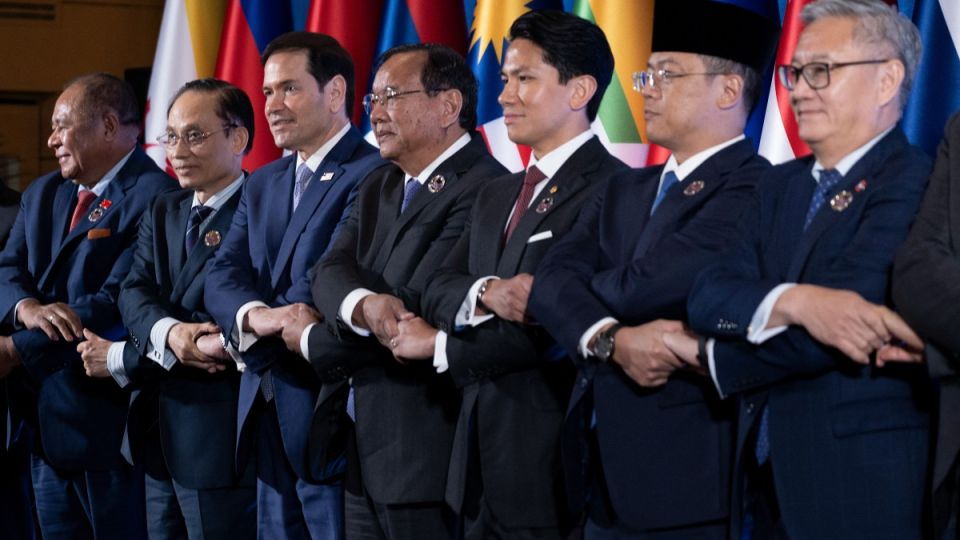
The US-Israel war on Iran dominated both the AMM and the ASEAN Regional Forum, attended by nearly all the world’s major military powers, including Chinese Foreign Minister Wang Yi and US Secretary of State Marco Rubio.
But ASEAN also sits astride one of the world’s busiest straits, the Malacca, where a conflict would be no less dangerous than that currently occurring over Hormuz.
Manila sits on the front line of the South China Sea dispute against China, which claims nearly the entire resource-rich sea as its own, though this has been rejected by the United Nations. Brunei, Malaysia and Vietnam also claim smaller portions of the vital waterway.
The South China Sea issue has seen little real progress, a concern that is reflected in the ministers’ joint communique: strongly worded but diplomatically cautious. They appear to recognize that ASEAN could become the next source of global instability if the region is not handled with care by all sides.
On the Middle East war, the ministers called on all parties to exercise utmost restraint, avoid actions that could worsen the situation and resolve differences through diplomacy and dialogue to preserve regional peace and stability.
On the South China Sea, they reaffirmed the importance of maintaining peace, security, stability, safety and freedom of navigation and overflight, in the context of what they described as the regional waterway’s potentials as a zone of peace, stability, prosperity and sustainable development.
Should the situation in the South China Sea spin out of control, a new war may become difficult to avoid, even if no one wishes it.
ASEAN continues to play its hand carefully with China, which has made clear it will not hesitate to use military force if outside powers intervene in the dispute.
The ministers ensured that their voice on the war was heard. At the same time, they denied Washington a platform for propaganda despite Rubio’s attempt to use the forum to place the blame squarely on Iran. ASEAN, however, pointed its finger at the US and Israel for starting the war.
Washington’s influence in the region has been eroding steadily, worsened by President Donald Trump’s latest unilateral tariffs against nearly all ASEAN countries.
The Philippines’ foreign minister, Maria Theresa Lazaro, deserves credit for not exploiting her role as ASEAN chair to advance her country’s interests, as reflected in the AMM’s balanced joint declaration.
ASEAN also succeeded in keeping the Myanmar crisis within the region’s purview, preventing outside powers from directly intervening in the affairs of the pariah state. The bloc ultimately maintained its stance against the military regime, even as some members pushed for more flexibility.
The message from the Manila forum is unmistakable: ASEAN’s stability can no longer be taken for granted. As global power rivalries intensify and flash points multiply, the bloc will need more than carefully worded communiques to keep the peace.
Real progress on the code of conduct in the South China Sea, sustained unity on Myanmar and diversified energy security will determine whether ASEAN remains a bystander to global conflict or one day become its epicenter.