

October 28, 2025
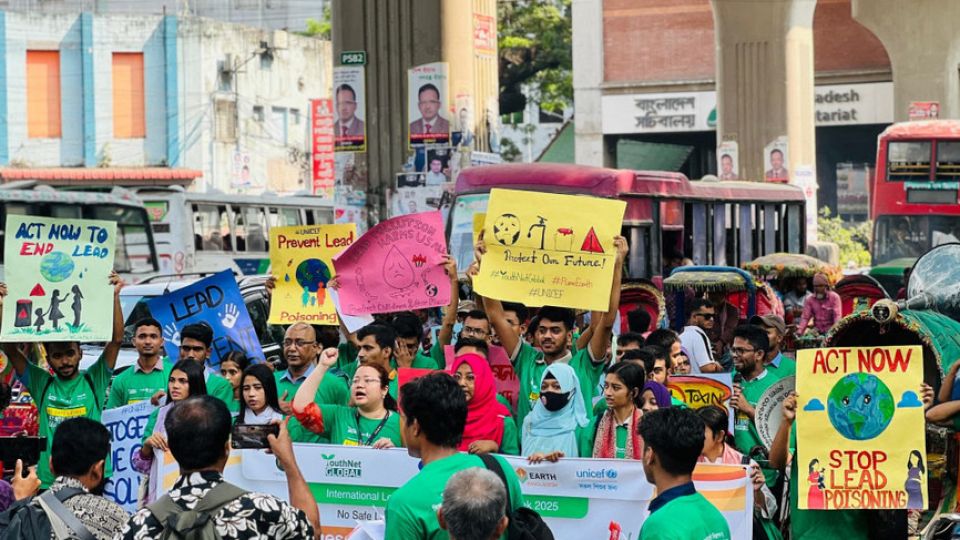
DHAKA – A rally in Dhaka on Monday called for urgent measures to end lead pollution, which continues to endanger the health of millions of children in Bangladesh, as part of the observance of International Lead Poisoning Prevention Week 2025.
This year’s global theme was “No Safe Level: Act Now to End Lead Exposure.”
The programme, held in front of the Dhaka Press Club, was organised by YouthNet Global and Pure Earth Bangladesh, in coordination with the Department of Environment and with support from Unicef.
Data presented at the rally highlighted that Bangladesh is among the top four most lead-contaminated countries in the world, with an estimated 36 million children (about 60 percent of the total) having elevated blood lead levels.
Speakers warned that even low levels of lead exposure can impair children’s intelligence and behaviour, while in adults it increases the risk of heart disease. In pregnant women, lead poisoning can cause miscarriage and stillbirth.
The World Bank estimates that the economic cost of lead pollution in Bangladesh is around $28.6 billion annually, equivalent to 6 to 9 percent of GDP.
Md Maruf Mohaimen, research officer at the Department of Environment and focal person on lead, said preventing lead pollution is a national priority. “The government is working with NGOs, communities, and industry to ensure strict enforcement of regulations and promote safer practices,” he told the gathering.
Mitali Das, country director of Pure Earth Bangladesh, said, “This toxic heavy metal has infiltrated our soil, water, food, and bodies. We are supporting remediation efforts and pushing for stricter regulations.”
Sohanur Rahman, executive coordinator of YouthNet Global, described lead poisoning as a “preventable crisis” and urged immediate collective action.
Organisers and participants issued a 10-point call to action, which included classifying lead as a toxic substance, conducting a national survey of lead levels, shutting down unsafe recycling factories, improving testing facilities, amending existing laws, and increasing public awareness.
Participants included youth activists, environmentalists, NGO workers, government officials, civil society representatives, and students, who formed a human chain to raise awareness.