

July 10, 2025
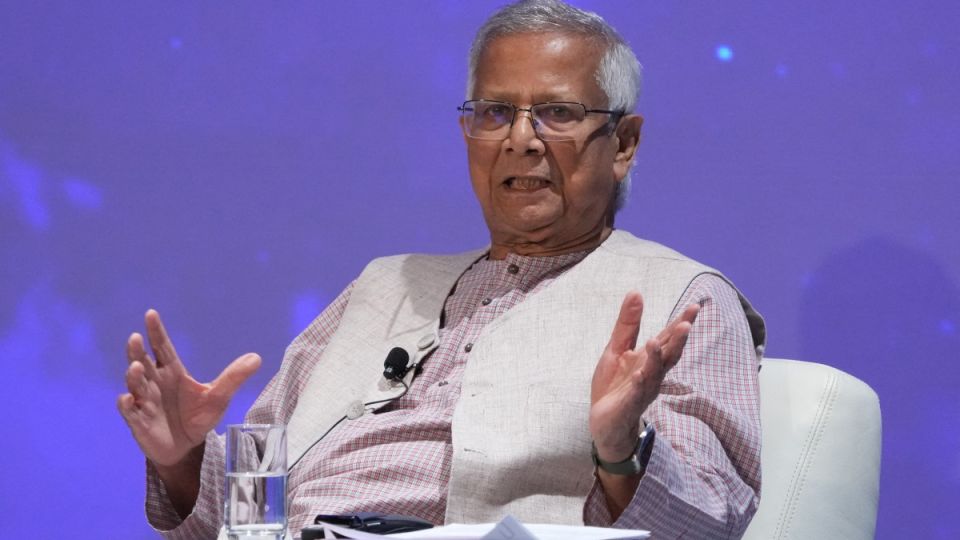
DHAKA – Chief Adviser Prof Muhammad Yunus yesterday ordered the authorities concerned to complete, by December, the preparations for the upcoming national election.
The polls are likely to take place in February or April, he told a meeting with law enforcers at the state guest house Jamuna in the capital.
The meeting, which discussed the law enforcement agencies’ preparedness for the election, was also attended by the home adviser, the national security adviser, the home secretary and top officials of the police, Rab, Ansar, Coast Guard and other forces.
Earlier, on the eve of Eid-ul-Azha, Yunus had said elections may take place in the first half of April next year.
“Later, we informed that if preparations are completed and reforms implemented, the election could be held before Ramadan — possibly in February. This means that everything needed to build the institutional framework for the election must begin now,” Yunus was quoted as saying by his Press Secretary Shafiqul Alam at a briefing last night.
On June 13, after a meeting with Tarique Rahman in London, where the BNP acting chairperson suggested that polls could take place before Ramadan, Yunus said it was indeed possible to hold the election the week before the month of fasting if all preparations are completed.
Ramadan is expected to begin in the third week of February.
Yesterday’s meeting discussed the reshuffle of deputy commissioners, upazila nirbahi officers and superintendents of police at the district level along with officers in charge at local police stations.
Usually, during elections, deputy commissioners serve as returning officers and upazila nirbahi officers as assistant returning officers, while SPs and OCs maintain law and order.
About whether the army will remain on the ground with magistracy power until the polls, Shafiqul said, “It is uncertain … but the army will serve as a strike force during the voting period.
“The chief adviser noted that previous elections were merely symbolic. Therefore, everyone involved must be trained to conduct a ‘real election’.”
He added, “Roles must be clearly defined. If necessary, a rehearsal election should be conducted.”
At the meeting, Yunus stressed the need to verify workforce availability.
“If additional appointments are necessary, recruitment should begin immediately and adequate training should be arranged.”
He also instructed the production of video content explaining election procedures for voters, which would be broadcast on television and social media for quick dissemination.
The chief adviser urged everyone to focus on safeguarding the women’s voting rights. Separate polling booths for new voters were also recommended.
He suggested evaluating whether “a separate voter list” could be created for those aged between 18 and 33.
“For the past 16 years, voters haven’t experienced a proper election. They recall violence and rigging at polling stations. In this election, we want voting to be a positive and memorable experience. First-time voters should feel proud — it should be a moment they cherish.”
The meeting also extensively discussed law enforcement deployment, identifying high-risk polling centres and the army’s role as a strike force.
Bangladesh will have 47,000 polling centres, around 16,000 of which are potentially “high-risk”. Special directives were issued to ensure peaceful voting at those locations.
Discussions also covered installing CCTV cameras at every centre to ensure proper monitoring and training of relevant personnel.
Previously, law enforcers were deployed for four days around election time. For this election, plans are underway for a seven-day deployment to maintain order before, during and after voting.
Yunus instructed officials to look into the possibility of excluding presiding officers or polling officials of the last three elections from the upcoming election duties, said Deputy Press Secretary Azad Majumder.
The CA also said control rooms will be established at upazila, district and divisional levels. “Police personnel may wear body cameras and could be assigned duties outside their regular jurisdictions.”
The media’s role also came up at the meeting. Azad said, “We’ve seen cases where people posing as media workers were actually affiliated with political parties and then became involved in the electoral process. Even genuine media professionals could not do their duties properly.
“And therefore, a media code of conduct should be prepared in advance, so that media workers know their boundaries and election officials also understand to what extent the media should have access.”
There were also discussions about polls observers, especially since the upcoming election has already drawn global attention. “We’re hoping for around two lakh observers. We have given clear instructions to ensure that political party workers don’t show up as ‘observers’,” he said.