

December 10, 2025
ISLAMABAD – Their recruitment marks a dangerous new export for Bangladesh and a perplexing shift in South Asian militancy.
Faisal Hossain told his family he had found work in Dubai. In reality, the 22-year-old from Madaripur, some 100 kilometres to the south of Bangladesh’s capital Dhaka, was fighting for the Tehreek-i-Taliban Pakistan (TTP) — a banned militant group waging insurgency against the Pakistani state in order to establish their own interpretation of Sharia law.
On September 26, 2025, Pakistani security forces killed Hossain during an operation in Karak district, Khyber Pakhtunkhwa. His brother, Arman, identified him from photos of bodies circulated in the media.
Hossain is one of at least four Bangladeshis confirmed killed while fighting for the TTP, referred to as the Fitna al-Khawarij by the Pakistan state. Bangladesh’s Counter Terrorism and Transnational Crime (CTTC) unit adds that another two dozen or so Bangladeshi nationals are currently in Pakistan, fighting for the TTP and other militant organisations — a trend that experts say first emerged in 2023 and has alarmed authorities in Dhaka.
A second Bangladeshi, Zubair Ahmed, 22, is believed to have been killed in April 2025. “At the end of April, I received a call from an unknown number, informing me that my son is no more,” his mother, Aleya Akter, tells Eos.
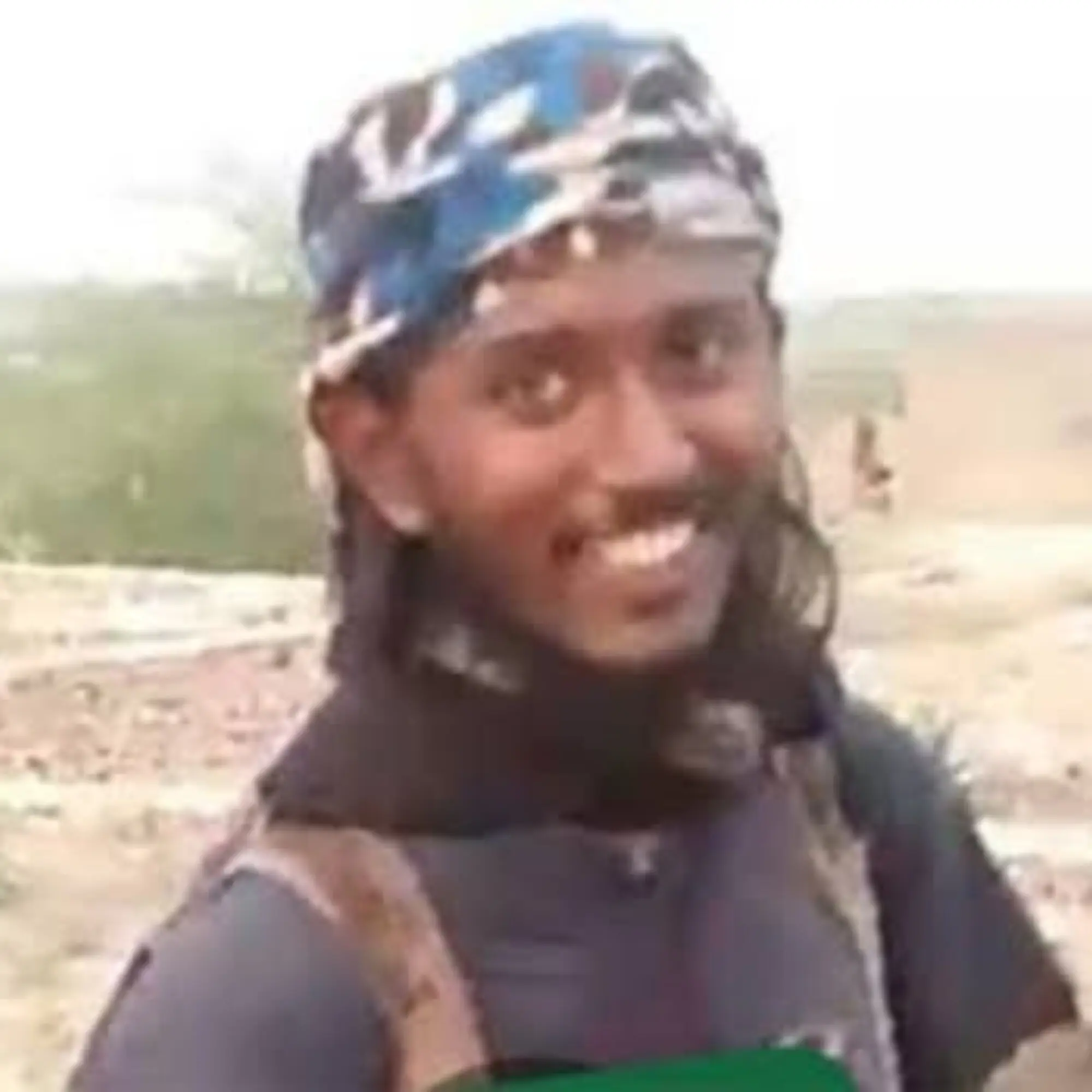
An undated image of Bangladeshi youth Faisal Hossain, which surfaced after news of his killing in a security operation against militants in Pakistan. PHOTO: SOCIAL MEDIA/DAWN
THE FATE OF RATAN DHALI
The fate of a third man, Ratan Dhali, 29, remains unclear. In early November, the CTTC informed his family he had been killed in the September 26 operation. But on December 1, a video surfaced on Bangladeshi social media, showing someone identified as Dhali and claiming to be alive.
CTTC Superintendent of Police (SP) Rawshan Sadia Afroz tells Eos that officers have investigated the video and found it to be fake and will not be conducting a forensic analysis. A TTP spokesperson in Pakistan, Imran Haider, who initially told Eos that Dhali was dead has now retracted the statement, saying Dhali was only presumed dead because he had been missing.
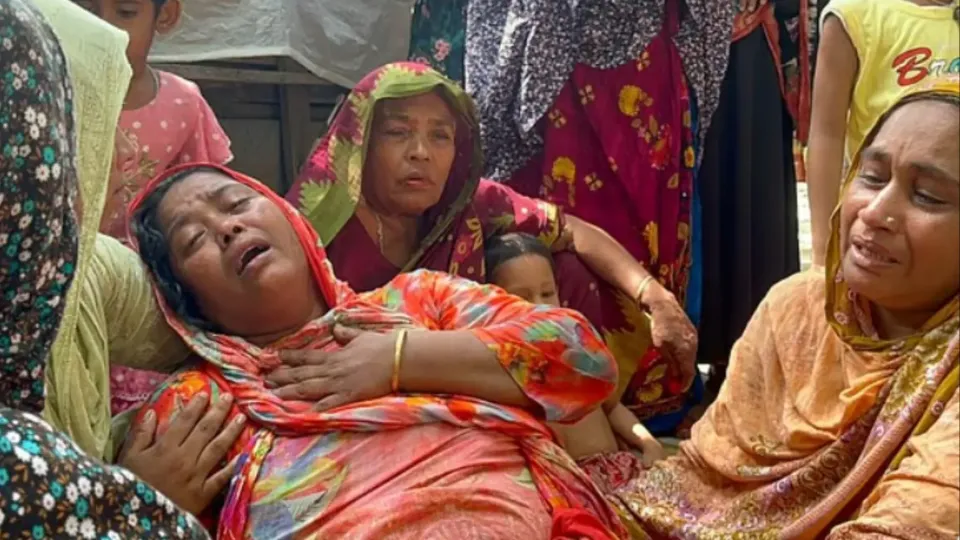
For Dhali’s family, the uncertainty is agonising. “A few days ago, the police informed me that my son had been killed in Pakistan,” his father Anwar Dhali tells Eos. “Now, God only knows whether my son is alive or not.
Ratan Dhali last spoke to his family on April 11, 2024 — Eid day. He made a video call to his mother, exchanged Eid greetings, and told her he was in Delhi and would soon travel to Dubai. “That was our last conversation. I never spoke to my son again,” says Selina Begum, Ratan’s mother, as she broke down in tears.
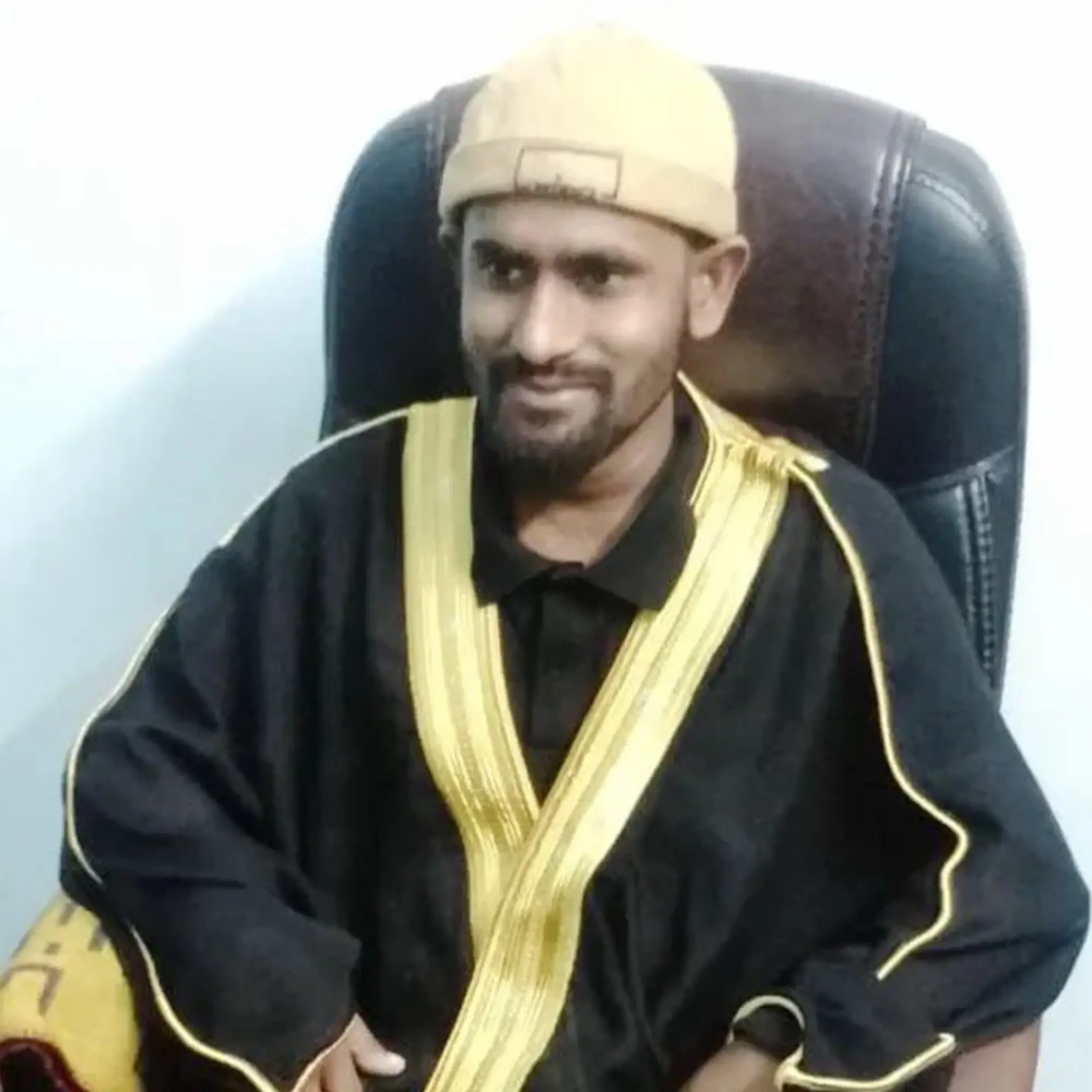
Ratan Dhali, a 29-year-old from Gopalganj district in southwestern Bangladesh, was reportedly killed in Pakistan this year. PHOTO: SOCIAL MEDIA/DAWN
RECRUITMENT METHOD
In March 2024, Hossain told his father that he wanted to go to Dubai. But his family did not agree, as they could not afford it. A few days later, Hossain told them that he had found a way to get there. “An elder brother will take me there and pay all the expenses. My salary will be 35,000 takas [$285]. After arriving in Dubai, I will have to repay him from my salary,” he told them.
When Hossain was about to leave home for Dubai, his elder brother Arman asked him if he had obtained a visa. Faisal replied that his visa would be from India. “I was surprised when I heard that,” Arman tells Eos.
“He [Hossain] would call us once or twice a month and say he was working in Dubai,” says Arman. “We last contacted him in June this year. Since then, despite repeated attempts, it has not been possible to reach him.”
Also in March 2024, Dhali told his father he was going to Dubai. “He told me that his boss had a clinic in Dubai and he wanted Ratan to work there,” his father Anwar tells Eos. About 20 days later, was when Dhali called his mother and told her he was in India and would be going to Dubai, he adds.
In reality, both men had travelled to India via the Benapole Land Port — the largest land port in Bangladesh, used for imports and exports to and from India — before staying in Kolkata and Delhi for several days. “Our investigation found that Ratan [Dhali] and Faisal [Hossain] entered India via the Benapole land port on March 27, 2024. From there, they illegally travelled to Pakistan through Afghanistan, where they joined the TTP,” says SP Afroz.
Dhali and Hossain had been working at a clinic called Rof Rof Hijama Centre, located in Dhaka’s Khilgaon area. When Eos went to look for the clinic, it was no longer in the building. A resident said it had relocated a few months earlier.
Zubair took a different route. He first went to Saudi Arabia in November 2024 to perform Umrah. After completing Umrah, he did not return home. The CTTC say Zubair entered Pakistan through legal channels from Saudi Arabia. “After performing Umrah, Zubair said he was not coming home for now, as he was busy spreading the message of Allah,” says Aleya Akter, his mother.
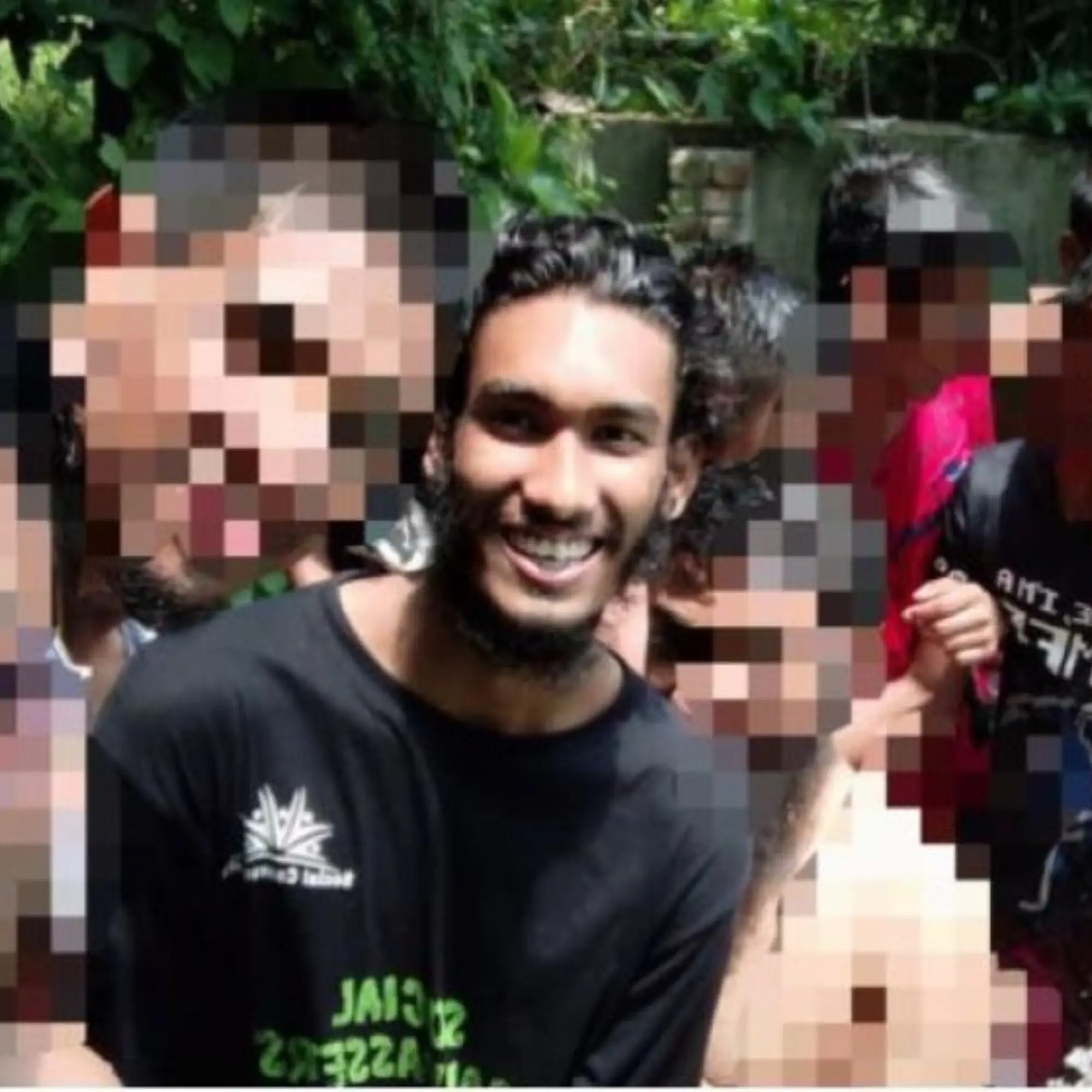
Zubair Ahmed, 22, was killed in Pakistan in April this year. PHOTO: SOCIAL MEDIA/DAWN
PREYING ON THE VULNERABLE
There seems to be certain similarities in the three recruits: all three come from modest backgrounds.
Dhali studied at a school in Dhaka until class five. His father drives an autorickshaw and his mother is a housewife. Hossain completed his matriculation at a school in Uttara, Dhaka. His father is a retired private-sector employee and his elder brother works as a deliveryman. Ahmed was pursuing an undergraduate degree in Islamic Studies and comes from a middle-class family.
The families of the victims allege that their sons were misled and trapped. They are demanding justice and have urged the Bangladesh government to take immediate action.
“I have only one demand. I want the people who led my son down this path to be punished,” says Ratan’s father. Faisal’s brother Arman echoes the demand. “I request the Bangladeshi government to investigate the root of this cycle and punish those responsible, so that no one else falls for this kind of deception and loses their child in the future,” he tells Eos.
Analysts say militant recruiters often target young people from rural districts, who are seeking jobs abroad or are financially strapped. “People from lower-middle-class families are the most vulnerable, which is why they can be easily persuaded by promises of money,” says Mubashar Hasan, a political analyst specialising in South Asian geopolitics and an adjunct researcher at the Western Sydney University in Australia.
Imran Haider, the TTP spokesperson in Pakistan who spoke to Eos via WhatsApp, contends that the young men knew what they were getting into. “No one was brought here by force or deception,” says Haider, who claims to be a former Bangladesh Air Force engineer. According to the CTTC, he left Bangladesh in April 2023.
SCALE OF THE ISSUE
According to SP Afroz, Bangladeshis are joining multiple militant organisations in Pakistan beyond the TTP. “So far, we have identified three of them: TTP, TLP [Tehreek-i-Labbaik Pakistan] and IMP [Ittehad-ul-Mujahideen Pakistan],” she says.
Experts believe the majority join the TTP, which was founded in 2007 by Baitullah Mehsud. Its current leader is Noor Wali Mehsud, who has publicly pledged allegiance to the Afghan Taliban.
While it remains difficult to estimate how many Bangladeshis are leaving for Pakistan, the trend has grown in recent years. “I am not obligated to tell you how many [Bangladeshis] are fighting for TTP,” says TTP’s Haider.
Bangladeshi police say they have identified dozens who are currently in Pakistan. “We have been able to identify 25 to 30 people who are currently in Pakistan and fighting,” says SP Afroz. Most of this recruitment, experts and security officials add, tends to take place online and often involves misinterpretation of religious edicts.
Dr Tawhidul Haque, a criminologist and associate professor at the University of Dhaka, says the involvement of Bangladeshi youth in militant organisations has been rising in recent years. “And they are now doing these things online, where they face less risk,” he adds.
Hasan Al Mahmud, who has been reporting on militancy in Bangladesh for years, says this trend of people from Bangladesh going to Pakistan to join militant organisations started in 2023. “They are constantly trying to recruit newcomers by misinterpreting religion,” he tells Eos.
Bangladesh police say that they have been cracking down on such activities and are keeping a close watch. “In recent years, we have identified at least a hundred people who were planning to go to Pakistan to engage in militancy,” says SP Afroz. “We stopped them.”
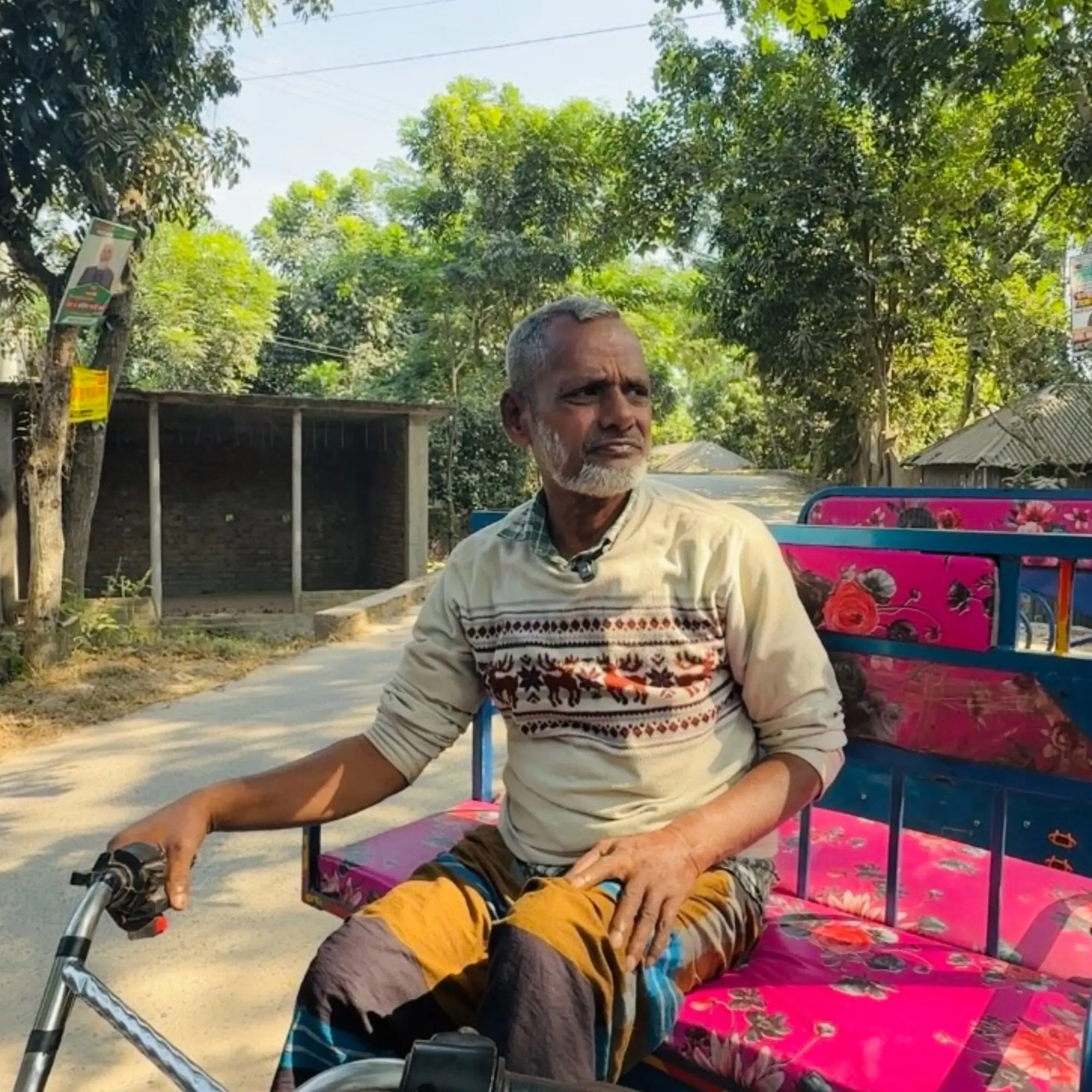
Ratan Dhali’s father, Anwar Dhali, is an autorickshaw driver in Gopalganj district in southwestern Bangladesh. PHOTO: DAWN
MOTIVATING FACTORS
For experts in Bangladesh, their fellow citizens fighting against a Muslim-majority country like Pakistan represents an unusual development. “In history, people from Bangladesh have gone to fight in many countries for various reasons,” says Mubashar Hasan, the political analyst. “But going to Pakistan to fight against the Pakistani government is a new and surprising development,” he adds.
Haider, the TTP spokesperson in Pakistan, says these young men are fighting to establish Islamic rule in Pakistan. “Although India and Pakistan were divided in 1947 based on the two-nation theory, Islamic rule was never truly established in Pakistan,” he says. “Our main goal is to establish Islamic rule in Pakistan.”
Mamunul Haque, an Islamic scholar and the joint secretary-general of Hefazat-i-Islam Bangladesh — one of the country’s largest Islamic organisations — rejects this reasoning. He says his organisation strongly advises against leaving Bangladesh to wage an armed war against another Islamic state. “Islam does not support this either,” he tells Eos.
But religious condemnation alone may not deter recruits who have already been radicalised — both online and offline. Dr Haque, the criminologist, says radicalised individuals lose their capacity for critical thinking. “They can’t think about things logically,” he says. “They simply follow whatever instructions they’re given.”
MILITANCY IN BANGLADESH
While Bangladesh has largely suppressed domestic militant activity in recent years, the emergence of citizens fighting abroad suggests extremist networks have adapted — recruiting online and sending fighters to foreign conflicts.
On July 5, 2025, an officer from the Intelligence Branch of Bangladesh’s Anti-Terrorism Unit filed a case with Savar police station in Dhaka, naming six people and their unidentified associates, confirms Savar police station’s officer-in-charge, Mohammad Jewel Mia. “The case, filed under the Anti-Terrorism Act, accuses them of conspiring against another country by attempting to disrupt and destabilise its public security on behalf of the TTP, as well as sharing extremist content,” Mia tells Eos.
Law enforcement agencies in Bangladesh also arrested two people on charges of being involved with the TTP, also in July this year. The case file states that some Bangladeshi youths, inspired by the ideology of the TTP, are attempting to establish an Islamic Sharia-based regime in Pakistan by travelling to Afghanistan.
However, local acts of terrorism are few and far between. The last major terrorist attack on Bangladeshi soil took place on the night of July 1, 2016, when five young Bangladeshis carried out a brutal attack at the Holey Artisan Bakery in Dhaka, killing 20 people — including 17 foreigners — by shooting and stabbing them. Two police officers were also killed while trying to stop the attackers.
That night, the international extremist organisation Islamic State (IS) claimed responsibility and released photos of the perpetrators. However, the government rejected the IS claim, attributing the attack to the Bangladeshi militant group Neo-Jama’atul Mujahideen Bangladesh.
In response to such attacks over the years, the Bangladeshi government has banned nine militant organisations in the country as terrorist groups. Under the prevailing laws, these groups are prohibited from carrying out any activities in Bangladesh.
Yet some banned groups have tried to resurface, including Hizb-ut-Tahrir Bangladesh, which was proscribed in 2009. In March 2024, hundreds of members of the group held a public procession following Friday prayers in Dhaka, demanding the country’s secular democracy be replaced by an Islamic caliphate. Law enforcement responded by firing tear gas and sound grenades and arrested several participants.
Meanwhile, even if the video claiming to show Ratan Dhali to be alive isn’t forensically analysed, his family remains trapped between hope and grief — unsure whether their son will return or if he has already become another casualty in a conflict most Bangladeshis barely understand.
It’s an uncertainty that may define this new phase of militancy: families left in limbo, young men vanishing across borders and a threat that operates in digital shadows, far beyond the reach of domestic law enforcement.
The writer is a Bangladeshi investigative journalist whose work has appeared in various publications, including The New York Times, Reuters and AFP. He can be contacted at marufhasan57983@gmail.com. X: @the_MarufHasan