

August 26, 2025
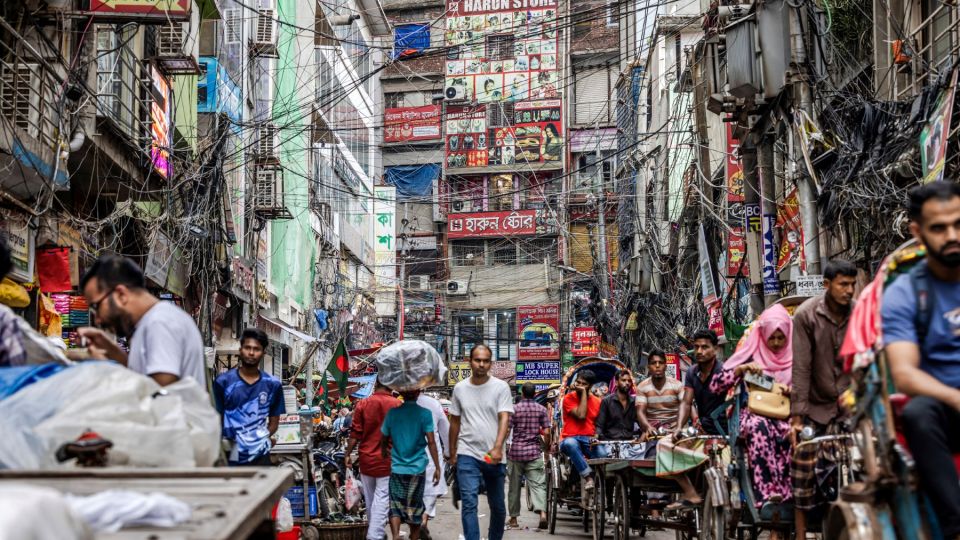
DHAKA – Poverty in Bangladesh has surged over the past three years, with nearly 28 percent of the population now poor compared to 18.7 percent in 2022, according to new estimates by the Power and Participation Research Centre.
The share of people living in extreme poverty has also risen to 9.35 percent this year, up from 5.6 percent three years ago.
This means one in every four people now lives below the poverty line, while one in every 10 is trapped in extreme poverty.
Another 18 percent are in the “vulnerable non-poor” group, at risk of falling into poverty anytime.
PPRC Executive Chairman Hossain Zillur Rahman revealed the findings yesterday while presenting the results of a national-level study on the state of the real economy at the LGED auditorium in Dhaka.
The think tank surveyed 8,067 households nationwide between May 8 and May 31 this year, with funding from the finance ministry.
The previous findings were reported by the Bangladesh Bureau of Statistics in Household Income and Expenditure Survey in 2022.
Zillur said the country is facing the impacts of three overlapping crises: the Covid-19 shock (2020–22), persistently high inflation, and political-economic uncertainty.
“So, focusing only on macroeconomics is not enough; we need to focus on people’s well-being, on ground realities, on equitable allocation,” he said, stressing the need to adopt a “people’s lens” in economic planning.
At the event, the PPRC also unveiled the scenario of household income, employment, expenditure, financial resilience, and digital participation in mid-2025. In some cases, it has also made a comparison between the pre-uprising and post-uprising impact on households.
55% SPENT ON FOOD
The survey found that nearly 55 percent of a household’s monthly expenditure now goes to food, averaging Tk 10,614.
Education costs average Tk 1,822 per month, healthcare Tk 1,556, transport Tk 1,478, and housing Tk 1,089.
Expenditure inequality has also intensified, with the national Gini coefficient rising to 0.436 from 0.334 in 2022.
Gini coefficient is used to measure income or wealth inequality, ranging from 0 (perfect equality) to 1 (perfect inequality).
The study found while rural inequality remains lower at 0.347, urban inequality has surged to 0.532.
Nationwide, the average monthly household income is Tk 32,685. Rural households earn Tk 29,205 and spend Tk 27,162, while urban households earn Tk 40,578 and spend Tk 44,961.
The divide is stark across social groups. The poorest 10 percent earn just Tk 8,477 a month but spend Tk 12,294, often through borrowing or external support. The richest 10 percent earn Tk 109,390 and spend Tk 101,163 — respectively around 13 and eight times more than the poorest.
Bangladesh is facing an “employment emergency” as 38 percent of those counted as employed are actually underemployed, working less than 40 hours a week, said Rahman.
Female labour force participation is stuck at 26 percent, and nearly half of workers are self-employed, underscoring both resilience and precarity.
BRIBE, HARASSMENT
The study found that although bribery has declined since August last year, it still remains widespread.
Before the political changeover, 8.54 percent of respondents reported paying bribes to access services; the rate fell to 3.69 percent afterward.
The highest amount of bribes was paid at government offices, followed by the police and political leaders.
Households have been paying more bribes to the police and political leaders in the post-August period compared to pre-August.
Nearly 39.4 percent of households now report paying bribes to the police, up from around 31.8 percent before August, while bribe payments to political leaders have risen to 33 percent from 31.77 percent.
Payments in government offices have declined from 52.34 percent to 46.76 percent.
On “Hoirani” (harassment, frustration or dysfunction in systems), 75 percent of respondents said “nothing works without money” best described their experience.
Other frustrations included bureaucratic hassle (36.4 percent), unclear service paths (22.3 percent), and delays or indecision (21.8 percent).
5 EMERGING VULNERABILITIES
The report identified five new vulnerabilities deepening poverty. These are chronic illness, debt burden, poverty with a female-headed family, food insecurity, and using non-sanitary conditions.
More than half of all households (51.3 percent) have at least one chronically ill member. Among them, 34.6 percent suffer from high blood pressure, 26.5 percent from gastric problems, 23 percent from diabetes, and 16 percent from heart disease.
“This is the new dimension of vulnerability. Families are incurring additional expenses on healthcare due to chronic illnesses, which in turn is increasing their debt burden.
“We have to address it with a new type of social safety net,” said Rahman.
Secondly, about one in every four poor households (24 percent) is female-headed. These households are among the most disadvantaged in society and therefore require special support.
Thirdly, poverty is associated with a rising debt burden: the bottom 40 percent have debt burden at least twice their savings while the bottom 4 percent saw a net 7 percent increase in debt levels over the last six months.
“Fourthly, food insecurity is a growing risk. Many of the poorest households skip multiple meals weekly or go a full day without food, and the situation is gradually worsening,” said Rahman.
Finally, with only five years remaining to achieve the SDGs, the sanitation crisis remains critical. Nearly 36 percent of the population still uses non-sanitary toilets. Ensuring safe sanitation has therefore become extremely important, Rahman said.
SIGNS OF RESILIENCE
Despite mounting hardship, the report highlighted some resilience.
Around 15 percent of households, mostly from higher income groups, receive remittances averaging Tk 29,000 per month. The domestic consumer market remains vibrant, estimated at $211 billion.
Digital preparedness is also widespread: 74 percent of households — and 80 percent of those with youth — own smartphones. Families are also adapting their consumption patterns, diversifying energy sources to cope with rising costs.
Yet optimism remains uneven.
While 62 percent of the wealthiest households feel hopeful about the future, only one-third of the poorest share that sentiment, with the majority expressing pessimism about their prospects.