

April 30, 2026
TOKYO – The decision by the Bank of Japan to keep its benchmark rate unchanged at its Policy Board meeting on Tuesday was made on the judgment that the impact of surging crude oil prices — resulting from the deteriorating Middle East situation — on the economy and prices needs to be ascertained.
However, the content of the Outlook for Economic Activity and Prices, released after the meeting, and BOJ Gov. Kazuo Ueda’s statement at a press conference suggest that the central bank has a favorable stance on future rate hikes.
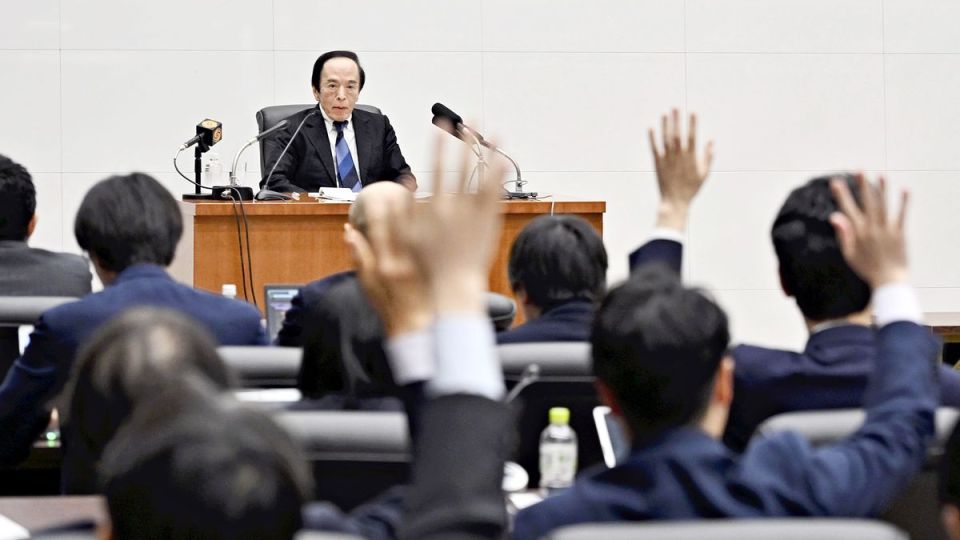
“We’d like to spend more time gauging whether there will be a phase of major economic correction or if there is a risk that prices will clearly shift upward,” Ueda said at the press conference, explaining the BOJ’s decision to maintain its benchmark rate.
He described the soaring oil prices as a “temporary supply shock” and said the decision to maintain the key interest rate was made in line with the thought that it is appropriate to take a wait-and-see approach.
Two months have passed since the U.S.-Israeli attacks on Iran began. The Strait of Hormuz, a strategic location along the oil transportation route from the Middle East, has effectively been closed. In Japan, this has caused prices of naphtha and other items to soar, triggering supply concerns.
The central bank believes that if the situation is prolonged, prices of a wide range of goods will rise, creating upward pressure on prices in general, while the economy will experience downward pressure through restrictions on corporate activities and reduced consumption. It has been closely monitoring the situation since the Policy Board meeting in March.
With the outlook in the Middle East still uncertain, the BOJ has concluded that more time is needed to assess the situation.
Impact on economic growth
According to the bank’s quarterly economic outlook report compiled at the Tuesday Policy Board meeting, the projected year-on-year rate of increase in the consumer price index for fiscal 2026 has risen significantly from the previous report in January. The figure represents the median of the nine Policy Board members’ forecasts. The report also revised down the projected real GDP growth rate.
The report was drawn up on the premise that the impact of the Middle East situation will ease and crude oil prices will decline, making it possible for the country to avoid large-scale supply chain disruption. Nevertheless, it ultimately assumed that significant downward pressure would be placed on the economic growth rate in fiscal 2026.
While indicating the possibility of economic slowdown, the outlook report contained expressions indicating increased caution against rising prices. “It is necessary to pay due attention, in particular, to keep the risk of inflation significantly deviating upward from materializing and thereby exerting an adverse impact on the economy afterward,” the report says.
Opinions divided
Three of the nine BOJ policymakers, Junko Nakagawa, Hajime Takata and Naoki Tamura, voted against the decision to keep the rate steady, instead calling to raise it, noting upward pressure on prices.
Takata and Tamura are known as hawkish members who generally favor raising the interest rate. The two had proposed interest rate hikes and voted against board decisions at previous meetings. But the decision by Nakagawa to vote against the board decision was received with surprise in the market.
“We have to take [their views] seriously,” Ueda said at the press conference. But he also stressed that the remaining six members, including himself, are also wary of rising prices, indicating growing vigilance within the BOJ.