

January 7, 2026
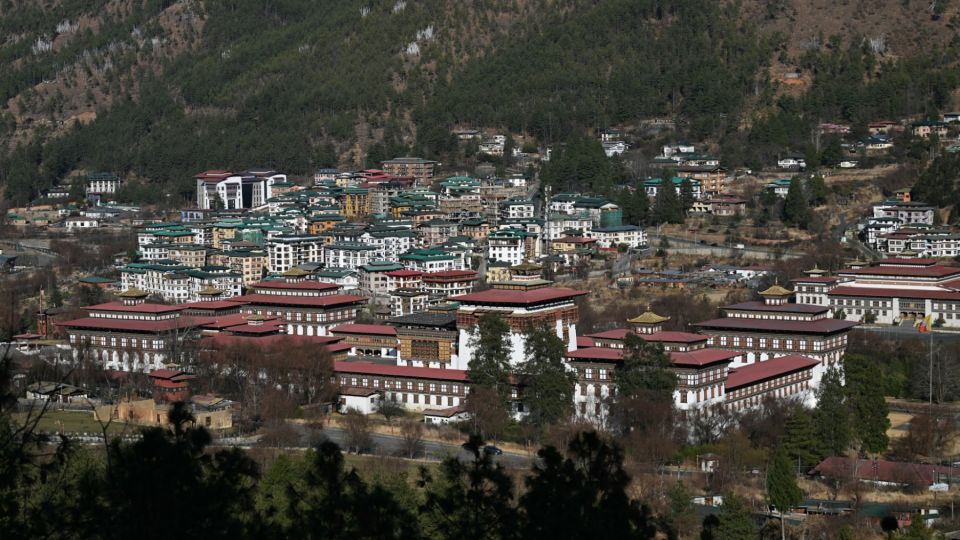
THIMPHU – On a sunny afternoon in Thimphu, the difference is easy to feel. Step off a shaded, tree-lined footpath onto a wide asphalt road, and the heat rises sharply underfoot. That everyday experience is now backed by science.
A recent study confirms that Urban Heat Islands (UHIs) are not only present in Thimphu Thromde but are expanding and could worsen significantly over the next decade.
An urban heat island occurs when a city becomes hotter than nearby areas because concrete, roads, and buildings absorb and trap heat, while a lack of trees reduces natural cooling.
The research, titled “Modeling and Simulation of Urban Heat Islands in Thimphu Thromde Using Artificial Neural Networks,” shows that as Thimphu continues to grow, the city is becoming progressively hotter than its surroundings.
By 2031, built-up areas in Thimphu Thromde are projected to exceed 72.82 percent, leaving less space for vegetation. As a result, both UHI and extreme UHI zones are expected to expand, posing increasing risks to thermal comfort, public health, and energy demand.
An urban heat island is a simple but serious phenomenon. Buildings, roads, and concrete surfaces absorb and store heat during the day, releasing it slowly at night.
At the same time, the loss of trees and green spaces reduces natural cooling, while vehicles, air conditioners, and other human activities add extra heat. The result is a city that struggles to cool down even after sunset.
The study places Thimphu’s experience within a global pattern.
Cities such as New Delhi, Tokyo, New York, Paris, and Beijing have long struggled with urban heat islands. In parts of New Delhi, temperatures can be 5–7°C higher than in surrounding rural areas. Paris has seen deadly heat waves intensified by dense stone buildings and narrow streets. Tokyo and New York have responded by promoting green roofs and reflective “cool roofs” to reduce heat absorption.
Thimphu, the study suggests, is now approaching a similar crossroads.
Using multi-temporal landsat satellite imagery, geographic information systems, and an Artificial Neural Network model, researchers analysed land use, land cover, and surface temperatures across Thimphu Thromde.
The findings show a clear relationship. Areas with dense buildings, paved roads, and limited vegetation consistently recorded higher land surface temperatures.
Between 2001 and 2021, Thimphu’s built-up area increased by nearly 17 percent, while vegetation cover declined by more than 19 percent. During the same period, surface temperature differences across the thromde ranged from 18°C to 26°C, with the hottest zones concentrated in dense urban cores.
Several prominent locations were identified as extreme UHI zones, including the Jigme Dorji Wangchuck National Referral Hospital area, the Thimphu Clock Tower, Motithang, and Tashi Commercial.
These places share common characteristics – multistorey buildings, asphalt pavements, heavy traffic, and limited green cover. Even artificial football turfs were found to contribute significantly to heat buildup.
Future modelling suggests a concerning picture for 2031. Hot UHI zones are expected to cover about 14.26 percent of Thimphu, while very hot zones may reach over six percent. New heat islands are also likely to emerge along the city’s expanding outskirts, where urban sprawl is replacing vegetation and open land.
The implications go beyond discomfort.
Elevated urban temperatures increase the risk of heat stress, especially for children, the elderly, and those with existing health conditions. Prolonged exposure can reduce productivity, worsen respiratory illnesses, and, in extreme cases, lead to heat exhaustion or heat stroke. Warmer cities also demand more electricity for cooling, placing additional pressure on energy systems.
Urban heat islands further contribute to air and water quality problems. Higher temperatures accelerate ground-level ozone formation, worsening air pollution. Heated surfaces also warm stormwater runoff, which can reduce oxygen levels in nearby rivers and streams, affecting aquatic life.
In Bhutan, these risks are heightened by geography. Urban expansion is largely confined to narrow valley systems, limiting airflow and increasing heat retention. Thimphu’s reinforced concrete buildings, often roofed with corrugated galvanised iron sheets, further intensify heat absorption.
Experts say that urban heat islands are not inevitable. Cities worldwide have shown that strategic planning can reduce heat. Expanding urban green spaces, planting roadside trees, preserving vegetation during development, promoting green roofs, and using lighter-coloured or heat-reflective building materials can significantly lower surface temperatures.
The study was supported under the Enhancing Climate Resilience of the Urban Landscapes and Communities in the Thimphu–Paro Region project, funded by the Global Environment Facility and implemented by the government in partnership with the UNDP. Its findings provide crucial scientific evidence to guide climate-resilient urban planning.