

September 1, 2025
THIMPHU – Amid a growing health crisis fueled by a rise in non-communicable diseases (NCDs), the government is implementing a new taxation framework for alcohol and tobacco products to discourage their consumption.
Some of the major causes of NCDs in the country are alcohol, tobacco, doma, drugs, vapes, e-cigarettes, and pan masala products (such as supari, shikar, and himgold).
To combat rising NCDs, the government is implementing diverse interventions, including a revised taxation on alcohol and tobacco products, which will take effect early next year.
NCDs such as cardiovascular diseases, cancers, chronic respiratory diseases, and diabetes account for nearly 80 percent of global deaths, with 41 million people dying every year. In Bhutan, NCDs cause 72 percent of all deaths.
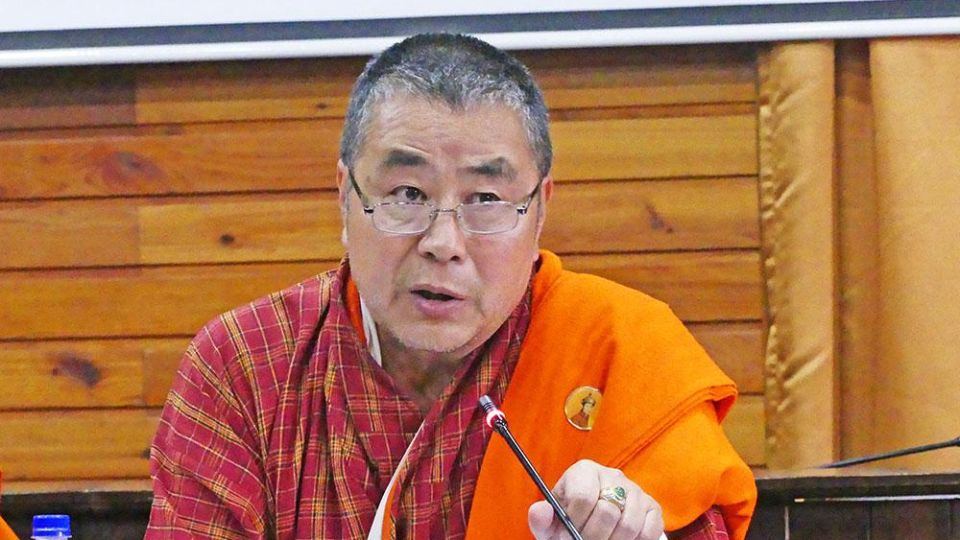
Health Minister Tandin Wangchuk said that the ministry, in collaboration with various stakeholders, has taken a united, multisectoral approach.
The stakeholders include the Ministry of Education and Skills Development, Department of Trade, Department of Revenue and Customs, Royal Bhutan Police, Bhutan Food and Drug Authority, The Pema Secretariat, Civil Society Organisations (CSOs), and Local Governments.
“Under the National Multisectoral Action for the Prevention and Control of NCDs, we are pursuing several key strategies,” Lyonpo added.
At present, a 100 percent sales tax and 10 percent customs duty are levied on tobacco products like cigarettes. In the revised version, the government will impose a 10 percent customs duty and a 5 percent goods and services tax (GST), with an additional excise tax of Nu 10 per cigarette stick and Nu 40 per cigar stick.
For other tobacco products, such as chewing tobacco, the existing 110 percent tax will be replaced with a 10 percent customs duty, 5 percent GST, and an excise tax of Nu 1,500 per kg.
E-cigarettes and their accessories will also see changes in their tax rates. The 110 percent tax on e-cigarettes, vapes, and refills will be replaced by a 100 percent excise tax, 10 percent customs duty, and 5 percent GST.
For e-cigarette devices, the revised tax will be a 10 percent excise tax, 10 percent customs duty, and 5 percent GST, replacing the previous 15 percent tax (5 percent sales tax and 10 percent customs duty).
The government is also revising the tax on alcohol, which is currently 200 percent. In the revision version, alcohol products will be charged a 100 percent customs duty and 5 percent GST, along with an excise tax of Nu 1,200 per litre of pure alcohol content.
For example, a 750 ml bottle of whisky with a 42.8 percent alcohol content will be taxed between Nu 325 and Nu 643.
The current 30 percent tax on pan masala and supari products will remain unchanged.
Lyonpo said that the government will also strengthen regulations.
“The revision of the Tobacco Control Rules and Regulations will explicitly include e-cigarettes, vapes, and heated tobacco products. Furthermore, the Ministry of Health has proposed that the permissible Blood Alcohol Concentration while driving be reduced from 0.08 percent to 0.05 percent,” Lyonpo added.
The health ministry is also working to control advertisements for harmful products and is conducting targeted campaigns to inform citizens, particularly young people, about the health risks of substance use and to shift social and cultural norms around areca nut (doma) and alcohol consumption.
Another intervention is providing cessation support for alcohol dependency by expanding access to counseling, brief intervention services from health facilities, and rehabilitation services in collaboration with CSOs. Support is being provided to those struggling with alcohol and other substance use disorders.
Lyonpo urged the public to take care of their health by changing lifestyles, improving dietary habits, engaging in more physical activity, and refraining from using alcohol and tobacco. Lyonpo cautioned that if individuals do not take care of their own health, the government’s NCD interventions would be less effective.