

July 6, 2026
THIMPHU – Every monsoon, Bhutan waits.
Drivers scan mountain slopes before rounding blind corners. Farmers wonder whether vegetables will reach markets. Tourists hope the road ahead remains open. Ambulances, buses, fuel tankers and supply trucks all depend on a single promise: that the country’s highways remain passable.
That promise is becoming increasingly difficult to keep.
In Bhutan, where roads are the country’s primary transport network and the backbone of its economy, the impact of a warming climate is becoming increasingly visible, not only in rising temperatures or melting glaciers, but in longer road closures, more frequent landslides, mounting repair bills, overstretched engineers, and communities cut off from essential services.
A five-year analysis by the Ministry of Infrastructure and Transport (MoIT) shows national highways are remaining closed significantly longer during the monsoon than they did just five years ago, while infrastructure damage this fiscal year (2024–25) has reached Nu 1.18 billion, more than three times the ministry’s annual budget for monsoon road restoration.
The findings reveal the growing challenge of keeping Bhutan connected as extreme weather events become more frequent and intense.
“At this time of year, the country is in the monsoon season, when heavy rainfall is both expected and unavoidable,” Lyonpo Chandra Bdr Gurung said. “Landslides and flash floods are recurring natural hazards that accompany the monsoon annually. This year, however, the situation has been exacerbated by substantial rainfall prior to the onset of the monsoon, which left soils highly saturated.”
MoIT is careful not to attribute one severe monsoon season solely to climate change.
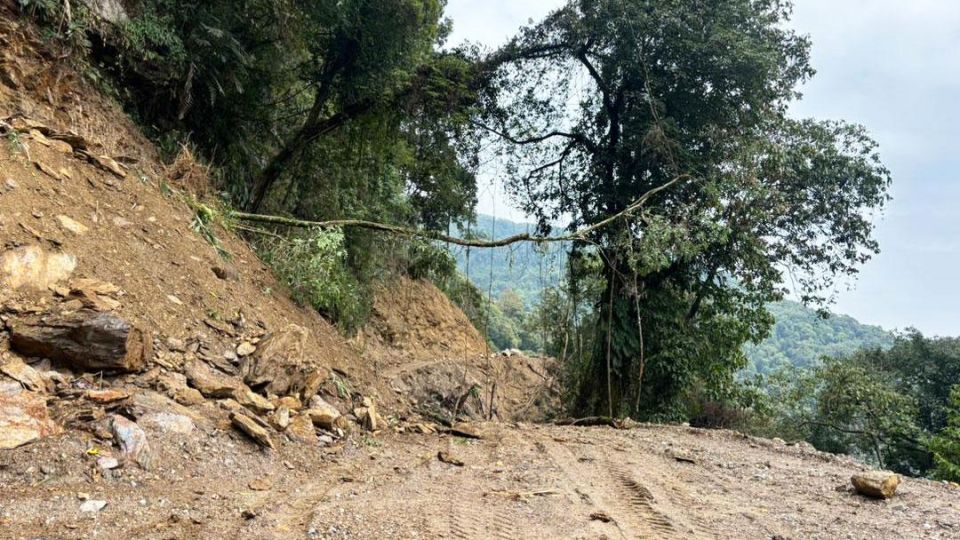
Scientists require long-term observations before making definitive attributions. The country’s steep Himalayan geology, naturally fragile slopes, and human activities such as road construction and land-use changes all contribute to landslide risks. Heavy rainfall remains the immediate trigger.
Five years of road closure data reveal a disturbing pattern. In 2020–21, roads remained closed for an average of just half a day. Within two years, the average closure duration had surged to 5.6 days, a twelve-fold increase.
Although conditions have moderated somewhat, roads still remain closed for around three days on average during the 2024–25 fiscal year, which is six times longer than the baseline five years ago.
The country also recorded 494 road blockages in 2020–21. That number nearly tripled to 1,402 by 2022–23 before easing to 343 in 2023–24, and falling to 305 road blocks in 2024–25.
The greatest burden falls on three critical regions. The Phuentsholing Regional Office alone accounted for almost 35 percent of all road closures during the worst year. Sarpang, responsible for large sections of the East-West Highway, experienced over 23 percent, while Tingtibi in Zhemgang accounted for another 11 percent.
Together, these three regions represented roughly 69 percent of all recorded closures.
The Phuentsholing–Thimphu Highway remains the country’s single most vulnerable corridor, while repeated disruptions along the East-West Highway threaten commerce, tourism, and national connectivity.
When the monsoon becomes the enemy
The transformation is perhaps most evident in what is causing road failures. Only one quarter of road blockages were caused by landslides in fiscal year 2020–21. Today, landslides account for nearly seven out of every ten road failures. In fiscal year 2024–25, 68 percent of all blockages resulted from landslides.
Debris flows, flash floods and rockslides make up most of the remaining cases. Today, 98 percent of road blockages occur during the monsoon season (May–October), compared with 66 percent only a few years earlier.
The monsoon has become the defining season of infrastructure risk. Its consequences are enormous.
Road closures during the monsoon now average 6.67 days compared with only 0.32 days during the dry season.
These disruptions occur precisely when agricultural production, tourism and commercial activity are at their seasonal peak.
The ministry’s own assessment draws an important distinction: geology has not changed. The country’s mountains have always been steep. Its terrain has always been fragile. What has changed is the climate acting upon that terrain.
The price of staying connected
Keeping Bhutan connected is becoming extraordinarily expensive. The ministry sets aside Nu 350 million each year for monsoon-related road restoration. This year alone, however, infrastructure damage has already reached about Nu 1.18 billion.
Roads account for nearly Nu 990 million. Bridge damage adds another Nu 187 million. The damage bill exceeds the annual budget by more than three times.
Even after the Cabinet approved an additional Nu 272.11 million in emergency funding, the available resources remain insufficient to restore all damaged infrastructure.
Climate change is no longer only an environmental issue. It has become a fiscal issue. Every landslide diverts money from new development into emergency repairs. Every washed-out bridge delays planned investments. Every additional emergency excavation stretches public finances further.
For a developing mountain nation with competing priorities in health, education and economic growth, these costs are becoming increasingly difficult to absorb.
The invisible heroes
Behind every reopened highway is an overstretched workforce.
Across nine regional offices, engineers maintain 24-hour emergency response throughout the monsoon. Under normal standards, one engineer is expected to oversee about 55 kilometres of road. Today, many supervise more than 85 kilometres.
At the same time, they continue managing construction projects, routine maintenance and emergency response operations.
The workload has become unsustainable.
While the public sees excavators clearing debris after a landslide, far less visible is the human cost of maintaining national connectivity in an era of increasingly frequent extreme weather.
A warmer Bhutan
Another indicator of climate change is emerging from an unexpected place: winter.
Snow-related road closures have fallen by 94 percent within five years. Incidents dropped from 79 in fiscal year 2021–22 to just five in fiscal year 2024–25.
The snowline is moving higher. Road crews now spend far less time clearing snow and ice. Instead, their attention is shifting towards the growing challenge posed by increasingly severe monsoon impacts. While winter risks are declining, monsoon risks are rapidly intensifying.