

May 28, 2026
ZHEMGANG – When Dasho Keiji Nishioka arrived in Panbang in 1976, he entered a place that felt almost untouched by time. The foothills were thick with forests. People moved through them as if they belonged entirely to the land, practicing shifting cultivation and living close to the wilderness. Roads were few. Farming, at least in the settled sense, was still finding its footing.
What Dasho Keiji Nishioka introduced was not simply agriculture. It was stability.
Posted in Panbang from 1976 to 1980 under an integrated rural development project, the Japanese agriculture expert helped communities clear land for settlement and encouraged farming practices that could sustain families over the long term. In many ways, he helped shape the beginning of modern agriculture in one of Bhutan’s most remote regions.
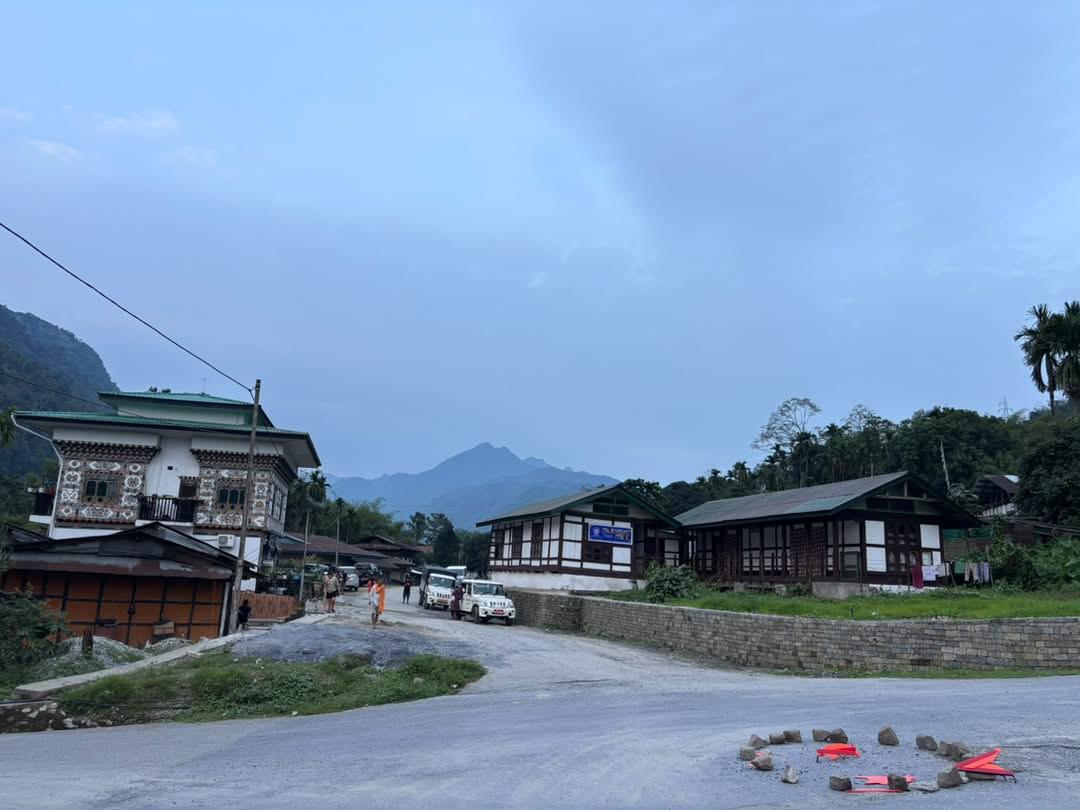
Even today, older residents speak of him with an affection usually reserved for family. The people of Panbang still call him “Japan Sahib.”
Across Bhutan, people continue to grow what is fondly known as “Japan rice,” though many may not realise where it came from. Dasho Nishioka was among the early Japanese experts who introduced the variety to the country. His contribution left such a deep mark that Bhutan honoured him with the red scarf in 1980 and later the Druk Thuksey (Heart Son of Bhutan) in 1992.
Panbang, however, is changing again.
Back then, the forest had to be cleared for survival. Now the thinking has shifted. People here are trying to protect the forests because they may be the very thing that keeps the community alive.
Few places are better suited for eco-tourism than Zhemgang. With nearly 94 percent forest cover, the district feels less like a settlement carved into nature and more like nature itself allowing people to stay. Mountains disappear beneath thick green canopies. Rivers cut through valleys that still feel wild.
Panbang sits deep within that world, about 76 kilometres from the nearest primary highway in Tingtibi. Nobody stumbles into Panbang by chance. The journey is long enough that arriving there feels deliberate.
Yet its remoteness, once seen as a disadvantage, now feels oddly valuable, perhaps even protective.
Bordering Royal Manas National Park, the country’s oldest protected area established in 1966, Panbang lies within one of the region’s richest ecological landscapes. Just downhill, the forest continues seamlessly into India’s Manas National Park. Together, they form the Greater Manas Landscape, one of the world’s largest protected tiger habitats.
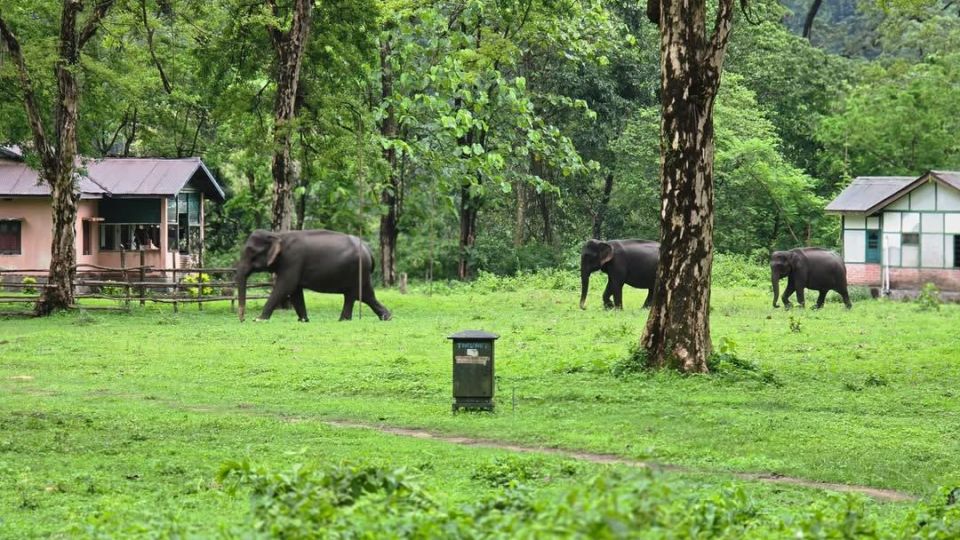
The numbers themselve show the richness of biodiversity, though the experience of standing there says more than statistics ever could. With wild cats, hundreds of bird species, amphibians, reptiles, tropical plants, and mammals, the forest does not feel silent. It feels alive in layers.
The rivers matter just as much.
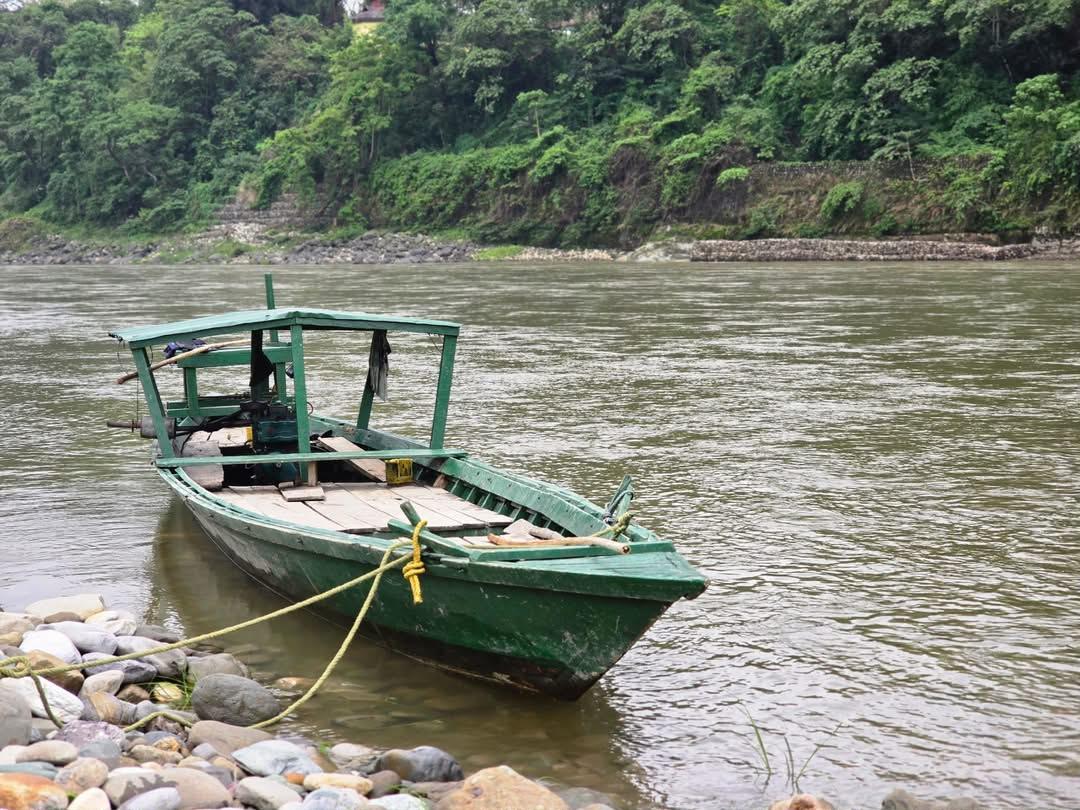
Panbang lies where the Mangdechhu and Drangmechhu river systems meet to form the Manas River before it flows into Assam and eventually joins the Brahmaputra River. These rivers have long sustained local life, feeding farms and carrying stories. Now they are carrying something else. Opportunity.
Here, locals often say, live both the tiger of the land and the tiger of the river, the golden mahseer.
The idea that these forests and rivers could support livelihoods through eco-tourism only began gaining traction in the late 2000s. Residents still remember Tshewang Wangchuk of the Bhutan Foundation encouraging young people to see eco-tourism not as a romantic idea for outsiders but as practical work that could help rural communities survive.
Rural-urban migration was already draining villages then. Young people were leaving because there seemed to be little reason to stay.
Some stayed anyway.
Among them was Ugyen Tshering, now owner of Panbang’s first private eco-tourism agency. Along with several other local youths, many of whom were school dropouts, the Bhutan Foundation helped form the “River Guides of Panbang,” the community’s first eco-tourism group. The group still operates today and later expanded into hospitality with the Jungle Eco-Lodge.
Ugyen Tshering remembers another Panbang, too.
“During Dasho Nishioka’s time, along with paddy cultivation, he introduced mandarins,” he said. “There were so many mandarins then that we had a surplus. Now there are hardly any.”
There is something deeply painful in that memory. Rural Bhutan often carries stories of abundance and decline side by side.
Even the name Panbang holds history. “Pan” refers to the handcrafted bamboo boats once used to cross the Drangmechhu during winter. “Bang” means the launching point of those boats. Long before bridges arrived, the river shaped movement, trade, and daily life.
The suspension bridge built during Nishioka’s time still stands today beside the newer motorable bridge. Residents still refer to it as Dasho Nishioka’s bridge. Nearby, his traditional Bhutanese house remains carefully preserved. Not far from it stands a grove of agarwood trees, in an area locals still call “Agur Camp.”
Inside the house, photographs tell the story of a different Panbang. Villagers clearing land together. Traditional canoes crossing the river. The bridge under construction. And later, images of residents gathered by the Drangmechhu to scatter Nishioka’s ashes into the river he had once crossed so many times himself.
The gallery feels less like a museum and more like memory refusing to disappear.
Today, eco-lodges employ local people. Visitors come for rafting, fly-fishing, birdwatching, and the kind of biodiversity that increasingly feels rare in the modern world. With Panbang now tied to the broader vision of the Gelephu Mindfulness City, hopes are rising again. New trails are being planned. More tourists are arriving. Slowly, cautiously, people are imagining a future here.
Still, Panbang’s story is not really about tourism alone. It is about adaptation. About a community learning, more than once, how to survive without losing itself in the process.
Years ago, the forest had to be cut to make life possible. Now the challenge is exactly the opposite. The future may depend on keeping it standing in the land of the Khengpas, whose very name “Kheng” translates directly to “rich forest.”