

February 16, 2026
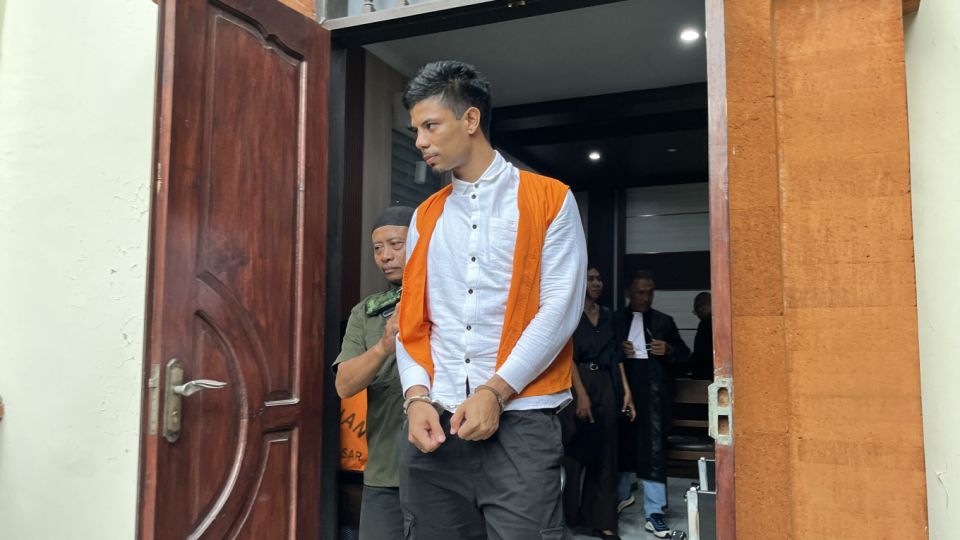
DENPASAR – The Denpasar District Court has sentenced a Brazilian national to 18 years in prison for smuggling 3 kilograms of cocaine into Bali.
Judge Ni Made Oktimandiani said Yuri Bezerra da Costa had been found guilty of breaching Article 113 of the 2009 Narcotics Law, which pertains to the trafficking of more than 5 grams of narcotics and carries a maximum penalty of death.
“The court sentences the defendant to 18 years’ imprisonment and a fine of Rp 1 billion [US$59,385], with a subsidiary term of 190 days’ imprisonment should the fine not be paid,” she said on Thursday.
The ruling exceeded the prosecutors’ demand of 16 years in prison and a Rp 2 billion fine.
In handing down the verdict, Ni Made said an aggravating factor was that Da Costa’s actions had undermined the government’s efforts to combat drug trafficking.
However, she added that the court considered the defendant’s admission of guilt, expression of remorse and cooperative conduct throughout the trial as mitigating factors.
The court has given Da Costa seven days to appeal the verdict to a higher court.
Da Costa’s lawyer, Joni Lay, said his client had not yet decided whether to challenge the verdict.
“We will carefully consider our next steps, as filing an appeal carries risks, including the possibility of a harsher sentence,” he said.
Da Costa was arrested on July 13 last year upon arriving at Bali’s I Gusti Ngurah Rai International Airport from Brazil. Customs officers discovered two packages in his luggage containing a total of 3.2 kg of cocaine.
Investigators said the drugs had been transported from Rio de Janeiro on an Emirates flight, with a transit stop in Dubai, United Arab Emirates.
During questioning, Da Costa told authorities that he had been instructed to deliver the cocaine to Bali and was promised Rp 400 million for the task.
The National Narcotics Agency (BNN) has warned that Indonesia is facing a rising wave of transnational drug trafficking, with popular tourist destinations, particularly Bali, emerging as prime targets.
Authorities have reported an increasing presence of South American cartels on the island, including the Sinaloa Cartel, widely regarded as the largest and most powerful drug trafficking group in the Western Hemisphere.
BNN noted that the growing number of trafficking attempts from South America indicates these cartels are establishing networks in Indonesia and may already be collaborating with local syndicates.
The agency said this expansion has been partly driven by intensified crackdowns on international drug operations in the United States under President Donald Trump, which forced these groups to seek new markets.
Last year, the Bali Police arrested 225 foreign nationals for alleged crimes on the island, with the majority, 107 cases, linked to drug trafficking.
Aside from South American cartels, authorities have also found evidence of a growing presence of Ukrainian and Russian drug syndicates in Bali, amid the ongoing war between those two countries.
They have also uncovered narcotics networks connected to Southeast Asia’s Golden Triangle, which spans northern Myanmar and parts of Laos and Thailand, as well as the Golden Crescent, which stretches across Afghanistan, Pakistan and Iran. (nal)