

July 2, 2026
PHNOM PENH – Cambodia’s power sector has transitioned from near-total dependence on fossil fuels more than three decades ago to a system where more than 63 per cent of electricity is now generated from clean energy sources, according to Minister of Mines and Energy Keo Rottanak.
Speaking at the inauguration of a new flood-resilient school building in the remote Pursat province village of Raing Til on June 28, the minister said Cambodia’s electricity progress reflected decades of peace, infrastructure development and long-term partnerships with foreign investors, including Malaysia-based Leader Energy.
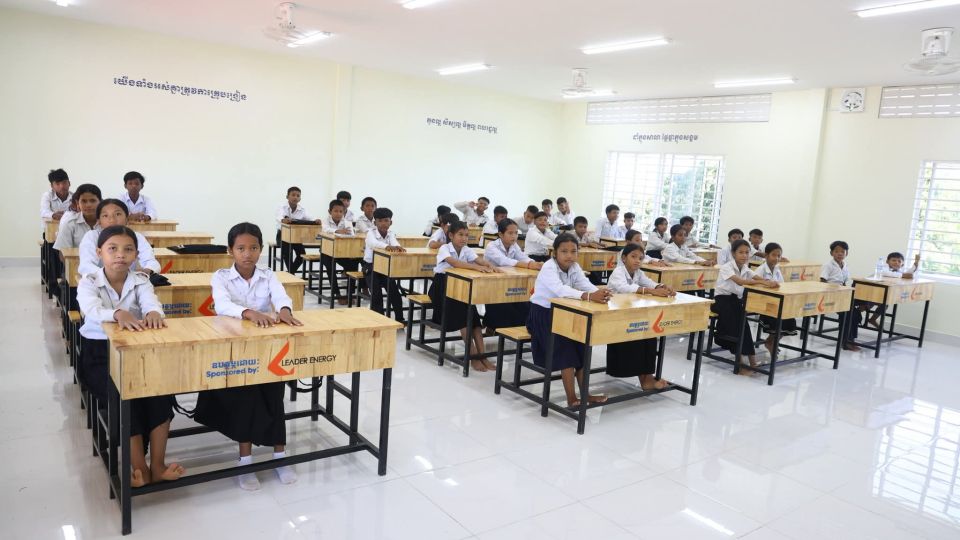
The five-classroom building at Raing Til Primary School, in Kandieng district, is worth nearly $200,000. It was donated by Leader Energy through the Electricite du Cambodge working group. The building is designed to stand above flood levels in a community that largely lives around water.
Rottanak said the village was one of the most remote communities in Pursat and that the higher construction cost reflected the need to build the school above seasonal flood levels.
“This is a community that essentially lives on water,” he said.
“If you were to come here about three months later, the whole area is flooded and this is a little island that they reside on,” he added.
The minister noted that the ceremony was not only about the school. He used the occasion to highlight Cambodia’s wider energy transformation over the past 32 years, noting that Leader Energy had been among the early investors that helped rebuild the Kingdom’s power infrastructure after war and civil conflict.
“More than 32 years ago, almost 100 per cent of Cambodia’s electricity was produced from oil,” he said.
“Now Cambodia produces more than 63 per cent of its energy from clean energy,” he added.
He also highlighted dramatic changes to electricity access across the Kingdom.
When Leader Energy first invested in Cambodia, less than 10 per cent of Cambodian villages and households had access to electricity, he said. Today, more than 99 per cent of villages are connected to the national grid, while household access has exceeded 96 per cent.
“From less than 10 per cent to more than 95, it was the joint work of leaders, partners and the Cambodian government,” he declared.
Rottanak said the transformation showed how Cambodia had moved from a post-war rehabilitation stage to a country with national grid connectivity, expanding clean energy generation and growing ambitions for regional power trade.
He thanked Leader Energy’s management, including Dato’ Sean, for maintaining confidence in Cambodia for more than three decades, saying the company came to the Kingdom when peace had not yet been fully restored and physical infrastructure remained weak.
“When you came, the country was not yet at peace. We had war, we had conflicts, poor infrastructure, no connectivity, but you came and you helped build this country,” he said.
The minister described Leader Energy as a “living witness” to Cambodia’s development, noting that its work had contributed to energy infrastructure, humanitarian support and corporate social responsibility, including assistance to the Cambodian Red Cross and support during natural disasters.
He said the company’s current move into clean energy and wind power marked a new milestone in the partnership.
“The fact that you have now moved into clean energy and wind energy is a new milestone to be celebrated,” he noted.
Rottanak also pointed to Cambodia’s ambition to take part in the ASEAN Power Grid, saying the country was working with regional partners toward a future in which the Kingdom could buy and sell electricity with neighbouring countries.
He noted that Leader Energy was also working with the Cambodian government on regional power connectivity, including potential links from Cambodia to Malaysia and Singapore.
“Our ambition is not only to create enough clean energy for Cambodia to use,” he said.
“We are working with ASEAN countries to connect the power networks of 11 countries in the future,” he added.
While the minister framed the speech around the country’s energy transition, he highlighted how the new school showed how infrastructure investment could reach communities that had long been isolated by geography and flooding.
He explained that modern education facilities are necessary to give children in Raing Til more choices in life, rather than leaving them dependent only on fishing or farming.
“We do not want the children of Raing Til to only catch fish or farm in the future,” he said.
“Some may want to become doctors, electrical engineers or even future leaders,” added.
He suggested that some of the students could one day work in the energy sector, including for Malaysian companies operating in Cambodia.
Rottanak urged local working groups to continue paying attention to the community’s health services, food security and basic needs, noting that the area faces seasonal flooding and limited agricultural land.
He said the school inauguration reflected the next stage of development for communities such as Raing Til, where electricity, education and connectivity could help open new opportunities for the younger generation.
“Today is the day we move forward again for our long-term future,” he said.