

January 28, 2026
JAKARTA – The surge in Indonesians seeking repatriation from Cambodia following a crackdown on online scam centers has drawn national scrutiny over its scale, with many pointing to structural weaknesses in employment and economic security that lure vulnerable Indonesians into such work
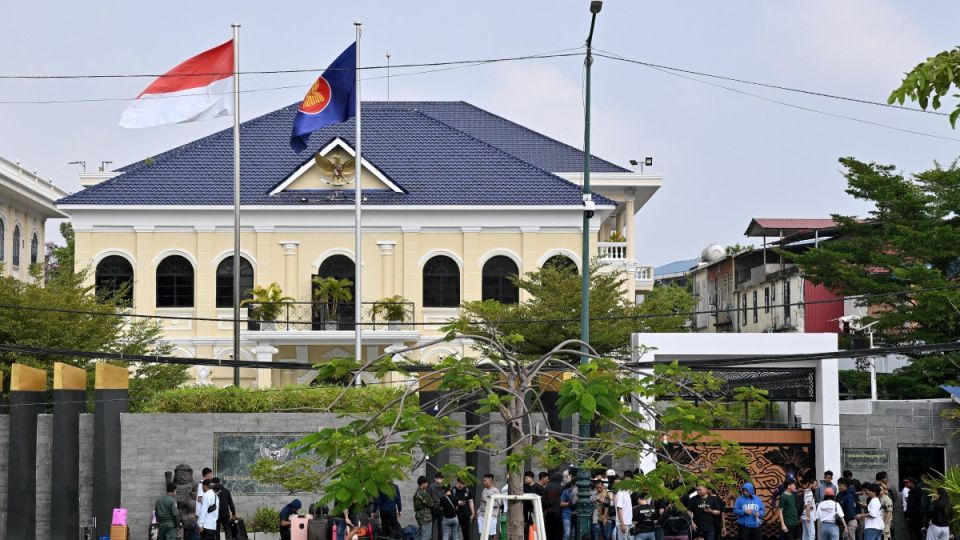
As of Monday, a total of 2,277 Indonesian nationals were seeking assistance from the Indonesian Embassy in Phnom Penh to return home, marking a spike in repatriation requests from Indonesians since Jan. 16.
The embassy said these Indonesians came in person from various regions following a large-scale clean-up by the Cambodian government against online scam operations in recent weeks, which has also forced other foreign nationals to flee the centers.
“There were 122 Indonesians reporting directly [to the office] on Saturday alone, which was a decrease compared with the previous three days, which reached over 200 per day,” the embassy said in its press release on Sunday.
Indonesian Ambassador to Cambodia Santo Darmosumarto said last week that the embassy “is coordinating intensively with Cambodian authorities” to expedite the return of these nationals.
Indonesia is among several Asian countries whose citizens have ended up in Cambodia’s scamming compounds, falling victim to online fraud networks’ false promises of high-paying jobs.
A report from human rights group Amnesty International last year recorded at least 53 compounds across Cambodia that violated thousands of workers’ human rights through “forced labor […] torture and other ill-treatment”.
Criminals or victims?
The phenomenon has since fueled debate at home, with differing views emerging as to whether the Indonesians involved in scam operations should be treated as victims of trafficking or as perpetrators of crime.
“They are scammers, so they are criminals. Whether they’re conscious of it or not, that’s the [truth]. […] That’s what they do as a job,” Financial Services Authority (OJK) chairman Mahendra Siregar said in a meeting with House of Representatives Commission XI overseeing financial affairs on Jan. 22, kompas.com reported.
Experts and human rights advocates have since condemned Mahendra’s comment, warning that it risks oversimplifying complex trafficking cases.
“Saying they are not victims is a reckless claim and reflects insensitivity to the reality of modern slavery,” Amnesty International Indonesia executive director Usman Hamid said in a statement on Monday, adding that it could make the government “reluctant to investigate the root problem, which is human trafficking”.
Larger problem
Karsiwen, chair of migrant advocacy group Kabar Bumi, said authorities should not generalize all Indonesians involved in scam operations, stressing the need to examine how each person was recruited.
“A lot of perpetrators are forced under pressure to do what they do,” she told The Jakarta Post on Monday.
Centre for Strategic and International Studies (CSIS) economist Deni Friawan said economic pressure was a key driver among these individuals, regardless of whether they knowingly engaged in criminal activity.
“Many feel it is difficult to find work here, so they look for opportunities abroad. Unfortunately, it could turn out to be criminal activities, which they may not have realized at the beginning,” Deni said.
Rights group Migrant Care executive director Wahyu Susilo shared the same sentiment, noting that the trafficking cases “surged and multiplied” during the COVID-19 pandemic when people lost their jobs, citing data released by the Foreign Ministry in 2023.
“This shows how fragile our economy and employment structure is, pushing people to seek work overseas, even in countries with lower GDPs [gross domestic products] than Indonesia, including Cambodia, Laos and Myanmar,” Wahyu said.
A special staff member at the Protection of Indonesian Migrant Workers (P2MI) Ministry Bintang Wahyu Saputra did not immediately respond to the Post’s request for comments.
Ambassador Santo told the Post on Monday that the embassy would not designate returnees as criminals or trafficking victims, it would “focus only on protecting Indonesian citizens abroad”.