

July 7, 2026
PHNOM PENH – Cambodia’s women entrepreneurs have welcomed a new $20 million green financing initiative aimed at helping businesses invest in energy-efficient technologies. They noted, however, that practical barriers ranging from collateral requirements to restrictive eligibility rules could prevent many women-led enterprises from benefiting unless lenders adopt more flexible approaches.
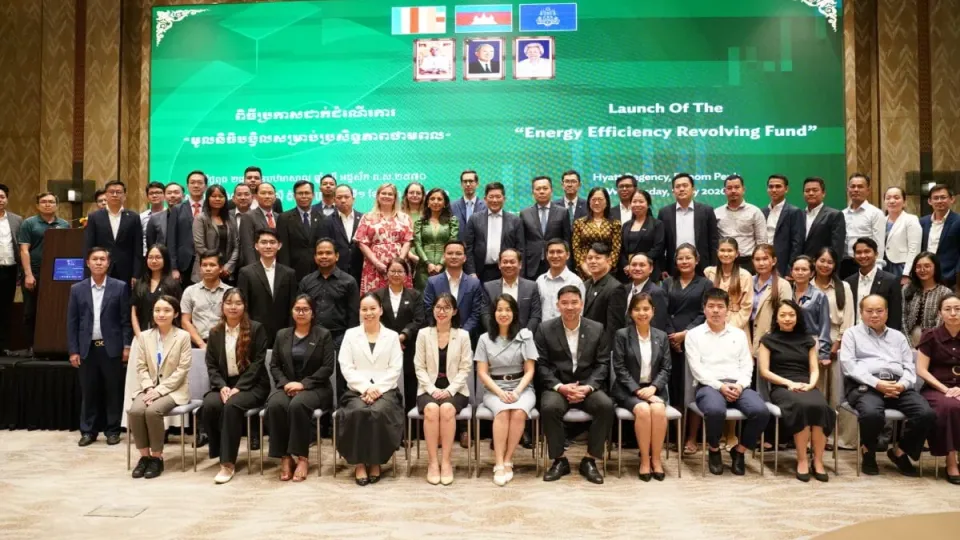
Speaking at the July 2 launch of the Energy Efficiency Revolving Fund (EERF), representatives of the Cambodia Women Entrepreneurs Association (CWEA) praised the government’s decision to reserve part of the programme for women-owned and women-led businesses, while urging policymakers and financial institutions to simplify lending procedures and better reflect the realities of female entrepreneurship.
The revolving fund, supported by the Asian Development Bank (ADB), the Royal Government of Cambodia and development partners, includes a target that at least 30% of supported enterprises should be women-owned or women-led.
For You Bory, deputy president of the Cambodia Women Entrepreneurs Association, believed that commitment is an important step towards narrowing one of the biggest challenges facing women in business.
“Access to finance remains one of the biggest bottlenecks for women entrepreneurs,” she said.
“We truly appreciate this initiative by ADB and SME Bank, especially the dedicated quota for women entrepreneurs,” she added.
The association represents more than 1,000 active women entrepreneurs across Cambodia and has repeatedly identified financing as one of the greatest constraints preventing businesses from expanding or investing in new technologies.
The new financing programme is designed to help Cambodian SMEs purchase energy-efficient machinery, renewable energy systems and modern equipment that reduce electricity consumption and operating costs.
However, Bory said many women-run businesses still struggle to meet lending conditions despite actively managing successful enterprises.
One challenge, she explained, is that many family businesses remain legally registered under a husband’s name even though wives are responsible for day-to-day management, staffing, finance and business development.
“As a result, these businesses may not qualify as women-owned or women-led under existing documentation, even though women are effectively running them,” she said.
She urged programme administrators to consider operational leadership rather than relying solely on registration certificates when determining eligibility for incentives targeting women entrepreneurs.
She also highlighted difficulties faced by single and divorced women, who often encounter additional requirements such as guarantors when applying for business loans.
“These create unnecessary barriers for independent women entrepreneurs who simply want to grow their businesses,” she said.
Beyond legal definitions, Bory warned that many micro and small enterprises face a more immediate obstacle: the high upfront investment required to adopt energy-efficient technologies.
Although businesses understand the long-term savings from installing solar power or replacing inefficient machinery, many lack the capital needed to make those investments.
“For small businesses, the initial investment remains a heavy burden,” she said.
“When entrepreneurs add installation costs, equipment costs and other related expenses, many decide they simply cannot afford to make the transition,” she added.
She noted that many small manufacturers and handicraft producers consume relatively modest amounts of electricity, making them ineligible for some existing green financing or energy service programmes that focus on larger industrial users.
“If financial programmes overlook these smaller enterprises because their energy bills are relatively low, we risk leaving behind businesses with significant growth potential,” she said.
Another concern raised by the association was the complexity of loan application procedures.
While welcoming concessional interest rates and credit guarantees offered through the Energy Efficiency Revolving Fund, Bory explained that many entrepreneurs continue to perceive formal lending as slow and complicated compared with informal borrowing.
“Many small businesses choose informal loans, even though the interest rates are much higher, because the process is simple and fast,” she said.
“If we want businesses to adopt green technologies, official financial products must become simpler and more user-friendly,” she added.
She also called on lenders to establish clearer timelines for approving applications so businesses can better plan investment decisions.
Programme organisers acknowledged that improving access to finance requires more than simply providing capital.
Chun Sothany, director of Strategy and Business Development at the Credit Guarantee Corporation of Cambodia (CGCC), said the project combines financing with technical assistance and capacity building to help both financial institutions and businesses better understand energy-efficiency investments.
She noted that the programme also aims to increase commercial banks’ confidence in financing projects that traditionally have been viewed as unfamiliar or risky.
“The project is more than just financing,” she said.
“It also includes capacity building for SMEs and participating financial institutions so they can better assess, access and manage investments in green technologies,” she added.
She explained that the guarantee mechanism was specifically designed to reduce collateral barriers that frequently prevent SMEs from obtaining loans.
The Energy Efficiency Revolving Fund will initially be implemented through SME Bank of Cambodia in partnership with CIMB Bank PLC and Foreign Trade Bank (FTB), while CGCC will provide optional partial credit guarantees to participating banks.
Officials say the programme is intended to encourage businesses to replace outdated equipment with energy-efficient technologies that lower electricity bills, improve productivity and reduce greenhouse gas emissions.
Although welcoming the initiative, Bory said its long-term success would depend on whether the financing reaches the businesses most in need.
“The Energy Efficiency Revolving Fund has the potential to reshape Cambodia’s business landscape,” she said.
“But by listening to feedback from businesses on the ground, we can make the rules more flexible, the requirements simpler and ensure that even the smallest enterprises, especially those led by women, have the opportunity to grow,” she added.
She reiterated that the association stood ready to work with the government, development partners and financial institutions to help women entrepreneurs prepare stronger loan applications and expand access to green finance across Cambodia.