

January 12, 2026
HANOI – Bánh hỏi (fine woven rice vermicelli) is a speciality dish in Việt Nam, commonly found in provinces such as Lâm Đồng, Đắk Lắk and Bến Tre. Phú Long bánh hỏi, from the Central Highlands province of Lâm Đồng, is especially popular for its meticulous, entirely manual production process.
Rice and water are the main ingredients used to make bánh hỏi. The rice vermicelli is notable for the traditional techniques involved in its preparation and for how harmoniously it pairs with a wide variety of toppings.

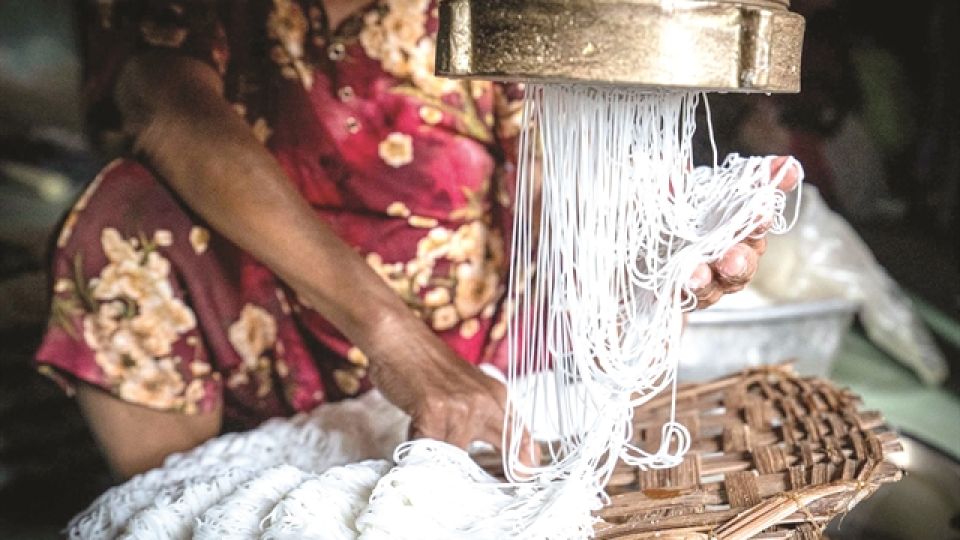
The dough is pressed into fine vermicelli and then it is arranged into small buns on a bamboo tray. PHOTO: VNA/VIET NAM NEWS
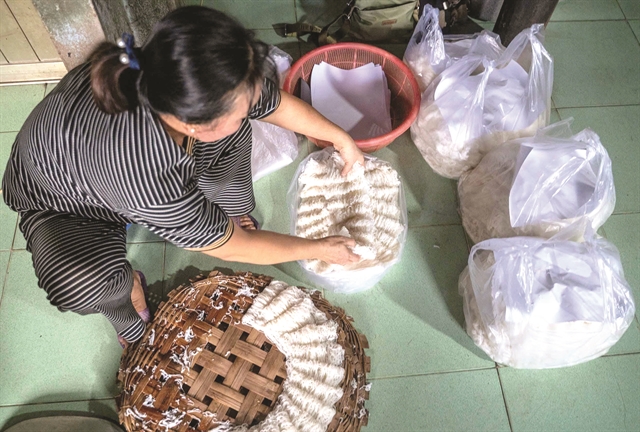
Fresh banh hoi is packaged and shipped daily to restaurants for same-day use. PHOTO: VNA/VIET NAM NEWS
To produce high-quality vermicelli, the rice must be carefully selected, thoroughly washed and soaked overnight. It is then finely ground with water into a thick rice batter, which is steamed, kneaded and continuously stirred until it forms a smooth, elastic dough.
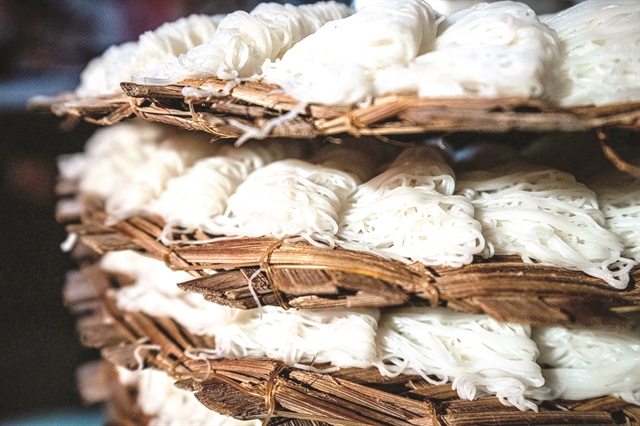
The dough is pressed through a mould to form delicate sheets, which are then laid on a flat surface. Once shaped, the sheets are steamed again to maintain their soft texture. They are then carefully arranged on banana leaves placed atop bamboo trays.
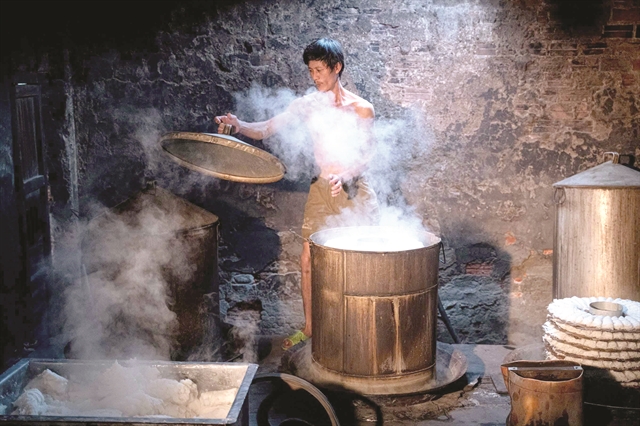
After being shaped into thin sheets, the vermicelli is steamed for a second time to preserve its softness. PHOTO: VNA/VIET NAM NEWS
Rice flour will be mixed with water to become big dough, which is then shaped in
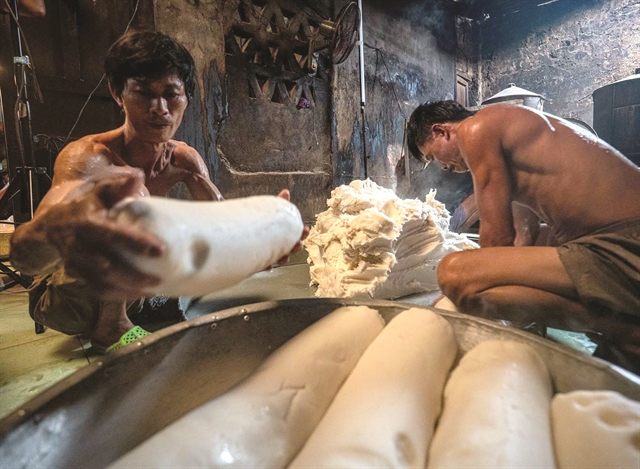
Rice flour is mixed with water to form a large dough, which is then shaped into small portions before pressing. PHOTO: VNA/VIET NAM NEWS
This traditional dish is commonly enjoyed for breakfast, lunch or dinner. Despite its popularity, the exact origins of bánh hỏi and its name remain somewhat mysterious. Some suggest that the name derives from the many inquiries about the dish when it first appeared – hỏi means “question” in Vietnamese.
In the past, bánh hỏi was made fresh for ceremonial occasions or for sale at local markets, and would last only about one hour at room temperature. Today, packaged instant bánh hỏi is widely available, ready to serve after a simple steaming of around 10 minutes.
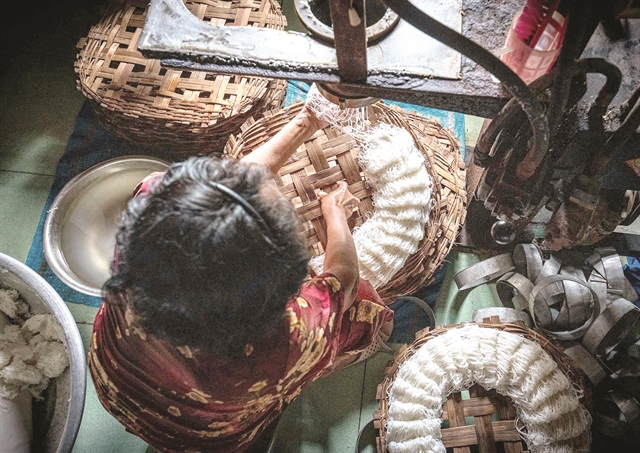
Once shaped, the sheets are then carefully arranged atop bamboo trays. PHOTO: VNA/VIET NAM NEWS
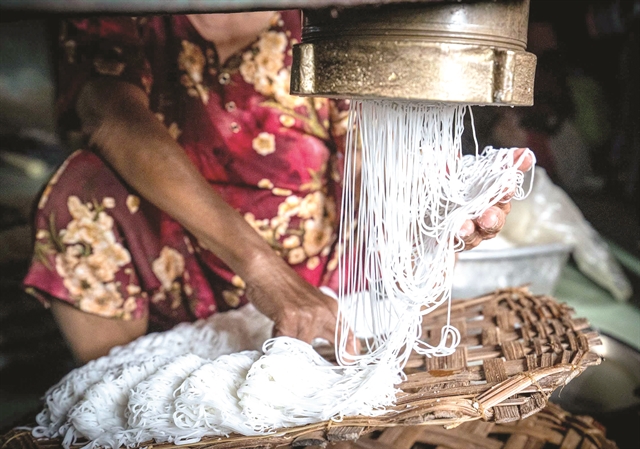
The dough is pressed through a mould to form delicate sheets, which are then laid on a flat surface. PHOTO: VNA/VIET NAM NEWS

Banh hoi is typically served with sweet and sour fish sauce with minced garlic and chillies. PHOTO: VNA/VIET NAM NEWS