

February 3, 2026
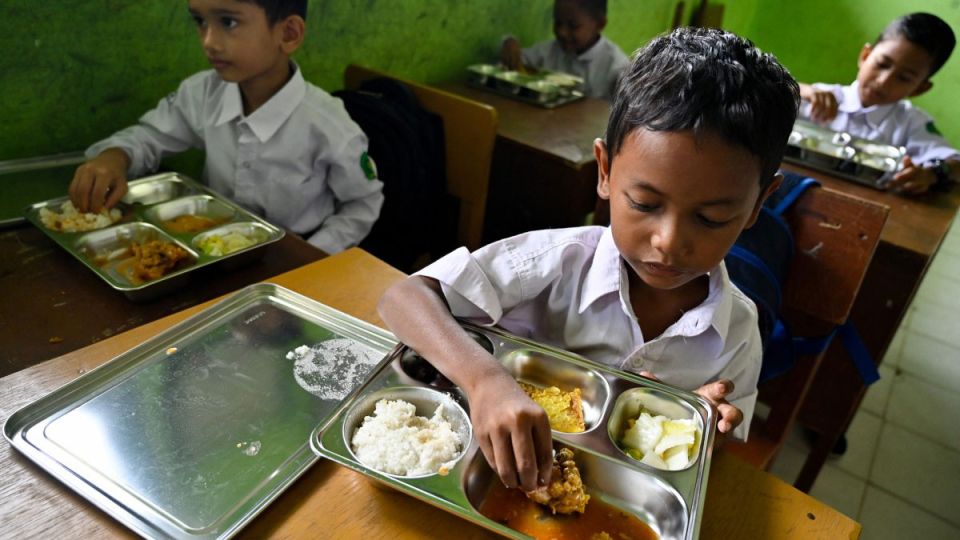
BENGKULU – The debate over public policy priorities, whether to emphasize immediate consumption programs like the free nutritious meal program or structural production policies such as job creation, has reached a critical juncture
At the Prasasti Economic Forum 2026 in Jakarta recently, National Development Planning Minister Rachmat Pambudy, who also heads the National Development Planning Agency (Bappenas), argued that the free meals initiative is more pressing than the immediate expansion of employment opportunities.
However, leading economic thinkers remind us that social protection cannot be divorced from the economic structures that sustain it. Nobel laureate Amartya Sen, for instance, emphasizes the importance of capability, the substantive freedom individuals possess to lead healthy, productive lives. While nutritional assistance may bolster a child’s capabilities in the short term, those gains remain fragile without the stability of decent work for their parents.
No one disputes that child nutrition is a vital long-term investment. Organizations such as United Nations Children Fund (UNICEF) and the World Health Organization (WHO) have repeatedly warned that early malnutrition leaves permanent scars on a nation’s human capital. In this light, free meal programs, provided they reach the intended recipients and deliver high-quality nutrition, are urgent and necessary interventions. They act as an essential safety net when the labor market fails to provide families with sufficient income.
Yet, development literature remains clear: Consumption-side interventions alone cannot dismantle structural vulnerability. The late British economist Anthony Atkinson and scholar Frances Stewart both highlighted that entrenched disparities, or “horizontal inequalities”, can only be truly addressed through policies that reach the roots of the economy, rather than through compensatory consumption alone.
Indonesia’s current labor market illustrates this structural challenge through a stark statistical paradox. According to the most recent data from Statistics Indonesia (BPS) as of August 2025, the Open Unemployment Rate (TPT) stood at 4.85 percent, a slight improvement from the previous year. While this figure suggests a stabilizing market, it masks a much deeper vulnerability: the quality of employment.
The real crisis lies in the “informalization” of the workforce. BPS reports that approximately 59.40 percent of Indonesia’s workforce, over 86 million people, are trapped in the informal sector. This sector is characterized by low productivity, lack of legal protection and extreme wage volatility.
Recent studies from early 2026 further reveal that nearly 80 percent of new jobs created since 2018 have emerged within informal household enterprises, rather than stable, formal industries. This inherent job instability leaves households dangerously exposed to economic shocks, ensuring that even with state-provided meals, a child’s broader access to nutrition and security remains perpetually precarious.
This tension recalls Karl Polanyi’s famous concept of the “double movement”: when markets fail to protect the social fabric, the state must step in with social interventions.
However, if these interventions are limited strictly to consumption support, they fail to repair the primary mechanism of welfare distribution: employment. In the end, the crisis of child nutrition is a mirror reflecting the fragility of the labor market, where parents struggle to find their footing as stable earners.
Furthermore, free meal programs demand significant annual funding. Without simultaneous improvements in the labor market, this spending fails to generate the economic base required to sustain state revenues.
In contrast, policies that expand productive employment create what Atkinson described as a “virtuous circle”. By raising household incomes, the state stimulates domestic consumption and broadens the tax base, which in turn finances future social policy.
The policy dialectic between nutrition and production demands integration, not isolation. Nutritional assistance is an indispensable lifeline for children in marginalized families, but it should be designed as a bridge toward long-term stability.
As noted in the work of Dani Rodrik, inclusive development requires transitioning workers from the informal to the formal sector, raising productivity and creating value-added employment. Without such fundamental reforms, social programs will remain mere stopgaps, patching over symptoms while the root causes of poverty persist.
A child’s well-being depends profoundly on the security their parents can find in the labor market. While free meal programs offer vital protection in vulnerable times, ensuring that parents have access to decent jobs is the only strategy that makes a child’s access to basic needs comprehensive. True security is not found in a single meal, but in the sustained ability to access quality nutrition, education, healthcare and safe housing, all underpinned by a parent’s dignity of work.
By prioritizing a healthy labor market, a nation can solve social problems at their source, fostering household food security and ensuring a resilient future for the next generation.
The writer is a professor of agricultural economics at the University of Bengkulu and the chair of the Public Policy Division at the Indonesian Association of Academics and Scientists (ASASI). The views expressed are personal.