

July 6, 2026
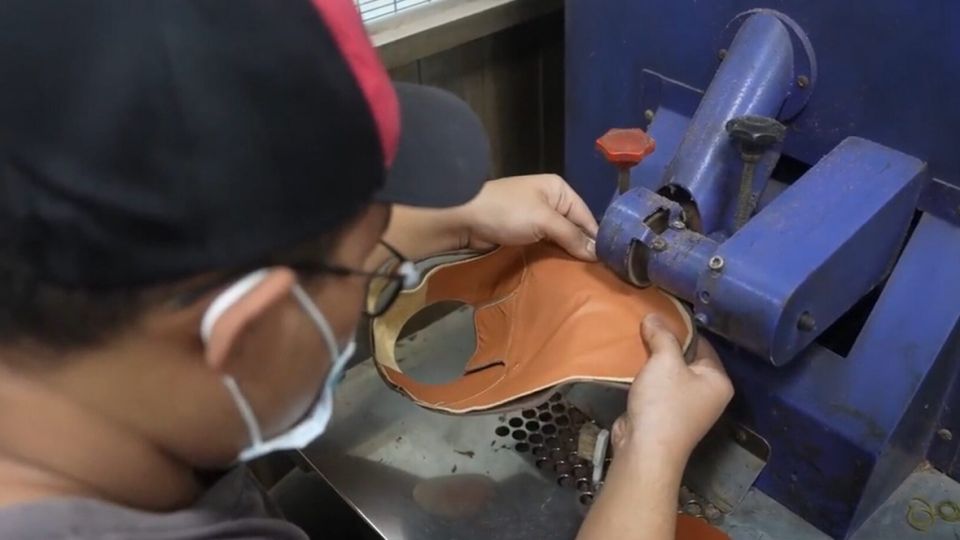
JAKARTA – After decades in the shoemaking business, Helmi Muntahal has grown accustomed to seeing production costs fluctuate one item at a time. But this year has been different.
“Everything has gone up together,” said Helmi, who runs Pabrik Sepatu Bandung Cibaduyut 1920, a family-owned footwear factory in Cibaduyut, Bandung’s renowned leather shoemaking district.
His family operates the factory, which produces footwear for several Indonesian brands, since the 1980s, including names such as NAH Project, Brodo and Geoff Max.
“It’s no longer just one specific item. Almost every material has become more expensive.”
The simultaneous increase in raw material prices has made running the factory increasingly difficult. Many of the adhesives used in production are imported, while nearly all other inputs have also become more expensive, forcing manufacturers to raise selling prices at a time when consumers are cautious with spending.
According to Helmi, individual material costs have increased by around 30 to 40 percent. But passing those higher costs on to customers has proven difficult.
“If we increase prices, it affects sales. But if we don’t increase them, we lose money,” he told The Jakarta Post on June 24.
The current business environment, he added, feels more challenging than the COVID-19 pandemic.
Comparing the periods before the pandemic, during COVID-19 and today, Helmi said the current slowdown had become the most difficult for his factory, driven by a combination of rising production costs and weakening consumer demand.
Demand this year has fallen by roughly 30 to 40 percent, mirroring the increase in production costs.
The challenge has become even more pronounced as more consumers purchase footwear through online marketplaces, where competition is largely determined by price. Marketplace administrative fees have also become more burdensome, further squeezing manufacturers’ margins.
Competition from inexpensive imported footwear, particularly from China, adds another layer of pressure.
Like many, his factory has responded by cutting costs where possible and gradually downsizing its workforce from around 120 employees before the pandemic to about 60 today.
Helmi accepts the reality of lower margins but hopes the government can bring down the cost of doing business, including reducing fees associated with online sales and stabilizing prices for production materials.
“We need more stable prices,” he said. “Even plastic once increased by as much as 200 percent. That makes production very difficult.”
According to Indonesian Footwear Association (Aprisindo) secretary general Yoseph Billie Dosiwoda, many businesses are taking a wait-and-see approach as they monitor conditions over the next several months.
“The next two to three months will be crucial, given the ongoing global uncertainty and weakening domestic spending power,” he told the Post on June 23.
“If conditions do not improve, we cannot rule out layoffs as a last resort, although that is the outcome we want to avoid. The increase in imported raw material costs of around 30 to 40 percent has added to the pressure.”
Yoseph also warned that Indonesia must maintain a tariff advantage over competing footwear exporting countries to remain competitive in the US market. He added that power outages reported by Aprisindo members were disrupting productivity, raising costs, delaying deliveries and risking buyers’ confidence.
Without policy support, exports were likely to weaken, he said, urging the government to speed up tax refunds to improve manufacturers’ cash flow, provide electricity and gas price incentives and ensure greater regulatory certainty on wages for labor-intensive industries.
For Samuel Wongso, owner of shoe manufacturer Alas Kaki Tangguh, the uncertainty has made production planning increasingly difficult.
Running businesses in both footwear and apparel, he said production costs and quotations sent to clients had been calculated before raw material prices shifted due to currency movements.
“The situation is really not pleasant, especially since some of the raw materials were ordered several months ago, but they’re only being paid for now. The price isn’t locked in at the old rate when we placed the order, but at the current rate. That’s because we’re in manufacturing. It’s simply not possible for an industry or factory to pay for everything in cash in advance,” he told the Post on June 25.
According to him, rices for plastic, rubber and similar materials have risen by around 40 to 60 percent, while some apparel materials priced in US dollars have increased by as much as 160 percent.
Rather than cutting jobs, the company has focused on expanding its supplier network and developing alternative materials to manage costs, while continuing to evaluate business conditions.
“Hopefully things improve. As long as the numbers still add up and the business remains viable, we’ll just keep going. We try to stay positive.”
“I’m also confident this situation won’t last forever. I don’t think it will continue until the end of the year. But after July, we’ll definitely evaluate things again, should the situation remain uncertain,” he said.
The challenging business environment has also weighed on local footwear brands. Kahar Gunawan, who runs Bandung-based Compass shoes since 1998, said Indonesian shoemakers had made significant strides in recent years, producing original designs and improving product quality to compete with international labels.
But the current economic slowdown has weakened consumer demand, as footwear is generally considered a discretionary purchase.
“When spending power declines, consumers naturally prioritize primary and secondary needs before buying shoes,” Kahar told the Post on June 15.
At the same time, the weakened rupiah has pushed up the cost of imported materials and supporting components for the brand by 10 to 30 percent.
“Although some materials are already produced in Indonesia, the raw inputs used to make those materials still have to be imported. As a result, the rupiah’s depreciation against the US dollar has automatically driven up raw material prices,” he added.
He believes the government could help by lowering import duties on raw materials and components not yet produced domestically.
Over the longer term, he also suggested encouraging overseas raw material suppliers, particularly from China, to invest in Indonesia and establish local production facilities.