

December 10, 2025
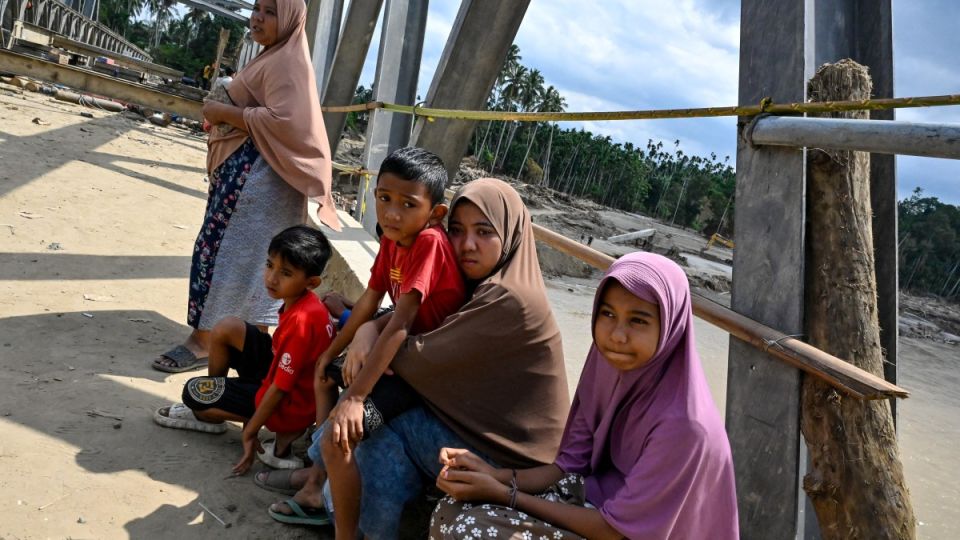
JAKARTA/MEDAN – Suffering through days without clean water or proper medical care, evacuees packed into emergency shelters across three provinces in the northern part of Sumatra are falling severely ill, with some reportedly dying before help can reach them, as the region’s floods and landslides continue to isolate entire communities.
Indonesia continues to reel from the hydrometeorological disaster that first struck Aceh, West Sumatra and North Sumatra two weeks ago, with 964 confirmed deaths, at least 262 missing, more than 5,000 injured, over 152,000 houses destroyed and around 1,200 public facilities damaged across 52 regencies.
The number of evacuees now stands at around 800,000.
As of Tuesday, both the central government and regional administrations were still struggling to deliver food, medical supplies and clean water to areas cut off by collapsed bridges, blocked roads and damaged infrastructure.
Although airdrops have continued, the joint search and rescue task force has yet to reach thousands of isolated residents.
Read also: Calls grow for Indonesia to accept foreign disaster aid
The National Disaster Mitigation Agency (BNPB) reported on Sunday that more than 500 villages in Bener Meriah and North Aceh regencies remained inaccessible in Aceh, while two regencies in both North Sumatra and West Sumatra were also isolated.
The agency had yet to reveal an updated number of isolated regions on Tuesday.
BNPB spokesperson Abdul Muhari said affected national roads, including in Bireuen and North Aceh, were being repaired to restore land access, with completion expected by this weekend.
“Land routes are crucial to optimizing aid distribution to affected areas,” he said during a press briefing on Tuesday afternoon, citing that in West Sumatra, where roads are now open, aid can be delivered quickly.
“Seventeen trucks carrying 27 tonnes of aid entered immediately,” Abdul added.
Deteriorating health
Across Aceh and North Sumatra, health conditions inside shelters have deteriorated sharply. In Kuala Simpang, Aceh Tamiang regency, ambulances raced nonstop on Tuesday to transport sick evacuees to the nearby city of Langsa after the local hospital was inundated and rendered inoperable.
“Almost every day some evacuees from Kuala Simpang are taken to Langsa. Most suffer from diarrhea, fever and rashes,” an affected resident, Fajri Akbar told The Jakarta Post.
Many inland villages, he added, remained unreachable because of damaged roads, leaving sick survivors without medical support. “My friend’s younger sister died in a shelter three days ago from illness”.
Meanwhile, acting head of the Aceh health agency, Ferdiyus said that 18 isolated regencies were in urgent need of basic health services, with seven community health centers (Puskesmas) paralyzed.
“The most distressing thing is the lack of clean water, which has affected evacuees’ health,” he said on Monday. Skin diseases to acute respiratory infections (ISPA) have surged across shelters, while medical equipment cannot be brought to numerous regions because of blocked access.
Last Friday, an evacuee in Aceh Tamiang, Aisyah, died in a shelter after going more than a week without treatment for her blood sugar, Reuters reported.
Thousands of evacuees in North Sumatra are facing similarly concerning conditions. The provincial health office has recorded 6,433 cases of skin disease, 5,151 cases of ISPA, 1,065 cases of diarrhea, 755 cases of influenza, seven dengue cases and 534 suspected typhoid cases.
Fitri, an evacuee in Adiankoting district, said her child had suffered severe diarrhea for three days. “My child even had seizures, her eyes rolled back. She has never been this sick. Maybe it’s the germs, the mud, the flood, everything,” she said.
In Central Tapanuli, evacuees pleaded for more food for infants, with resident Juliandika saying that “baby food is the only thing missing. There hasn’t been anything at all here,” Kompas.com reported.
North Sumatra Governor Bobby Nasution said 13 subdistricts remained inaccessible by land as his administration tried to accelerate aid deliveries.
“We will make every effort to expedite the disaster management process, including repairing all damage caused by the floods and landslides,” Bobby said on Sunday after a virtual meeting with President Prabowo Subianto.
Read also: Disease spreads among Sumatra flood victims
In response to the deteriorating health conditions, the health ministry has begun deploying medical teams, including intern doctors, to the disaster‑affected regions.
Around 300 military and police doctors are also being sent to support and supervise the interns, acknowledging that many local health workers were themselves impacted by the floods and landslides.