

January 26, 2026
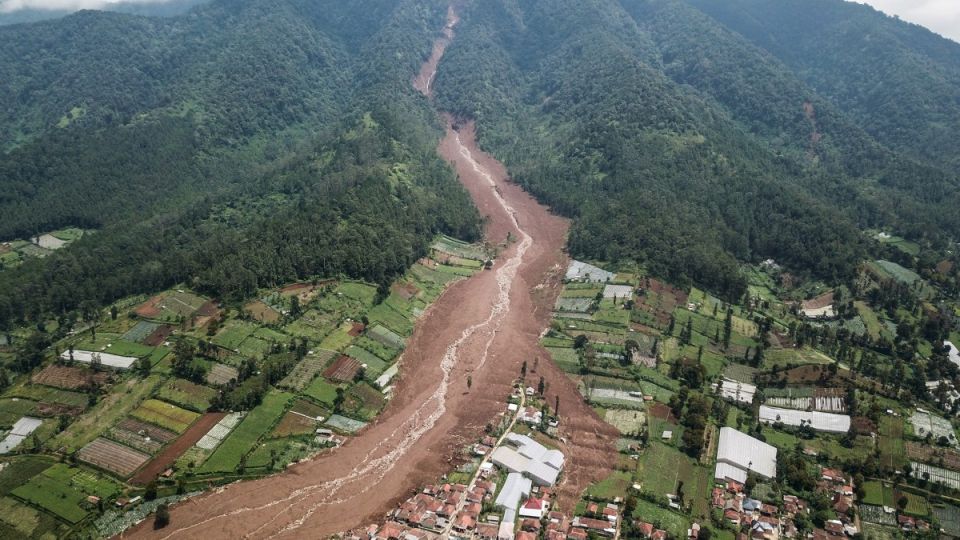
JAKARTA – Flooding and landslides that were triggered by torrential rains have continued to paralyze regions across Java and disrupt traffic and public service, with the worst single disaster killing at least nine people and leaving more than 80 missing in West Java
Hours of heavy downpours set off the deadly landslide that buried at least 30 homes in Pasirlangu village in West Bandung regency, West Java early Saturday morning.
A rescue team led by the National Search and Rescue Agency (Basarnas) was deployed on Sunday to search for the remaining people trapped under 8 meters of debris. Around 230 people living in and around the hilly village have been evacuated to safer places to anticipate more landslides.
The village is situated near the Burangrang mountain pass, some 25 kilometers away from the provincial capital of Bandung.
The West Bandung administration has issued a decree declaring a two-week emergency response period and vowed to launch coordinated mitigation efforts in the disaster-prone village.
“Our main focus is recovering those who are still missing and rescuing all of the affected residents. All elements are involved to accelerate evacuation efforts,” West Bandung Regent Jeje Ritchie Ismail said in a statement on Saturday.
Vice President Gibran Rakabuming Raka visited the regency on Sunday, instructing local authorities to speed up searches and aid delivery for survivors. He also ordered the West Java administration to investigate rapid land conversions in the province, which was believed to have worsened the disaster.
Gripped by disasters
Several regions across Java have already experienced flooding and landslides that disrupted numerous road access and public transport routes since early January.
In Karawang, West Java, heavy rains, which have triggered floods in 13 districts since early last week, impacted seven more districts on Saturday, forcing 2,000 people to evacuate to shelters.
The Karawang administration advised more residents to take shelter as floodwaters continue to creep into thousands of homes on Sunday.
In the neighboring Subang regency, floodwaters reached 150 centimeters on Saturday, inundating more than 3,300 homes and 27 hectares of rice fields across 21 villages in nine districts. Nearly 960 people are still taking shelter.
In Central Java, a series of flash floods and landslides on Friday hit parts of four regencies on the slope of Mount Slamet: Pemalang, Purbalingga, Brebes and Tegal.
The disasters cut off access to several roads and bridges across the regencies.
At least one fatality has been reported in Pemalang, while the overflowed Soso River in Purbalingga still isolated two hamlets and displaced hundreds of residents in the regency by Sunday.
Meanwhile, the Pati administration in Central Java extended on Saturday an emergency response period until Feb. 6, after at least 51 villages continued to suffer from either floods or landslides since early January.
Heavy rainfall and strong winds are expected to continue to batter parts of Java until Jan. 29, with the Meteorology, Climatology and Geophysics Agency (BMKG) predicting the rainy season will peak at the end of February.
Jakarta’s recurring floods
In the capital Jakarta, nearly 1,600 people have been living in shelters since Thursday after floods inundated their houses following heavy rains.
While floodwaters had begun to recede in some neighborhoods, two worst-hit neighborhoods of Kampung Melayu in East Jakarta and Kapuk Muara in North Jakarta were still inundated by Sunday, with waters reaching between 30 and 80 cm high.
In recent days, extreme rainfall intensity has been recorded across Jakarta, including in northern parts of the city, where rainfall reached its daily peak of 267 millimeters on Thursday, far exceeding the weather agency’s 150-mm threshold for extreme rainfall. The agency forecasts torrential rains will still occur in the coming days.
Jakarta Governor Pramono Anung has allowed city employees to work from home and ordered remote learning for students across the capital until Jan. 28.
“Because of extreme rainfall, we’ve approved work-from-home and remote learning policies and the circular letters have already been issued by the Education Agency and Manpower Agency,” Pramono said in a statement on Saturday.
The Jakarta administration also continues restoring the capacity of rivers flowing across the capital to contain rainwater, as well as conducting weather modification operations until Jan. 27 to reduce rainfall intensity.