

February 3, 2026
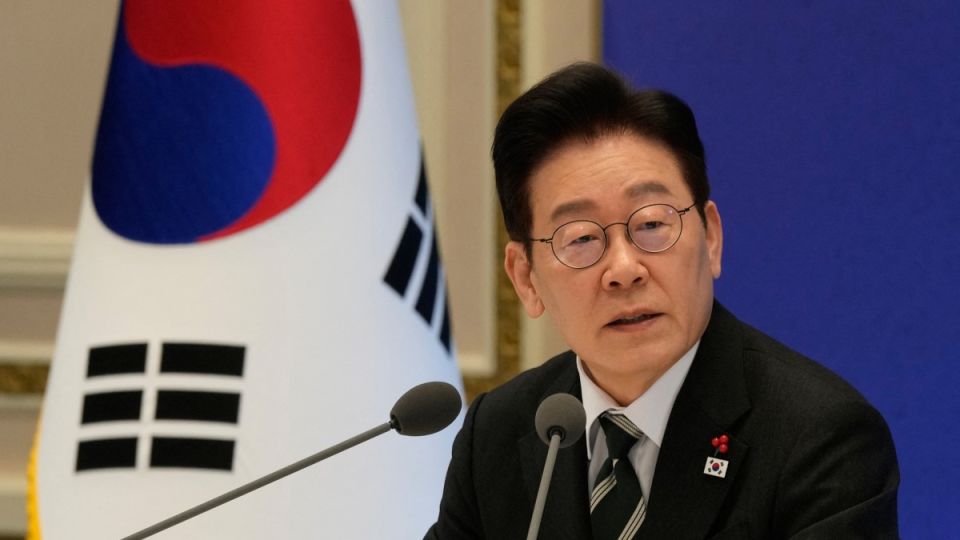
SEOUL – President Lee Jae Myung’s increasingly frequent social media posts warning of an end to a tax waiver for multiple homeowners have put his housing agenda — and his direct-to-public messaging — at the center of a widening political debate between rival parties.
The main opposition People Power Party said Monday that Lee’s posts urging homeowners to sell amount to “intimidation.” The party went further, asking whether Lee “learned it” from US President Donald Trump, who has made social media a key tool of governance and used it to deliver major policy announcements.
Following his New Year’s news conference on Jan. 23, Lee has stepped up his use of his official X account to weigh in on major policy issues. The approach aligns with his long-standing communications style: he relied heavily on social media while serving as mayor of Seongnam and governor of Gyeonggi Province.
Housing policy has accounted for the lion’s share of his posts. Lee has posted about the issue 11 times: one post on Jan. 23, four posts on Jan. 25, three on Saturday, one on Sunday and two on Monday.
Lee’s posts largely reaffirm his determination to terminate the exemption for the higher capital gains tax on multihomeowners that began with the inauguration of the Yoon Suk Yeol administration on May 9 in 2022 and was extended each year.
Lee has hit back at a media report criticizing tougher regulations on multiple-homeowners or rebutted the main People Power Party’s questioning of his confidence in stabilizing the real-estate market through the reinstatement of taxes and the expansion of public housing.
“Wouldn’t it be time to stop both defending nation-ruining real-estate speculation and engaging in anachronistic pro-North Korea witch hunts?” Lee said Monday morning in a post on X, singling out the People Power Party.
Lee’s remarks came in response to the party’s criticism that he was “stirring public opinion with provocative slogans.”
The opposition also claimed that the Lee administration’s plan to provide public land for the construction of 60,000 housing units in Seoul and the surrounding metropolitan area is “no different from telling people to be satisfied with the government-dictated ‘distribution of real estate.’”
Following Lee’s post, Rep. Song Eon-seog, the floor leader of the People Power Party, denounced Lee’s recent social media remarks as “politics of intimidation aimed at the market.”
At a supreme council meeting at the National Assembly, Song said it was “highly inappropriate for the president to pressure the market directly through social media.”
Song stressed that “the market should be managed through laws, institutions and a consistent road map — the policy context can’t be explained in short messages.”
“I can’t help but ask whether this was learned from US President Donald Trump, who unilaterally announces tariff hikes through social media,” Song added, referring to Trump’s Jan. 26 Truth Social post calling for tariffs on South Korean imports to be raised to 25 percent from 15 percent.
People Power Party Chair Rep. Jang Dong-hyeok also took aim at President Lee’s frequent use of social media, saying he appeared to be “recently imitating Trump’s FAFO on social media.” FAFO stands for “f— around and find out,” largely perceived as a warning that one’s actions will have consequences.
“Instead of threatening the public on social media, I hope he exercises some control over his anger,” Jang said during the same meeting. “These days, the president seems to be immersed in a politics of scolding, an economics of scolding and a diplomacy of scolding.”
The ruling Democratic Party of Korea pushed back against the criticism, defending the president’s use of social media as a legitimate channel for public communication.
“The president’s social media is simply one way of communicating policy directions and principles to the public, while policies themselves are being pursued through formal procedures, including interagency consultations, policy design and legal and institutional revisions,” Rep. Bak Seung-a, the party’s floor spokesperson, said in a statement.
“While the People Power Party claims that ‘people’s housing stability cannot be secured in a country where the president’s finger becomes policy,’ the public is instead showing empathy and trust toward a president who communicates directly,” Bak added.
During a closed-door supreme council meeting on Monday, Democratic Party chair Rep. Jung Chung-rae instructed the party’s policy chief, Rep. Han Jeoung-ae, to “develop concrete measures and detailed plans to support President Lee Jae Myung’s policy messages on social media and to ensure their thorough implementation,” according to senior spokesperson Rep. Park Soo-hyun.