

May 13, 2026
CHANGCHUN – In recent years, via systematic ecological restoration and precise protection, the number of migratory birds stopping over in Northeast China’s Jilin province has significantly increased, vividly illustrating the harmonious coexistence between humans and birds.
Jilin, as a core area of the East Asia-Australasia Flyway of migratory birds, is witnessing a migratory bird wave involving 385 species and a total of over 1 million birds in early May, according to data from local government.
The province boasts numerous key wetlands that provide crucial stopover and replenishment sites for migratory birds.
Gao Jinbao, director of the protection station at the Boluo Lake National Nature Reserve in Nong’an county, excitedly observes the birds through his binoculars every day.
This year, more than 100 Baer’s pochards have come to rest and recuperate in the Boluo Lake Wetlands, an increase from 2025.
The safe environment and abundant food sources have encouraged many migratory birds to transition from merely stopping over to settling down in the wetlands.
“We found that a pair of Oriental storks had laid four eggs, and they successfully raised two chicks,” said Gao. “In previous years, Oriental storks merely passed through the reserve without staying to breed.”
“Their breeding occurrence proves that the reserve’s ecology has reached a standard suitable for breeding,” he added.
Meanwhile, in ecological reserves across Jilin, the number and variety of migratory birds have increased annually, showcasing fruitful results in ecological protection.
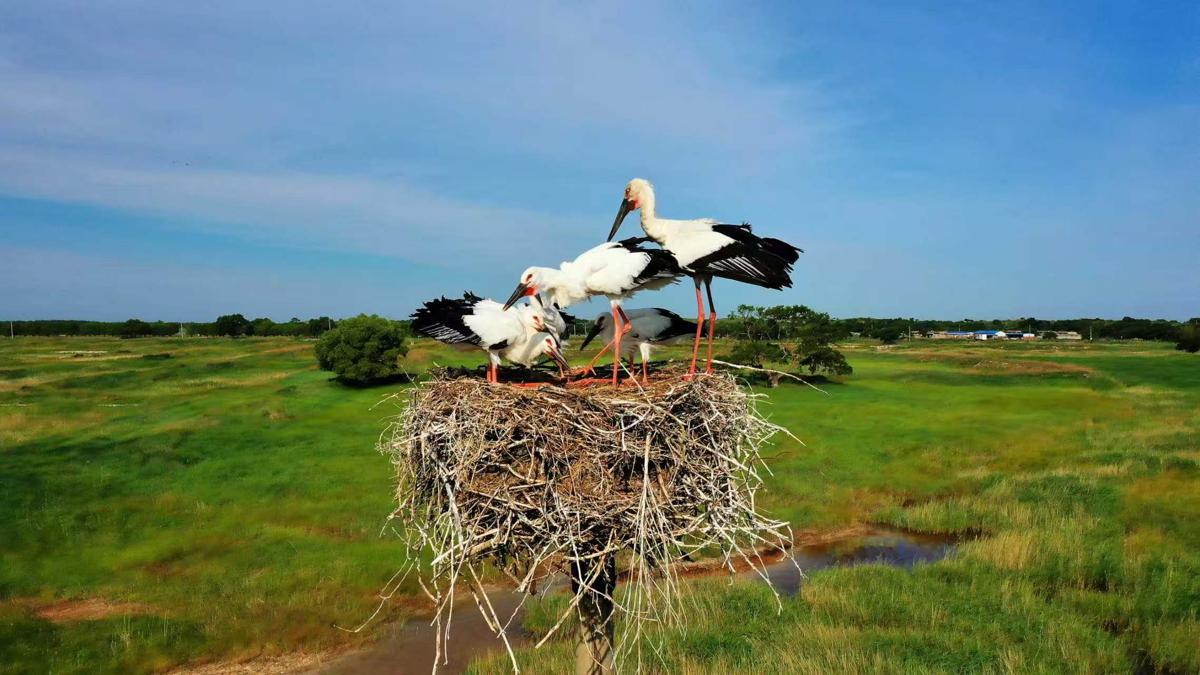
An Oriental stork family rests in their nest at the Xianghai National Nature Reserve in Baicheng city in Jilin province. PHOTO: CHINA DAILY
Monitoring data at the Chagan Lake Reserve in Songyuan city shows an increase of 37 species of wild birds compared to over a decade ago, with a steady rise in rare bird populations.
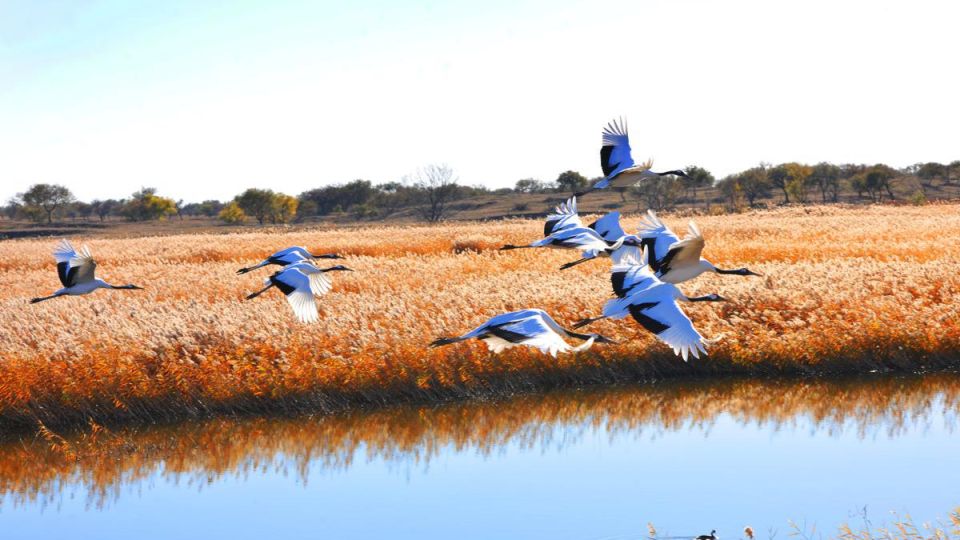
During the peak of bird migration, the number of white cranes in the Xianghai National Nature Reserve in Baicheng city can reach 3,000.
The reserve has been carrying out wetland protection and restoration work for many years.
Through comprehensive management, grazing bans, and scientific wetland water diversion projects, human interference and destructive activities have been effectively controlled, significantly increasing the area of shallow beaches and marshes suitable for wading birds like white cranes.
Currently, the lakes, rivers, and marshes suitable for waterbird habitats have been restored to over 40,000 hectares.

Whiskered terns forage in the Chagan Lake Reserve in Songyuan city in Jilin province. PHOTO: CHINA DAILY
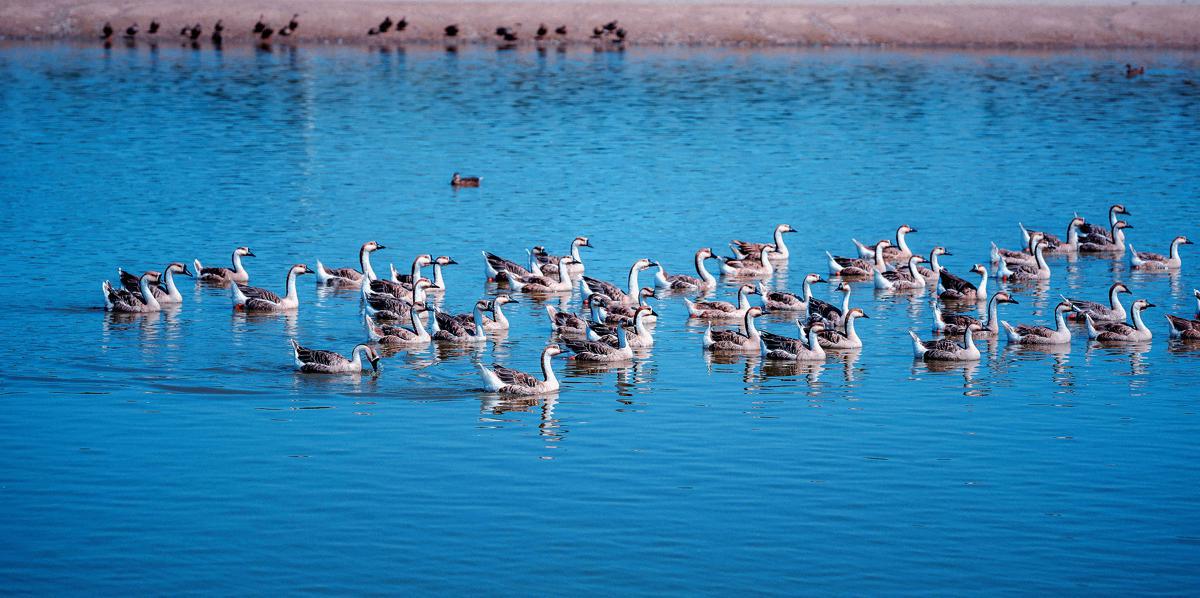
A flock of swan geese glide through the Chagan Lake Reserve in Songyuan city in Jilin province PHOTO: CHINA DAILY